
Reviewed · WALL STREET AND FINANCIAL DISTRICT TOURS
The Outlaws Who Built NYC: Financial District Tour
New York’s Financial District was not built by clean-cut heroes alone. This two-hour tour follows pirates, smugglers, schemers, law-breakers, and other rough-edged figures who helped shape the city’s early growth. You’ll connect famous places with the people who made their fortunes, broke rules, or changed the law.
I like the unusual focus, especially the stories of the first privateers, Madame Restell, New York’s first Black millionaire, and Captain Kidd. I also like the small maximum of 15 people, which gives guide Krombie room to tell jokes, answer questions, and keep the group together.
The main drawback is pace. Eleven stops in about two hours means each story is brief, often just six or seven minutes, and the tour stays outdoors. If you want long museum visits or a slow look at every building, this will feel brisk.
Key points about the Financial District walk
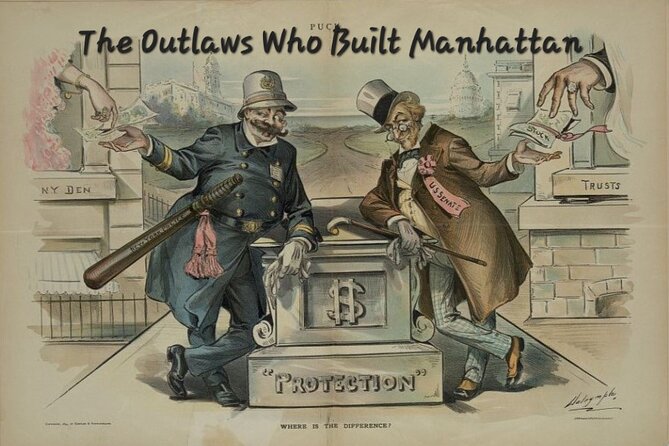
- Outlaws become city builders: The tour shows how pirates, political schemers, criminals, and business opportunists helped form New York.
- Eleven stops in two hours: You move from the Oculus and 9/11 Memorial area to Wall Street, the East River waterfront, Hanover Square, and White Horse Tavern.
- Guide Krombie brings a lively tone: Her approach combines careful research, humor, and strong enthusiasm for the subject.
- A small group keeps it personal: The tour accepts no more than 15 people.
- A useful $40 history lesson: You get a tightly planned look at places many visitors pass without knowing their backstories.
- Easy public transit at both ends: The start is near the World Trade Center, and the finish is close to Bowling Green, South Ferry, Whitehall Street, and ferry services.
Why New York’s villains make good tour subjects
Most Lower Manhattan tours lean toward presidents, financiers, patriotic monuments, and grand architecture. This one asks a less comfortable question: who helped build the city when the rules were loose, badly enforced, or designed to favor the powerful?
That gives the experience a useful edge. You hear about men and women who were not polished civic leaders, yet still affected New York’s money, law, press, water supply, policing, and social order. The stories are not presented as a simple parade of criminals. Instead, you see how the city grew through deals, disputes, questionable businesses, and people willing to test the limits.
The humor matters, too. Krombie’s style is fast, bright, and conversational. She has been praised for making scandals and obscure names easy to follow without turning the tour into a dry lecture. If you usually avoid guided walks, this is the kind of format that may win you over: short stories, clear movement through the city, and a subject with plenty of natural drama.
You should still arrive ready to listen closely. The tour covers a lot of ground in a short period. Names and dates can come quickly, especially during the Wall Street portion.
More Wall Street and Financial District Tours:
- NYC City Tour: Statue of Liberty, 9/11 Memorial, Wall Street
★ 4.5 · 2,059 reviews - Wall Street Insider Tour with a Finance Professional
★ 4.5 · 660 reviews - Wall Street Insider Tour with a Finance Professional
★ 4.5 · 571 reviews
Starting at Church Street near the Oculus
The meeting point is outside the entrance of the M Social Hotel New York Downtown, at 55 Church Street. The hotel was formerly the Millennium Downtown New York, so check the current name when you arrive. The start time is 3 p.m.
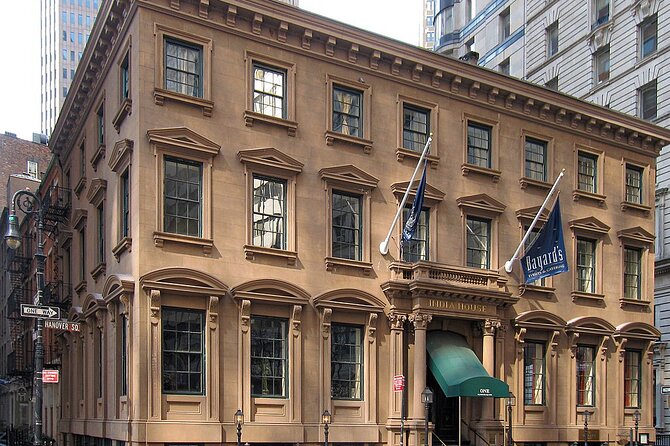
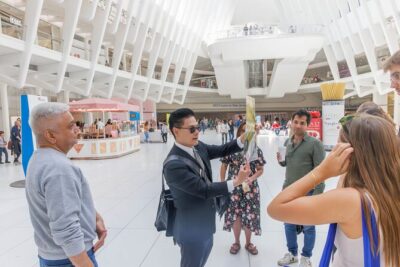
The first formal stop is the Oculus World Trade Center, where you learn about the area’s first privateers and the remains of ships embedded in the earth. That is an excellent opening because it pushes you back before modern Lower Manhattan, before the skyscrapers and financial institutions that now define the district.
The ship remains offer a physical connection to the city’s earlier development. You are not just hearing that Manhattan grew through trade and maritime activity. You are hearing about evidence beneath the streets, where older layers of the city still sit below the modern one.
The first stop lasts about seven minutes, so think of it as a sharp introduction rather than a full lesson in colonial New York. The group then continues toward the 9/11 Memorial area.
Madame Restell and New York’s complicated moral rules
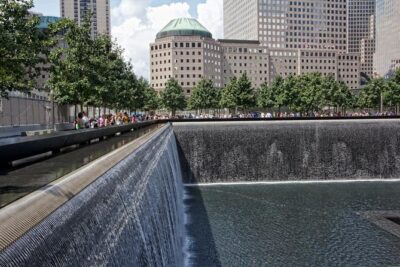
Near the National 9/11 Memorial and Museum, the tour stops at the former site of Madame Restell’s business. Her story adds a very different kind of outlaw to the tour. Instead of focusing only on pirates or male political operators, the route brings in a woman whose business and public reputation touched some of the city’s most heated social questions.
You spend about seven minutes here. The location is striking because the modern memorial district carries such a solemn tone, while the story belongs to an earlier New York filled with sharp arguments over money, morality, and personal choice.
This contrast is one of the tour’s strengths. You are constantly looking at present-day Lower Manhattan while hearing about people and disputes that have disappeared from the usual sightseeing script. The drawback is that the former site may not offer much visible evidence of the old business. The value comes mainly from the explanation and the setting, not from entering a preserved building.
A former home tied to New York’s first Black millionaire
The next stop, also near the National 9/11 Memorial and Museum, marks the former home of New York City’s first Black millionaire. It lasts about six minutes.
This is an important inclusion because it widens the story beyond familiar pirates and white male power brokers. The tour shows that Black New Yorkers were also part of the city’s early economic life and social structure, even when standard accounts leave them out.
You will get more from this stop if you pay attention to the connection between place and status. A home in this part of Manhattan is not just an address. It suggests access to money, influence, and the city’s expanding commercial world.
Again, the stop is short. You should expect a focused account rather than a full biography. Still, it helps the tour avoid becoming a simple collection of criminal tales. The larger subject is power, and that includes people who gained it through routes often ignored in standard tours.
More New York City Tours:
- NYC: SUMMIT One Vanderbilt Tickets
★ 4.7 · 51,195 reviews - NYC: Empire State Building Tickets – Observatory & Museum
★ 4.7 · 25,757 reviews - New York City: Statue of Liberty & Ellis Island with Ferry
★ 4.6 · 18,683 reviews - New York City: American Museum of Natural History Ticket
★ 4.5 · 15,447 reviews
Trinity Church and the trial that changed the press
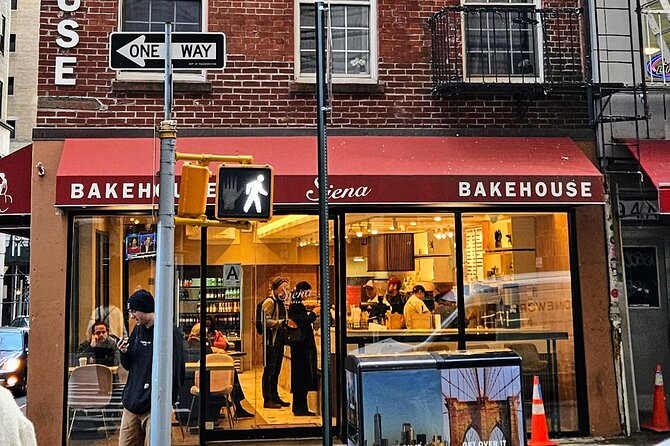
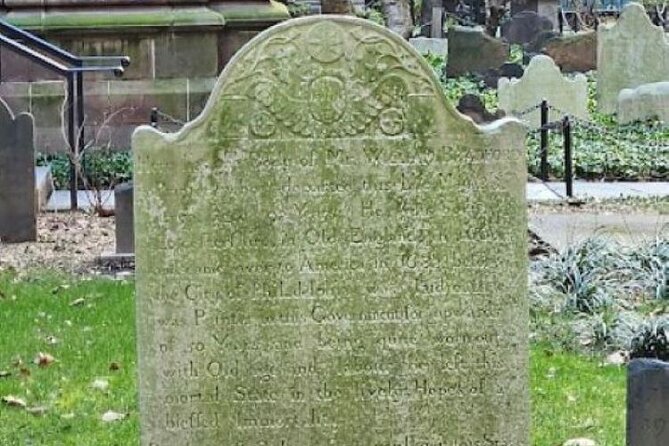
At Trinity Church, the story shifts from questionable characters to a legal battle with lasting importance. Here you learn about the trial that established the Freedom of the Press.
The church gives this part of the tour a strong setting. You are standing in one of Lower Manhattan’s most recognizable historic spaces while hearing how printed words, public criticism, and legal authority collided in early New York.
The stop takes about six minutes. That is enough time to explain why the trial mattered, but not enough for a long discussion of legal history. I like this part because it shows that the city’s rough politics produced more than scandals. They also helped shape principles that still affect public debate.
Do not expect entry into Trinity Church as part of the stated experience. The tour’s stops are outdoor points, and admission is free. You are there for the location and the story.
Wall Street, from the 1920 bombing to the Manhattan Company
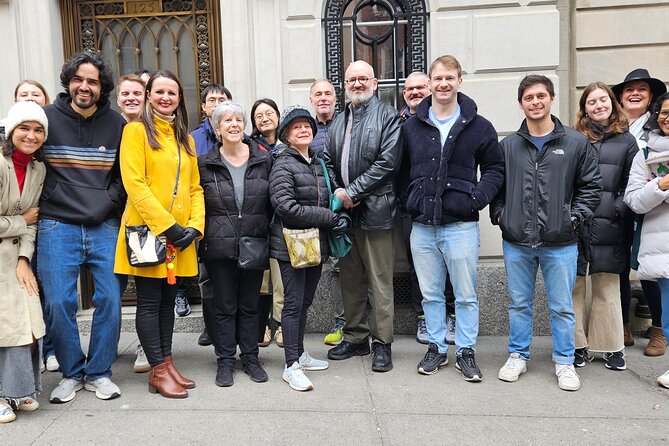
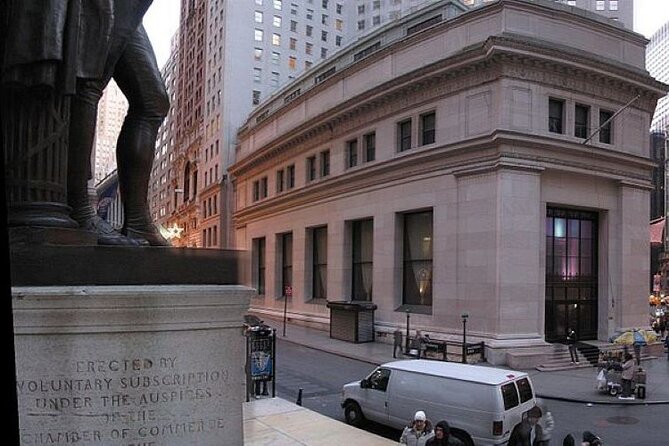
Wall Street receives two separate stops, each lasting about seven minutes. The first covers the site of the 1920 Wall Street bombing.
That story fits the tour’s theme of a city built amid conflict and danger. Wall Street is now shorthand for global finance, but this stop reminds you that money centers can also be targets. The physical setting is familiar, yet the event changes how you read the street around you.
The second Wall Street stop concerns the Manhattan Company, including its role in New York’s water supply and the formation of a bank. This is one of the most useful pairings on the route. You move from a violent attack to the quieter power of institutions, infrastructure, and finance.
The Manhattan Company story helps explain how basic public needs and private business could overlap. Water supply and banking may sound like separate subjects, but in a growing city they were closely tied to influence and profit. This is where the tour’s title makes the most sense: the people building New York were not always working in neat civic categories.
Because the tour moves quickly, listen for the main point of each Wall Street story. The setting is busy, and you may be more distracted here than at the quieter stops.
The Brooklyn Bridge from the East River waterfront
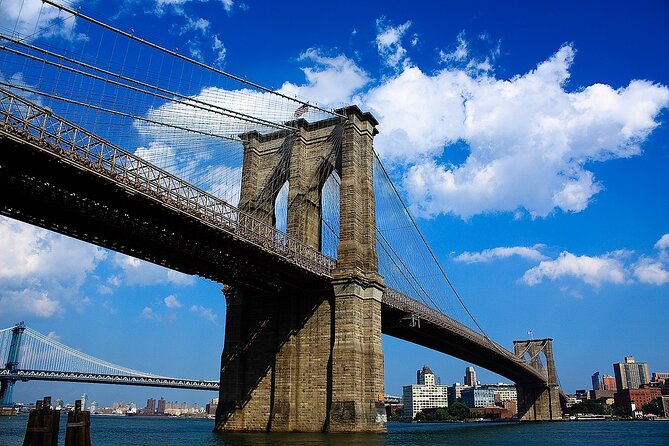
At the East River Waterfront Esplanade, you get a bird’s-eye view of the Brooklyn Bridge and hear about its corrupt beginnings. The view provides a welcome change after the tighter streets around Trinity Church and Wall Street.
This stop lasts about seven minutes, but the visual reward is greater than the clock suggests. You can look across the river while hearing about the bridge as a project shaped by ambition, money, and improper dealings. It is a good reminder that celebrated monuments often have less tidy origins than their finished stonework suggests.
Bring your attention to the view, but do not expect a long photography session. The itinerary includes scheduled photo stops, and this is the clearest one, yet the route still has many stories to cover. You will have time to take pictures, not unlimited time to frame every angle.
The First Precinct and the politics of police corruption
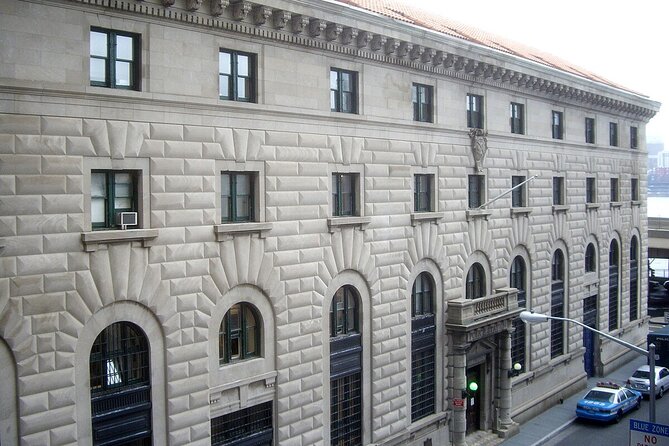
The First Precinct stop turns to police corruption in the 1970s. It lasts about seven minutes and brings the tour’s theme into a more recent period.
This is a smart choice because it shows that shady power did not disappear with the colonial era. New York’s problems with influence, money, and official misconduct continued into living memory. The stop also gives the tour a broader time range, from early privateers to modern city institutions.
You may find this section especially useful if you have seen the Financial District only as a business center. The area has also been shaped by law enforcement, political pressure, and public trust. The story adds another layer to the streets around you without requiring a museum visit.
As with the other stops, the discussion is short. If police history is your main interest, you may want a more specialized experience. Here, it is one chapter in a much wider story.
Hanover Square and Captain Kidd’s New York
At Hanover Square, the tour explores Captain Kidd’s connection to the colony. Kidd is perhaps the route’s most obvious pirate figure, but the point is larger than a pirate anecdote.
You learn how a local resident and criminal had a hand in the development of the colony. That connection shows how early New York could blur the line between respectable commerce and criminal enterprise. A person might be treated as useful, dangerous, or respectable depending on the moment and the interests of people in power.
Hanover Square also helps you picture the older city beneath today’s Financial District. Modern office buildings make it hard to sense the scale and uncertainty of colonial New York. A well-told story can restore some of that tension, even when little of the earlier physical setting remains.
This stop takes about seven minutes. It is a strong choice for anyone drawn to pirates, but the tour does not stop there.
Finishing at White Horse Tavern on Bridge Street
The final stop is the White Horse Tavern on Bridge Street, where you hear about the home of New Amsterdam law-breakers who later helped create New York’s elite. That ending neatly brings the tour’s main idea together.
The people who gained power were not always separate from the people who broke rules. In a young commercial colony, the same figures could move between questionable dealings, local influence, and elite status. The final story gives the tour a clear closing thought: New York’s establishment was built by people who often operated outside polite convention.
The tour ends at White Horse Tavern, 25 Bridge Street, in the Financial District. From there, you are close to Bowling Green, served by the 4 and 5 trains, and to South Ferry and Whitehall Street, served by the 1, R, and W trains. Ferry services are also nearby.
That makes the finish practical for continuing your afternoon or evening. You can head toward the waterfront, subway connections, or nearby Lower Manhattan sights without crossing back to the starting point.
What $40 gets you
At $40 per person, this is not the cheapest way to walk around Lower Manhattan. You can see Wall Street, Trinity Church, the Oculus, and the waterfront without paying an admission fee. The value comes from the research, structure, and connections between places that otherwise look unrelated.
You are paying for about two hours of guided interpretation across 11 stops, not for museum entry or a large attraction ticket. I think the price is fair if you enjoy unusual city history and would otherwise spend time trying to piece these stories together yourself.
The small group improves that value. With a maximum of 15 people, you should have a better chance of hearing the guide than on a large bus or crowded mass-market walk. It also suits the tour’s conversational style.
Still, price-conscious visitors should know what they are buying. This is a story-focused walking experience. If you mainly want interiors, long photo breaks, or access to historic buildings, the $40 may feel less compelling.
Who should book this tour?
I would choose this tour if you have already seen the main Lower Manhattan landmarks and want a fresh way to understand them. It also suits repeat visitors, history fans, curious first-time visitors, and anyone who prefers odd details to a standard greatest-hits tour.
The tour works particularly well for people who enjoy pirates, financial scandals, press freedom, criminal biographies, and the messy links between public life and private profit. Krombie’s lively delivery should appeal to you if a formal lecture sounds dull.
I would hesitate if you need a slow pace, frequent sitting, or long visits inside museums and churches. The exact route requires attention and movement between stops, and the schedule leaves little room for lingering. Service animals are allowed, and most people can participate, but the provided information does not specify the walking distance or the availability of seating.
Book with the weather in mind, since the listed stops are outdoor locations. You can cancel for a full refund up to 24 hours before the 3 p.m. start time. Changes or cancellations made later are not accepted for a refund.
FAQ
How long is The Outlaws Who Built NYC tour?
The experience lasts approximately two hours.
What time does the tour start?
The tour starts at 3 p.m.
Where does the tour begin?
The meeting point is outside the entrance of the M Social Hotel New York Downtown, formerly the Millennium Downtown New York, at 55 Church Street.
Where does the tour end?
The tour ends at White Horse Tavern, 25 Bridge Street, in the Financial District.
How large is the tour group?
The tour has a maximum of 15 people.
Is the tour offered in English?
Yes. The tour is offered in English, and a mobile ticket is available.
Should you book The Outlaws Who Built NYC?
Book it if you want the Financial District explained through its pirates, criminals, press battles, corrupt officials, and ambitious business figures. The route is compact, the subject is unusual, and the small group gives Krombie’s humor and research room to work.
Skip it if you want a relaxed sightseeing walk with long stops or indoor access. For $40, you are buying sharp storytelling and connections between overlooked places, not a ticketed attraction. For the right history-minded visitor, that is exactly the point.
Recently added in New York City
- Brooklyn: 3-Hour Williamsburg Bites Food Tour★ 4.5 · 58 reviews
- World Trade Center, 911 and Ground Zero Walking Tour★ 5.0 · 4 reviews
- Welcome to New York: A Tour of Taylor Swift Hotspots★ 5.0 · 11 reviews
- Your NYC Story in Photos: Custom 2-Hour Tour & Photo Shoot★ 4.9 · 60 reviews
- Wall Street: The birth place of NYC in French/English tour★ 5.0 · 6 reviews
- Washington from New York in Spanish★ 5.0 · 4 reviews
- NYC: Empire State Building Sunrise Experience Ticket★ 4.6 · 55 reviews
- New York City: Walk This Way Harlem Hip Hop Walking Tour★ 4.8 · 42 reviews
Wall Street and Financial District Tours, compared.
NYC City Tour: Statue of Liberty, 9/11 Memorial, Wall Street
Read our review →
Wall Street Insider Tour with a Finance Professional
Read our review →Wall Street Insider Tour with a Finance Professional
Read our review →
Manhattan Group Tour Including Wall Street and 911 Memorial
Read our review →
Wall Street Tour with 9/11 Memorial and Statue Ferry
Read our review →
Wall Street and Financial District Walking Tour
Read our review →
Wall Street and Financial District Walking Tour
Read our review →Browse the lists this tour appears in