
Reviewed · HARLEM TOURS
The Soul of Harlem Walking Tour in New York
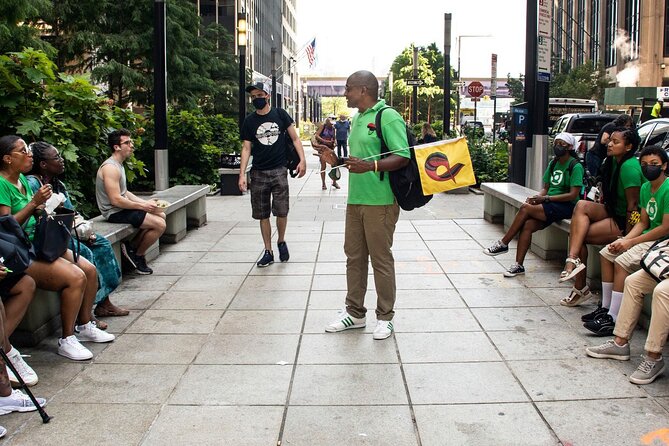
Harlem comes into focus block by block on this small-group walk, from the Metro-North platform at 125th Street to the Apollo Theater. Local guide Larry connects music, politics, architecture, and daily life, giving you more than a quick look from a sightseeing bus.
I like the personal scale, with no more than 10 people, and I like the way the tour links famous places to lesser-known buildings, murals, and neighborhood stories. The main consideration is pace: the walk covers less than a mile, but the 2.5 hours are packed with talk, stops, and questions, so this is a history walk rather than a fast sightseeing loop.
Key points to know before you book
- Larry’s local connection: Larry grew up in Harlem and leads the tour with firsthand familiarity and a warm, conversational style.
- A short route with a long story: The walk is less than a mile, but the many stops and discussions fill about 2.5 hours.
- Big landmarks and smaller details: You see the Apollo Theater, Schomburg Center, Langston Hughes House, murals, brownstones, and important civic buildings.
- Harlem beyond the postcard: The route covers arts, jazz, civil rights, architecture, changing demographics, and neighborhood life.
- Small groups matter: The maximum group size is 10, making it easier to ask questions and keep a comfortable pace.
- Plan around the jazz museum: The National Jazz Museum in Harlem is open only Thursday through Saturday.
Why this Harlem walk feels different
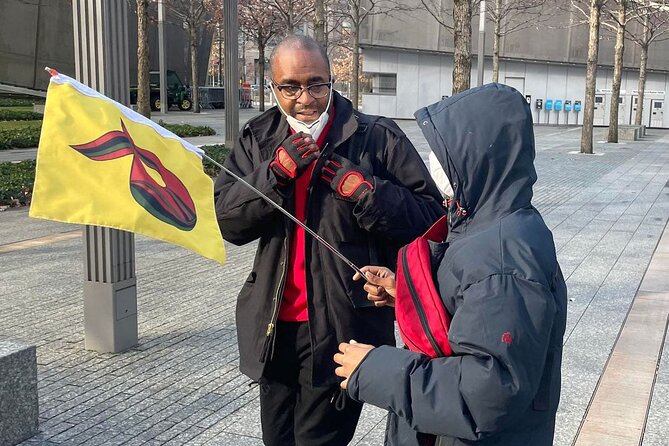
Many first visits to New York stay below 110th Street. That means missing a neighborhood central to African American art, literature, music, politics, and the wider story of New York City.
This tour begins at 85 East 125th Street, near the Metro-North station, and ends by the Apollo Theater. You are not simply checking off landmarks. You are walking through a working neighborhood while Larry explains how its buildings and institutions fit together.
That local setting matters. Harlem is not a museum district with every story neatly labeled. A handsome building may have several chapters. A mural may connect to a political movement, a musician, or a community memory. Larry’s role is to give those details a place in the larger story.
The tour also reaches beyond the usual Harlem Renaissance headline. You will hear about Dutch-era New York, changing populations, civil rights, artists, jazz musicians, commerce, and the people who shaped the neighborhood over time. That broad reach is one reason the walk feels substantial despite its short distance.
More Harlem Tours:
- NYC Highlights Tour: Bronx, Brooklyn, Harlem, Queens & Coney
★ 4.5 · 2,846 reviews - NYC: Contrasts Tour of Harlem, The Bronx, Queens & Brooklyn
★ 4.5 · 2,167 reviews - NYC: Harlem Hallelujah! Gospel Wednesday Concert
★ 4.7 · 1,638 reviews
Starting above 125th Street at Park Avenue
The first stop is the Metro-North train station platform on Park Avenue. From here, you get a view toward famous 125th Street and see artwork describing Harlem’s past.
This is a smart place to begin. The station gives you an immediate sense of movement and connection, while 125th Street provides the visual anchor for the rest of the walk. Larry can establish the area’s geography before leading you into the surrounding streets.
The stop lasts about 10 minutes and does not require an admission ticket. Wear comfortable shoes, but do not expect a strenuous hike here. The route is short, and the challenge is mainly standing, listening, and taking in a steady flow of information.
The long central walk through Harlem
Most of the tour takes place in Harlem itself, with about 1 hour and 20 minutes devoted to streets, buildings, and stories. This is where the experience earns its name.
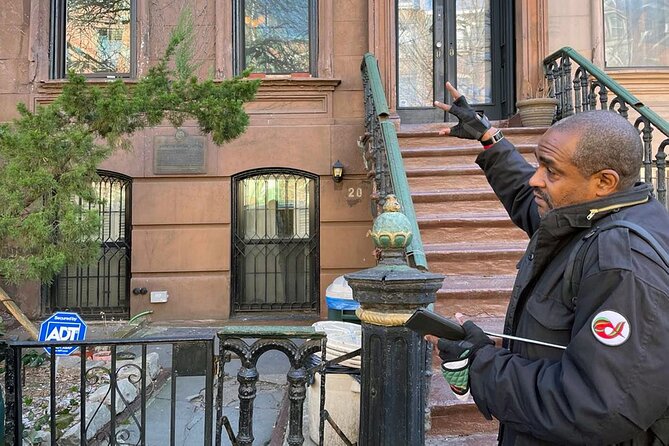
You will discuss the Metro-North station, Astor’s Row, the building known as the White House in Harlem, the YMCA, Lenox Terrace, Harlem Hospital, the Harlem State Office Building, and Blumsteins Department Store. The last of these carries a particularly serious civil rights connection, as it was the place where Martin Luther King Jr. nearly lost his life.
You will also see several murals and walk through streets lined with historic homes and buildings. The value here is not just visual. Harlem’s architecture helps show how the neighborhood developed, who lived there, and how public life changed over time.
The central section is also the best chance to understand Harlem as a living community rather than a collection of famous names. You will walk at street level, see people going about their day, and gain a sense of how institutions, businesses, art, and housing sit beside one another.
Larry’s style is a major part of the experience. He uses humor, welcomes questions, and adjusts to the group. That matters on a talk-heavy walk. Instead of throwing facts at you, he keeps the discussion connected to what you are seeing.
Several people who took the tour described the pace as manageable, with breaks along the way. One family noted that the walk felt leisurely even though the full experience lasted about 2.5 hours. That is useful if you worry about a long city walk: the distance is modest, but you should be ready to stop often and listen.
Schomburg Center: a serious stop for Black culture
The Schomburg Center for Research in Black Culture receives about 15 minutes. It is part of the New York Public Library system and focuses on African American, African Diaspora, and African experiences.
Even a short stop here adds weight to the tour. The center is not simply another Harlem landmark. It represents the preservation of books, records, photographs, art, and other material tied to Black life and culture.
The visit is described as a discussion stop, not a long research-library visit. You should not expect an extended indoor museum session. Instead, Larry places the center within Harlem’s role as a major site of study, memory, and cultural work.
This is one of the places where the tour’s broad approach pays off. You move from streets and buildings into the institutions that preserve the ideas and stories behind them.
More NYC Walking Tours:
- SoHo, Little Italy, and Chinatown Walking Tour in New York
★ 5.0 · 3,153 reviews - Secrets of Grand Central Station Walking Tour New York City
★ 5.0 · 1,796 reviews - Greenwich Village Walking and Food Tasting Tour
★ 5.0 · 1,572 reviews - Artistic, Alternative Greenwich Village Walking Tour
★ 5.0 · 971 reviews
Langston Hughes House and the Harlem Renaissance

The Langston Hughes House is a 10-minute stop. Hughes was a major figure in the Harlem Renaissance, and his work receives considerable attention during the walk.
The house gives the literary side of Harlem a physical address. That makes the period easier to grasp than a list of authors and dates. You can connect Hughes to the streets around you and see how the neighborhood’s creative life was rooted in actual homes, gathering places, and local institutions.
The tour does not treat the Harlem Renaissance as a frozen period. Larry connects its writers and artists with the wider cultural identity of Harlem, including music, politics, and the community that supported creative work.
If literature is your main interest, this stop may leave you wanting more time. Ten minutes is enough for context, but not enough for a full author biography or an extended interior visit. Still, it is a useful part of a larger story.
Jazz, photographs, and the National Jazz Museum
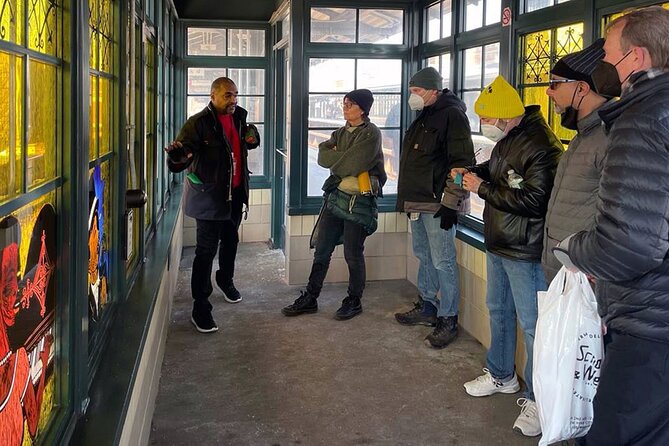
The National Jazz Museum in Harlem is another 10-minute stop. The museum is open only Thursday through Saturday, so check the day of your tour if this part matters to you.
The discussion includes jazz musicians linked to the Harlem Renaissance, current exhibits, vintage jazz photographs, maps, and books. This adds a visual and musical layer to the walking route.
The museum stop is especially useful if you know Harlem mainly through the Apollo Theater. It shows that the neighborhood’s jazz story is wider than one famous stage. Musicians, clubs, writers, audiences, and local institutions all form part of the picture.
Because the stop is short and the museum has limited opening days, treat it as an introduction rather than a full museum visit. If you are a serious jazz fan, you may want to return separately when the museum is open. The tour gives you the context to make that visit more meaningful.
The Apollo Theater and Harlem’s public stage
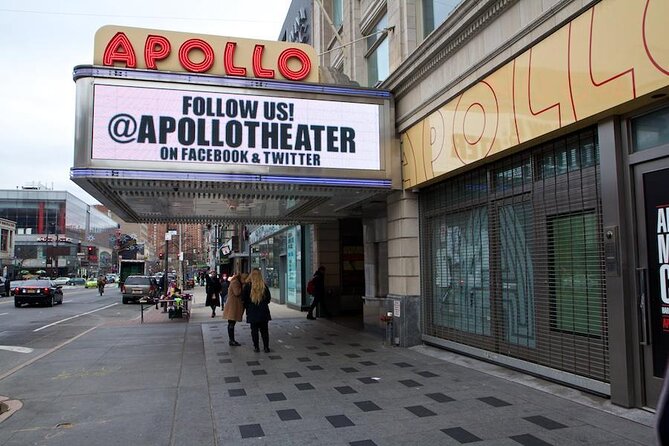
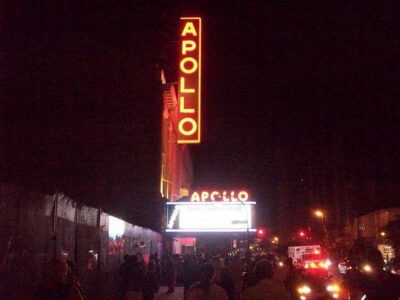
The Apollo Theater is the final major landmark, with about five minutes devoted to the building and its Walk of Fame. You will discuss the many performers associated with the theater and its role in Harlem.
Five minutes may sound brief, but the Apollo works well as a closing point. By this stage, you have heard about writers, musicians, businesses, civil rights, architecture, and neighborhood change. The theater gathers those strands into one recognizable place.
The Apollo is famous, but the tour helps prevent it from becoming a single-photo stop. The discussion puts the theater in the context of Harlem’s entertainment industry and the performers who built its reputation.
The tour ends at the Apollo Theater, at 233 West 125th Street, 3rd Floor, between Adam Clayton Powell Jr. Boulevard and Frederick Douglass Boulevard. That central location makes it easy to continue exploring after the walk, though the tour itself does not include any additional activity.
The Theresa Hotel and the final Harlem stories
Before the Apollo, the route passes the Theresa Hotel at 2082 Adam Clayton Powell Jr. Boulevard. The stop lasts about five minutes.
The Theresa is included for its role in Harlem’s past. It is a quick exterior discussion rather than an extended visit, but that is consistent with the tour’s method. Larry uses buildings as prompts for stories about the people, events, and social forces connected to them.
This is the kind of stop that can be easy to miss on your own. You might walk past the building without knowing why it matters. A guide adds the context that turns an ordinary-looking address into part of Harlem’s civic and cultural record.
How much walking and talking to expect
The total duration is about 2 hours and 30 minutes. One especially useful detail is that the route is less than a mile, so the physical distance is not the main issue.
You will spend much of the time standing at stops, looking at buildings, and listening to Larry explain what you are seeing. The tour includes breaks and moves at a leisurely pace, according to the experience described by participants.
That makes it a good choice if you prefer depth over speed. It is less suitable if you want to cover Harlem quickly or spend most of the time inside museums. The tour is built around conversation in the streets.
The group maximum is 10 people. That is small enough for a more direct exchange with Larry and makes it easier for him to notice if someone needs a pause or has a question. It also means availability can be limited, and the experience is often booked about 24 days ahead. If your schedule is fixed, reserve early.
The tour is offered in English and uses a mobile ticket. It is near public transportation, service animals are allowed, and most people can take part. No admission fees are listed for the stops, though the focus is on viewing and discussing the sites rather than spending long periods inside them.
Is $60 a fair price?
At $60 per person, this is not the cheapest way to see Harlem. You can walk along 125th Street for free, and several landmarks can be viewed from the outside without paying for a tour.
The question is what you want your $60 to buy. Here, you are paying for a small group, about 2.5 hours with a local guide, a carefully connected route, and interpretation of places that are easy to pass without context. The short distance also means the price is not based on covering a huge area. It is based on the amount of explanation.
I see the value strongest for a first visit to Harlem, especially if you want to understand how music, literature, civil rights, architecture, and local life connect. It is also worthwhile for New Yorkers who have visited Harlem but never had its stories organized into one walk.
The price is less compelling if you mainly want indoor museum time, a food tour, live music, or a fast list of famous addresses. Those are different experiences. This one is a guided neighborhood lesson with a human pace.
What Larry adds to the experience
Larry receives consistent praise for his warmth, humor, patience, and ability to keep a group engaged. Those qualities matter because the tour contains a lot of information.
He grew up in Harlem, and that personal connection gives the walk a friendly feel. One family described it as walking with an uncle, which captures the tone better than a formal lecture. He also makes room for questions and adjusts to the needs of the group.
The strongest feature is his ability to connect past and present. You do not just hear about famous people from decades ago. You also consider how Harlem changed, how different communities shaped it, and how the neighborhood’s legacy remains visible now.
That does not mean the tour is casual or light. It covers painful events, inequality, politics, violence, and social change along with art and music. Larry’s humor helps the walk remain approachable without turning serious subjects into entertainment.
Who should take this tour?
I would choose this walk if you want:
- A first look at Harlem with historical context
- A small group rather than a large bus or crowded sightseeing route
- Stories about Black art, music, literature, and civil rights
- A local guide who can answer questions
- A manageable walk with frequent stops
- A starting point for later visits to Harlem museums, restaurants, or music venues
Families can do well here, including groups with older children and teenagers, since the route is short and the guide uses storytelling rather than a dry list of dates. Couples and solo visitors also benefit from the small group format.
You should think twice if you dislike standing and listening, need a very fast itinerary, or want guaranteed access to every interior site. The National Jazz Museum’s limited opening days are another practical point. The experience requires good weather, so a rain plan matters. If poor weather cancels the tour, you are offered another date or a full refund.
Free cancellation is available until 24 hours before the start time. Within 24 hours, the payment is not refunded, and changes are not accepted.
Final verdict: book it for the stories, not just the sights
I recommend The Soul of Harlem Walking Tour if you want to understand Harlem through its streets and local institutions rather than simply photograph the Apollo Theater.
The best reason to book is Larry’s approach. He brings together architecture, jazz, literature, civil rights, and neighborhood life in a route that feels personal and manageable. The most important limitation is that the tour is discussion-heavy and includes only brief stops at most sites.
Book it early if you have fixed dates, wear comfortable shoes, and allow the full 2.5 hours. If you want a thoughtful introduction to Harlem, the $60 price is fair. If you want a museum visit or a music performance, use this walk as a starting point and plan those separately.
FAQ
Where does The Soul of Harlem Walking Tour begin?
The tour begins at 85 East 125th Street, New York, near the Metro-North train station and Park Avenue.
Where does the tour end?
It ends at the Apollo Theater, 233 West 125th Street, 3rd Floor, between Adam Clayton Powell Jr. Boulevard and Frederick Douglass Boulevard.
How long does the walking tour last?
The experience lasts approximately 2 hours and 30 minutes.
How far do you walk?
The route is less than a mile, but it includes many stops and discussions, so the full experience lasts much longer than the walking distance suggests.
What language is the tour offered in?
The tour is offered in English.
Who leads the tour?
The guide is Larry, a local author who grew up in Harlem.
How large is the group?
The tour has a maximum of 10 participants.
Is the National Jazz Museum always open during the tour?
No. The National Jazz Museum in Harlem is open only Thursday through Saturday.
Are admission tickets included for the stops?
The listed stops have no admission ticket charge. The experience focuses on viewing and discussing the sites, and the tour details do not promise extended admission to every interior.
Can I cancel for a refund?
Yes. You can cancel at least 24 hours before the start time for a full refund. Cancellations or changes made within 24 hours are not accepted for a refund.
What happens if bad weather cancels the tour?
Because the experience requires good weather, a cancellation caused by poor weather gives you the choice of another date or a full refund.
Recently added in New York City
- Personalize Sightseeing Tour★ 5.0 · 92 reviews
- NYC: Midtown Hands-On Bagel Baking Class★ 5.0 · 12 reviews
- Central Park Pedicab Tour with Guide★ 5.0 · 63 reviews
- Central Park Pedicab Guided Tour★ 5.0 · 17 reviews
- Photographer, Professional Photo shoot – New York★ 5.0 · 16 reviews
- Official Central Park Pedicab Ride ( UP TO 3 PERSONS )★ 5.0 · 4 reviews
- JFK or LGA package only (Round trip transfer plus VIP Contrasts)★ 5.0 · 3 reviews
- Official Central Park Pedicab Tours★ 5.0 · 35 reviews
Harlem Tours, compared.

NYC Highlights Tour: Bronx, Brooklyn, Harlem, Queens & Coney
Read our review →
Contrasts Tour of Harlem, The Bronx, Queens & Brooklyn
Read our review →
Browse the lists this tour appears in