

Reviewed · NYC SKYLINE AND ARCHITECTURE TOURS
The Story Behind NY’s Evolving Skyline An Architectural Journey Through History
New York’s skyline is not just a collection of tall buildings. It is a record of trade, immigration, politics, technology, and changing ideas about how a city should work. Kitt Garrett’s nearly two-hour architectural journey helps you read that record, from Castle Clinton’s waterfront setting to the new towers of Hudson Yards.
I like the clear historical timeline, which moves from Georgian and Federal buildings through Gothic Revival, Italianate, Renaissance Revival, and modern design. I also like the flexible format: you can watch the tour anywhere, then use the downloadable document to explore New York in person.
The main consideration is that this is not a live walking tour with a guide beside you. You need to manage your own route, pace, and attention, and the nearly two-hour presentation may feel dense if you are looking for a quick introduction.
Key points to know before you book
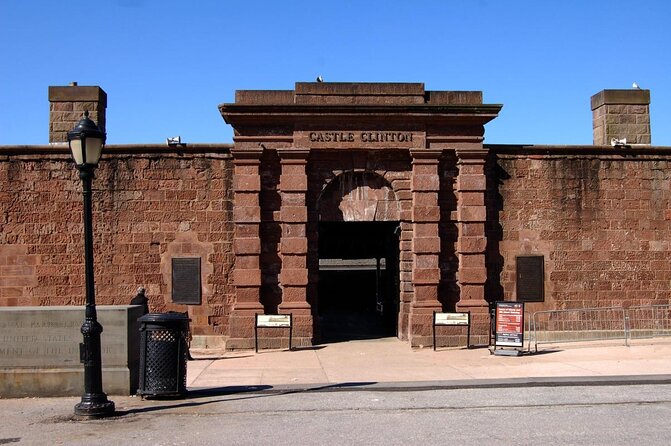
- Castle Clinton begins the story: The tour starts at one of New York Harbor’s historic landmarks and uses the waterfront to explain the city’s growth.
- The skyline becomes a history lesson: You learn how architectural styles reflect different periods, materials, needs, and ambitions.
- Kitt Garrett leads the presentation: Her methodical, well-organized approach focuses on buildings, architects, neighborhoods, and the events around them.
- You can watch from anywhere: The video format works for visitors planning a trip, locals, and former New Yorkers living elsewhere.
- A downloadable PDF adds practical value: Use addresses and location notes while walking around the city on your own.
- Hudson Yards provides a modern finish: The route ends at 20 Hudson Yards, with shops, restaurants, and restrooms nearby.
A city told through its buildings

The best idea here is simple: look up, then ask why a building looks the way it does. A stone facade, a pointed arch, a decorative cornice, or a glass tower is not just decoration. Each choice connects to a period of construction, a building material, a social need, or a new technology.
Garrett organizes the story around New York’s development over roughly 400 years. You begin with the period after Henry Hudson entered the harbor and consider how a small Dutch settlement became a major center of trade and commerce. From there, the presentation follows the city’s changing appearance and the forces that pushed it outward and upward.
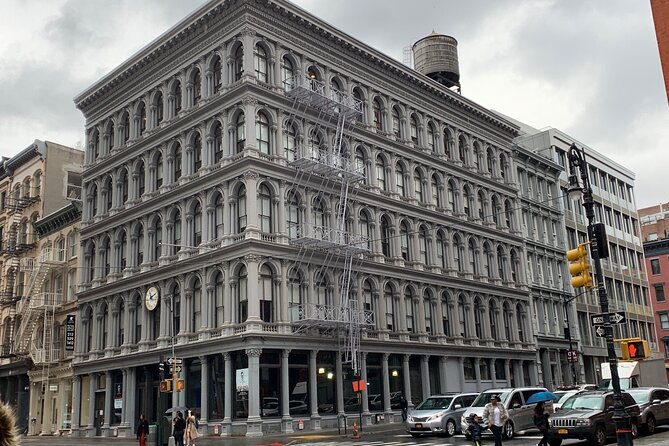
This approach is useful because New York can feel visually chaotic at first. A block may contain a church, a cast-iron commercial building, a Beaux-Arts landmark, a postwar apartment tower, and a glass office building. The tour gives you a system for sorting what you see.
You are not expected to become an architect in two hours. Instead, you learn enough to recognize broad styles and notice details that are easy to miss when you are rushing between attractions.
More NYC Skyline and Architecture Tours:
- Statue of Liberty & NYC Skyline Cruise – Freedom Liberty Tour
★ 4.0 · 1,499 reviews - Manhattan Architecture Yacht Cruise
★ 5.0 · 1,395 reviews - NYC: Dyker Heights Christmas Lights & Skyline View Bus Tour
★ 4.7 · 1,192 reviews
What you learn about architectural styles
One of the strongest parts of the experience is its wide sweep of architectural design. The presentation covers Georgian, Federal, Greek Revival, Romanesque Revival, Italianate, Renaissance Revival, Gothic Revival, Queen Anne, Neo-Classical, and modern architecture.
That list may sound academic, but the tour’s value comes from connecting styles to the city around them. You learn to consider the shape of a building, its ornament, its materials, and the period when it was built. This gives you a practical way to compare neighborhoods instead of seeing every older building as simply historic.
The focus on materials is especially useful. A building’s stone, brick, iron, or glass can tell you something about its age and purpose. Details around windows, entrances, rooflines, and upper stories also become clues. You begin to notice how architects used decoration to signal status, function, or civic pride.
Garrett’s presentation is described as methodical and carefully arranged. That matters with a subject this broad. Without a clear order, architectural history can turn into a pile of names and dates. Here, the goal is to connect buildings to the people and events that shaped them.
Starting at Castle Clinton and New York Harbor
Castle Clinton National Monument is an apt starting point. Located at the southern end of Manhattan, it places you beside the harbor where New York’s commercial and civic story took shape.
The opening section uses the waterfront to explain how trade helped drive the city’s growth. That context is important because New York’s architecture did not develop in isolation. Its buildings were tied to shipping, business, government, transportation, housing, and the steady arrival of people and money.
The stop itself is listed as about 10 minutes, but the full presentation continues far beyond that opening location. Think of Castle Clinton as the first chapter rather than the entire walking route.
You can visit the monument in person, or simply use the video as a virtual starting point. That flexibility is one of the tour’s practical strengths. If you are not in New York yet, you can prepare before your trip. If you live elsewhere, you can still follow the story without being physically present in the city.
From old neighborhoods to modern towers
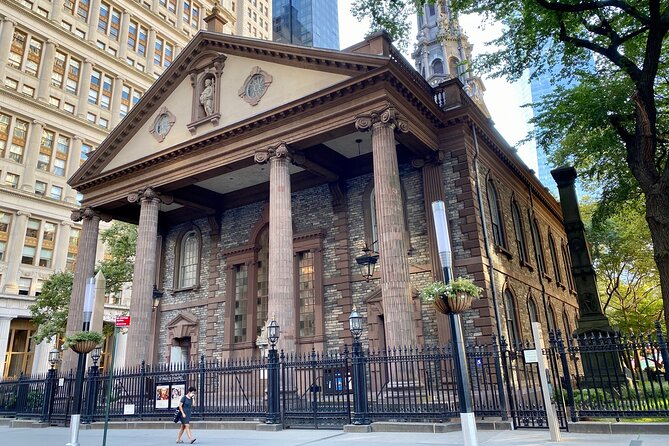
The tour does not treat skyscrapers as the only important part of New York architecture. It places them beside landmarked neighborhoods and older structures, showing how the city has repeatedly changed while retaining traces of earlier periods.
That balance is valuable. New York’s famous skyline often gets all the attention, but the city’s character also comes from its lower buildings, street walls, parks, and surviving historic districts. The presentation asks you to consider how older neighborhoods and new construction exist side by side.
You also look at the architects who influenced the city’s changing appearance. The focus is not only on famous names. The larger question is how individual design choices fit into a city shaped by economic pressure, public rules, available materials, and growing demand for space.
For me, the most useful lesson is that architecture reflects compromise. A building may be attractive, practical, profitable, symbolic, or all four at once. The tour helps you see those pressures instead of treating buildings as isolated works of art.
More Historical Tours in New York City:
- New York City: American Museum of Natural History Ticket
★ 4.5 · 15,447 reviews - NYC: Starship Landmark 90 Minute Sightseeing Cruise
★ 4.6 · 3,666 reviews - Starship Landmark 90 Minute Sightseeing Cruise
★ 4.5 · 2,073 reviews - American Museum of Natural History Admission Ticket
★ 4.0 · 1,931 reviews
Why zoning and air rights matter

The experience also moves into urban planning, including zoning and air rights. These are not always easy topics, but they explain why New York’s towers rise in particular places and why some neighborhoods retain a lower profile.
Zoning affects how much can be built, how tall a structure may be, and how new buildings relate to streets and nearby properties. Air rights, a less familiar idea for many people, can affect development by allowing building potential to be transferred or used above a property.
You do not need a planning degree to benefit from this section. It gives you a better way to understand why the skyline changes unevenly. Two nearby blocks may have very different building heights because their rules, ownership patterns, or development histories differ.
The planning discussion also brings the subject back to daily life. New York is not only a collection of buildings to admire. People work, live, commute, shop, and relax among them. Urban planning affects parks, public transportation, housing, commercial streets, and the feel of a neighborhood.
The waterfront’s move from industry to recreation
Another useful thread is the changing waterfront. The presentation follows the shift from industrial edges toward recreational and mixed-use destinations.
For decades, parts of New York’s waterfront served shipping, manufacturing, storage, and other working purposes. As those uses changed, some areas opened to parks, public spaces, housing, restaurants, shops, and new destinations.
The tour presents this change neighborhood by neighborhood rather than as one simple citywide story. That is a good distinction. Waterfront redevelopment can create attractive public places, but it also raises questions about access, development, and the needs of people who already live and work nearby.
The discussion of public and private partnerships adds another layer. New destinations often require investment from both government and private developers. That can bring new parks and services, but it also shapes what gets built and who benefits. Even in a short overview, this makes the modern skyline feel connected to public decisions, not just private ambition.
Ending at 20 Hudson Yards
The stated endpoint is 20 Hudson Yards, a useful place to finish because it represents New York’s newest phase of large-scale development. It also gives the presentation a clear contrast with Castle Clinton.
You begin near the historic harbor and end in a recently developed district filled with modern towers, retail, dining, and public spaces. The change between those two points captures the central idea of the experience: New York keeps rebuilding itself while carrying its earlier layers forward.
20 Hudson Yards is also practical as a stopping point. You will find shopping, restaurants, and restrooms nearby, which makes it a sensible place to pause after watching the presentation or following the related route.
Do not expect the tour to function like a guided tour inside every building along the way. Its purpose is to explain the city’s architectural evolution and give you tools for looking at buildings yourself.
A virtual tour that works for locals too
You do not need to be a first-time visitor to get value from this experience. The material is designed to work for people who already know New York and want a sharper understanding of the streets they pass each day.
The strongest praise centers on how much the presentation offers to longtime residents and former New Yorkers. A person who has lived in Manhattan for many years can still gain a new way to read familiar neighborhoods. That is a good sign for repeat visitors, too.
Garrett’s enthusiasm is part of the appeal, but the organization matters just as much. The presentation is described as easy to follow, carefully researched, and attentive to small architectural details. It also includes lesser-known subjects, such as air rights, that many general city tours skip.
The downloadable PDF is more than a souvenir. It can serve as a field guide when you walk through New York later. You can keep the location information on your device, check addresses, and use the presentation as a prompt to look more closely at facades, rooftops, entrances, and street layouts.
Price, timing, and group value
The price is $25 per group of up to 15 people. That makes the experience a particularly good value for a family, a small private group, or a group of friends who can watch together. The per-person cost becomes very low when several people share the booking.
The full presentation lasts about 1 hour and 58 minutes. That is long enough to offer real substance, but you may prefer to divide it into two sittings if you are watching before a busy trip.
The mobile ticket keeps the format simple. You do not need to coordinate a meeting time with a live guide, and you can watch from outside New York. At the same time, you give up the social energy and spontaneous questions that come with a live walking tour.
The activity is private, so only your group participates. Most people can take part, and service animals are allowed. It is also near public transportation when you use the related New York locations.
One important point: the purchase is non-refundable and cannot be changed for any reason. Book only when you are sure the format and timing suit you.
Who should choose this experience
I would recommend this tour to anyone who enjoys learning how a city developed through its buildings. It is especially well suited to:
- First-time visitors who want context before sightseeing
- Repeat visitors who feel they have only scratched the surface
- New Yorkers interested in their own neighborhoods
- Architecture and urban planning students
- Former residents who want to reconnect with the city
- Families or small groups seeking a low-cost private activity
It may not be right for you if you want a live guide, a brisk outdoor walk, or entry into specific buildings. The experience is strongest when you are willing to listen, pause, and then apply what you learn on your own streetside walk.
Should you book New York’s evolving skyline?
Book it if you want New York to make more sense when you look up. The carefully ordered story, broad range of architectural styles, planning context, and downloadable PDF give you more than a list of famous buildings.
At $25 for up to 15 people, the value is strong, especially for a private group. I would watch it before a first visit, then keep the PDF on my phone for later walks. If you are already familiar with New York, the material may be even more useful because it can turn familiar streets into fresh discoveries.
Skip it only if you need a live guide or a short, purely sightseeing-focused outing. For everyone else, this is a smart way to connect New York’s oldest waterfront stories with its newest towers.
FAQ
Where does the tour begin?
The tour begins at Castle Clinton National Monument in New York, New York.
Where does the tour end?
It ends at 20 Hudson Yards, New York, New York. The area has shopping, restaurants, and restrooms.
How long does the experience last?
The full experience lasts approximately 1 hour and 58 minutes.
How much does the tour cost?
The price is $25 per group, with up to 15 people included.
Is this a live guided walking tour?
No. It is an on-demand video and self-guided walking tour. You can watch the presentation and explore the locations independently.
Can I take the tour if I am not in New York City?
Yes. The virtual presentation can be watched without being physically in New York City.
Is a document included with the tour?
Yes. A document from the virtual tour can be downloaded to your device for reference while exploring.
Is the activity private?
Yes. Only your group participates in the private tour or activity.
Can I cancel or change my booking?
No. The experience is non-refundable and cannot be changed for any reason.
Recently added in New York City
- NYC: Midtown Hands-On Bagel Baking Class★ 5.0 · 12 reviews
- Personalize Sightseeing Tour★ 5.0 · 92 reviews
- Central Park Pedicab Tour with Guide★ 5.0 · 63 reviews
- Central Park Pedicab Guided Tour★ 5.0 · 17 reviews
- Photographer, Professional Photo shoot – New York★ 5.0 · 16 reviews
- Official Central Park Pedicab Ride ( UP TO 3 PERSONS )★ 5.0 · 4 reviews
- JFK or LGA package only (Round trip transfer plus VIP Contrasts)★ 5.0 · 3 reviews
- Official Central Park Pedicab Tours★ 5.0 · 35 reviews
NYC Skyline and Architecture Tours, compared.

Statue of Liberty & NYC Skyline Cruise – Freedom Liberty Tour
Read our review →

Dyker Heights Christmas Lights & Skyline View Bus Tour
Read our review →

Statue of Liberty and New York City Skyline Sightseeing Cruise
Read our review →
NY Helicopter Tour: New York City Skyline (Heliport fees Incl)
Read our review →
Statue and Skyline Cruise Aboard a Luxury Yacht
Read our review →
Browse the lists this tour appears in