
Reviewed · WALL STREET AND FINANCIAL DISTRICT TOURS
Unexpected Wall Street Walking Tour
Lower Manhattan’s best stories are often under your feet. On this walking tour, Suzanne Reisman traces old shorelines, buried pieces of New York, subway archaeology, early colonial events, and the financial district’s famous streets. You get far more than a quick photo stop at the New York Stock Exchange.
I like the small maximum of 15 people, which gives the walk a personal feel, and I like the unusual mix of subjects. You move from subway art and archaeology to landfill, fires, cobblestones, the Canyon of Heroes, and stories from Dutch New York to the modern city.
The main consideration is pace. This is a two-hour-15-minute walking tour with several stops, and the focus is historical detail rather than major indoor attractions. You will need good weather, comfortable shoes, and an appetite for stories.
Key points about this Lower Manhattan walk
- Small groups of no more than 15: Suzanne can keep the discussion informal and answer questions without shouting over a crowd.
- A different view of Wall Street: The tour looks beyond finance, with attention to archaeology, old shorelines, subway spaces, fires, and early New York.
- Starts at South Ferry at 11 a.m.: The meeting point is easy to reach by subway and puts you at the southern tip of Manhattan.
- Six connected areas: The route covers South Ferry, Battery Park, Bowling Green, Wall Street, Stone Street, and Fraunces Tavern.
- Ends at a historic tavern: You can finish with a meal or pay separately to visit the Fraunces Tavern Museum.
- Strong choice for history-minded families: One family found the walk worked well for children ages 10 and 14, while lifelong New Yorkers also learned new things.
Why this tour sees more than Wall Street’s famous facades
Many people arrive in the Financial District expecting a short look at the stock exchange, Federal Hall, and a few grand stone buildings. Those sights matter, but they tell only part of the story. This walk places Wall Street inside the much longer story of Lower Manhattan.
I like that the route asks you to look down as often as you look up. The ground beneath South Ferry, Battery Park, and the old streets can reveal how the island changed. Landfill, former shorelines, buried structures, and old transportation routes help explain why Lower Manhattan looks the way it does today.
The tour also links events that guidebooks often separate. Dutch colonial New York, early American politics, immigrant life, fires, public celebrations, subway construction, and modern finance all appear along a compact route. That makes the experience useful if you want context rather than a list of isolated facts.
Suzanne Reisman leads the walk in English. Her style, based on the experience details provided, combines careful research with humor and colorful anecdotes. That balance matters. A history walk can become a lecture, but amusing connections help you remember what you see.
More Wall Street and Financial District Tours:
- NYC City Tour: Statue of Liberty, 9/11 Memorial, Wall Street
★ 4.5 · 2,059 reviews - Wall Street Insider Tour with a Finance Professional
★ 4.5 · 660 reviews - Wall Street Insider Tour with a Finance Professional
★ 4.5 · 571 reviews
Starting at South Ferry and looking below street level
The tour begins at South Ferry Terminal at 11 a.m. This is a practical meeting point, especially if you are already using public transportation. It sits at the southern end of Manhattan, so the opening section immediately places you in an area shaped by water, transport, and changing city plans.
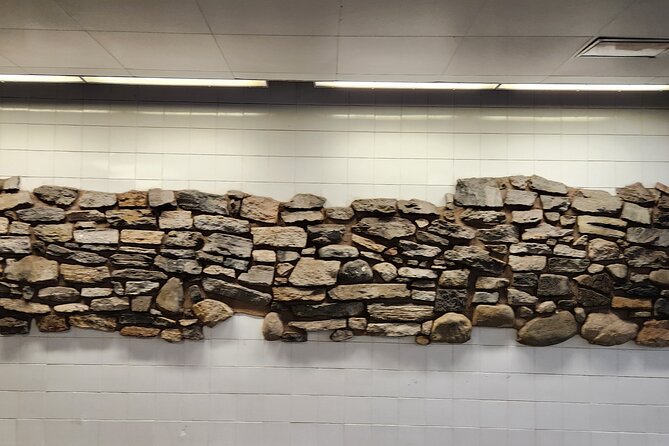
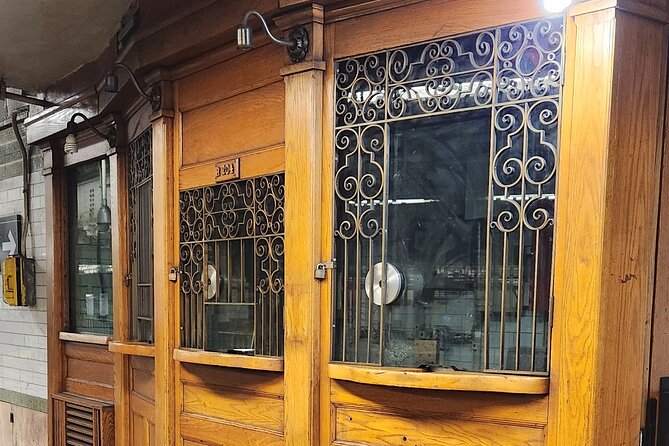
The first stop takes about 10 minutes and focuses on the South Ferry subway station, including archaeology and art. This is an unusual beginning. Instead of starting with a famous monument, Suzanne uses a transportation space to show how old and new New York overlap.
You should expect the subway stop to be discussed rather than treated as a separate museum visit. Admission is included because the tour itself is the product, but the walk does not include any extra attraction tickets. Keep that distinction in mind when comparing this experience with tours that include entry to museums or historic buildings.
The South Ferry section also sets the tone for the rest of the morning. You are not simply moving from one postcard view to another. You are being encouraged to notice details that can be easy to miss when you explore on your own.
Battery Park, old shorelines, and the city built outward
The route continues into Battery Park, with several stops along the way and more inside the park. This portion lasts about 30 minutes, making it one of the longer sections of the walk.
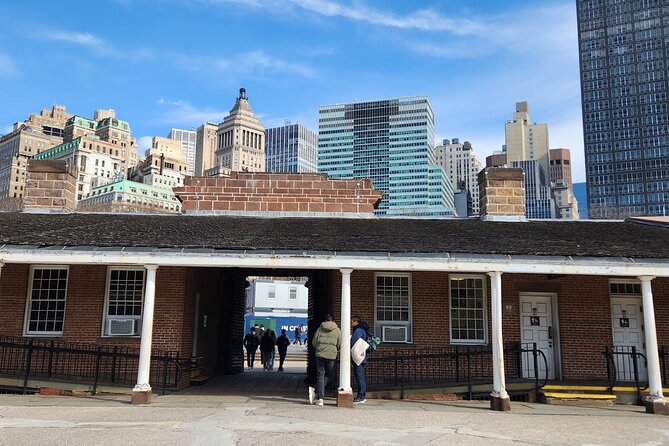
Battery Park is a natural place to discuss the edge of Manhattan, but the tour gives that familiar setting more depth. The area includes places built on landfill, and the route uses those changes to explain how the southern tip of the island expanded and shifted over time.
This is one of the strongest parts for anyone curious about the physical growth of New York. You can begin to picture a smaller island before later filling projects pushed the shoreline outward. The experience does not ask you to accept the city as a finished product. It shows how people reshaped it.
Expect several short stops rather than one long speech. That helps keep the walk moving, though it also means you should pay attention. If you prefer long blocks of free time for photographs, this is not that kind of outing. The guide’s storytelling is the main event.
Battery Park also offers a useful bridge between place and people. The area has seen military activity, public gatherings, changing transportation patterns, and daily city life. The supplied details do not promise a separate admission attraction here, so the value comes from Suzanne’s explanations and the connections she makes between the sites.
Bowling Green and the layers beneath the city
After Battery Park, the group reaches Bowling Green for about 20 minutes. The stop includes discussion of events connected with the area and a visit to the subway station.
Bowling Green is important because it helps connect the city’s early public life with the modern streets around it. You will hear about events that took place here, then see how the current transportation system occupies the same part of town.
I appreciate this kind of stop because it makes history feel less distant. Rather than placing colonial New York in a separate historical district, the tour shows how old events remain tied to office towers, subway entrances, traffic, and ordinary errands.
The subway element is especially useful for people who have passed through Lower Manhattan without considering what is below the pavement. The tour’s interest in archaeology and transit gives you a different way to read the city. Just remember that the walk is not designed as an in-depth subway tour. The station is one part of a wider story.
More NYC Walking Tours:
- SoHo, Little Italy, and Chinatown Walking Tour in New York
★ 5.0 · 3,153 reviews - Secrets of Grand Central Station Walking Tour New York City
★ 5.0 · 1,796 reviews - Greenwich Village Walking and Food Tasting Tour
★ 5.0 · 1,572 reviews - Artistic, Alternative Greenwich Village Walking Tour
★ 5.0 · 971 reviews
Wall Street beyond money and marble
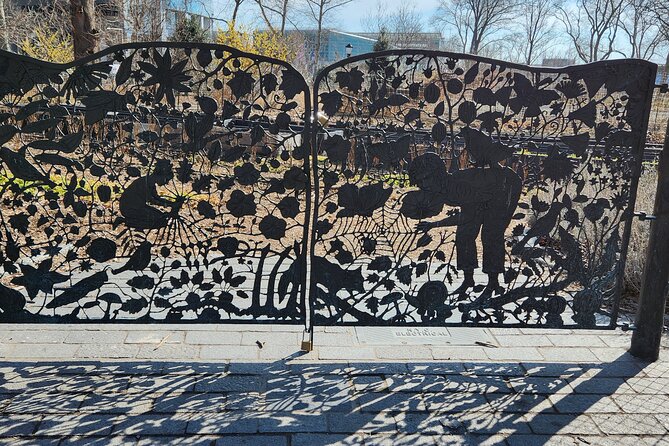
The section between Bowling Green and Wall Street takes about 30 minutes. Along the way, Suzanne makes several stops to discuss places, people, events, and local history before reaching Wall Street proper.
This is where the tour delivers what its title promises, but in a broader way than a standard finance-focused outing. You will certainly be in the heart of the Financial District, yet the discussion reaches beyond markets and corporate power. The route considers the people who shaped the district and the events that gave these streets meaning.
The group also passes through the Canyon of Heroes, a stretch associated with major public celebrations. That detail helps widen your view of Wall Street. The district has not only been a place of commerce. It has also been a stage for civic life, public honors, political drama, and citywide excitement.
I would choose this walk over an independent stroll if you want to understand connections between buildings and events. On your own, you can see the grand architecture. With Suzanne, you are more likely to learn why a place mattered, who used it, and how its role changed.
The tradeoff is that the itinerary leaves little time for extended visits inside individual buildings. This is an outside walking tour. If you want a formal tour of the New York Stock Exchange or another interior site, you will need to arrange that separately.
Stone Street, cobblestones, fires, and archaeology
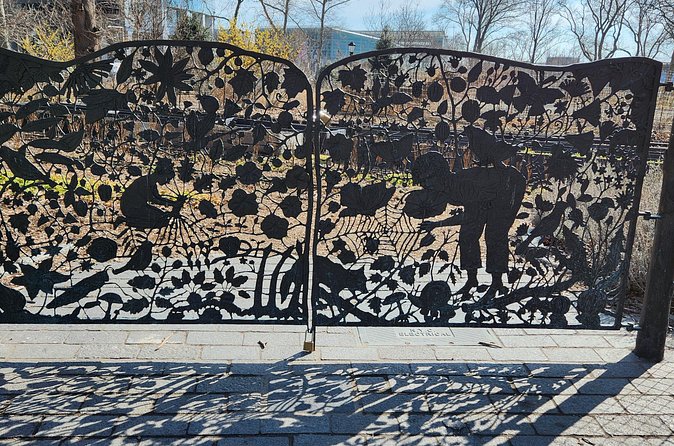
Stone Street receives about 15 minutes, but its short length does not make it a throwaway stop. The group discusses cobblestones and fires before moving toward an important archaeological site.
This is the kind of detail that gives the tour its character. A cobbled street may look picturesque, but it also raises practical questions. Why were these surfaces used? How did fire affect the district? What can the street tell you about earlier city life?
Stone Street is also a good place to pause and notice scale. Lower Manhattan can feel dominated by tall buildings and financial institutions. A narrower historic street changes your sense of the area. It reminds you that New York was once smaller, lower, rougher, and more vulnerable to fire.
The stop is brief, so do not expect a long meal break here. The focus remains on explanation and movement. If you want to eat on Stone Street, you may need to return later or make separate plans.
Finishing at Fraunces Tavern
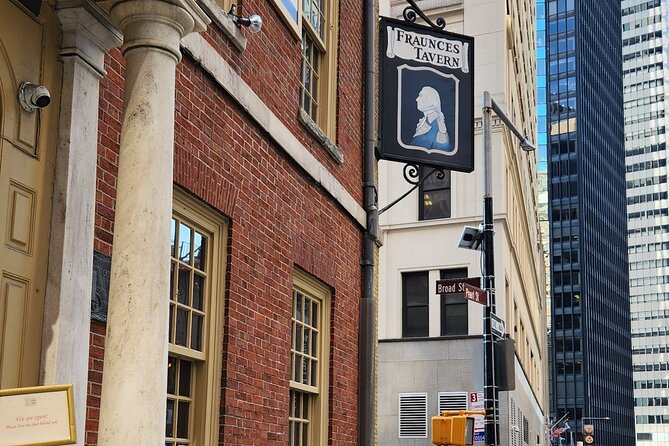
The walk wraps up outside Fraunces Tavern Museum at 54 Pearl Street. The final stop lasts about 10 minutes, and the endpoint gives you a useful choice.
You can stay for a meal at the tavern, visit the museum by paying its separate admission, or follow Suzanne’s directions to the nearest subway station. That flexibility is helpful at the end of a two-hour walk. You do not have to rush back to the starting point.
Fraunces Tavern also fits the tour’s overall theme. The route has moved through early New York, public events, the growth of the city, and the financial district. Ending at a historic tavern keeps the final moment connected to the city’s older social and political life.
The museum is not included in the $45 price. I see this as a fair arrangement because you can decide after the tour if you still want more history. If your morning schedule is tight, you can leave without paying for an attraction you cannot fully enjoy.
What $45 buys you
The price is $45 per person, and it covers the walking tour and guide. It does not include bottled water, food, or admission to Fraunces Tavern Museum.
For me, the value depends on how you like to travel. If you mainly want photographs of Wall Street’s best-known buildings, you can walk around the area for free. If you want the backstory of old shorelines, archaeology, fires, subway spaces, colonial events, and public celebrations, the guide adds the part you cannot easily get from wandering.
The small group helps justify the cost. A maximum of 15 people is far more manageable than a large city tour. You can hear the guide, ask questions, and stay involved as the route changes from one compact site to the next.
The tour also runs about two hours and 15 minutes, which is long enough to cover a lot without taking your entire day. I would pair it with lunch at or near Fraunces Tavern, then continue elsewhere in Lower Manhattan. Since the walk starts at 11 a.m., it works well as a morning activity that leads directly into lunch.
Who will get the most from this walk
This experience suits people who enjoy early American history, New York archaeology, and local stories that are easy to miss. It is especially useful if you have already seen the main sights and want a more thoughtful look at Lower Manhattan.
Families can consider it, too. The route worked for children ages 10 and 14 in one family, which suggests that the humor and movement can help younger participants stay interested. Still, every child is different. The walk includes sustained historical discussion, so children who enjoy stories and questions will get more from it than children who need constant action.
It also suits repeat visitors. One person who had lived and worked in Manhattan for 15 years still found new places and facts along the route. That is a strong sign that this is not only an introductory walk for first-time visitors.
You should think twice if you want a relaxed route with long breaks, indoor exhibits, or included food. This is a focused walking experience, and the weather policy matters. Poor weather can lead to a different date or a full refund, but you should still check the forecast and wear practical shoes.
The tour is offered in English. Service animals are allowed, it is near public transportation, and most people can participate. Bring your own water, since bottled water is not provided.
A practical plan for the morning
Arrive at South Ferry with enough time to find the exact meeting point before 11 a.m. The tour begins at South Ferry Terminal, New York, NY 10004. Since the route includes several stops and lasts more than two hours, comfortable shoes are more important than stylish ones.
Keep your schedule open after the final stop. You might want to eat at Fraunces Tavern, visit the museum, or ask Suzanne for directions to the nearest subway station. The endpoint is not the same as the starting point, so plan to continue from Pearl Street rather than assuming you will return to South Ferry with the group.
You can cancel for a full refund up to 24 hours before the start time. Changes or cancellations made less than 24 hours before the tour do not receive a refund, and the same-day cut-off follows local New York time.
Should you book the Unexpected Wall Street Walking Tour?
Book it if you want the story beneath the streets, not just a quick look at the financial district. Suzanne Reisman’s route gives you archaeology, early New York, landfill, subway history, fires, cobblestones, public celebrations, and Wall Street in one compact morning.
The $45 price is reasonable for a small, guided walk that reaches places and connections you might miss alone. I would choose it for history-minded adults, repeat visitors, and families with older children who can handle two hours of walking and discussion.
Skip it if you want major interior attractions, a meal included, or plenty of free time for photographs. For everyone else, this is a smart way to see Lower Manhattan as a living record of New York’s past, not simply as a cluster of famous financial buildings.
FAQ
Where does the tour begin?
The tour begins at South Ferry Terminal in New York, NY 10004.
What time does the tour start?
The start time is 11 a.m.
How long does the tour last?
The walking tour lasts approximately 2 hours and 15 minutes.
Where does the tour end?
The tour ends outside Fraunces Tavern Museum at 54 Pearl Street, New York, NY 10004.
Is admission to Fraunces Tavern Museum included?
No. You may visit the museum after the walk, but admission is paid separately.
How large is the group?
The tour has a maximum of 15 people.
What happens if the weather is poor?
The experience requires good weather. If it is canceled because of poor weather, you will be offered another date or a full refund.
Recently added in New York City
- Brooklyn: 3-Hour Williamsburg Bites Food Tour★ 4.5 · 58 reviews
- World Trade Center, 911 and Ground Zero Walking Tour★ 5.0 · 4 reviews
- Welcome to New York: A Tour of Taylor Swift Hotspots★ 5.0 · 11 reviews
- Your NYC Story in Photos: Custom 2-Hour Tour & Photo Shoot★ 4.9 · 60 reviews
- Washington from New York in Spanish★ 5.0 · 4 reviews
- Wall Street: The birth place of NYC in French/English tour★ 5.0 · 6 reviews
- NYC: Empire State Building Sunrise Experience Ticket★ 4.6 · 55 reviews
- New York City: Walk This Way Harlem Hip Hop Walking Tour★ 4.8 · 42 reviews
Wall Street and Financial District Tours, compared.

NYC City Tour: Statue of Liberty, 9/11 Memorial, Wall Street
Read our review →
Wall Street Insider Tour with a Finance Professional
Read our review →Wall Street Insider Tour with a Finance Professional
Read our review →
Manhattan Group Tour Including Wall Street and 911 Memorial
Read our review →
Wall Street Tour with 9/11 Memorial and Statue Ferry
Read our review →
Wall Street and Financial District Walking Tour
Read our review →

Wall Street and Financial District Walking Tour
Read our review →Browse the lists this tour appears in