

Reviewed · WALL STREET AND FINANCIAL DISTRICT TOURS
Wall Street and Lower Manhattan, New York History Walking Tour
Manhattan’s transformation from a Dutch outpost into the center of global finance comes alive on this compact walk. You’ll hear the fabled story of Peter Minuit buying the island for $24 in beads, then follow the clues through Battery Park, Wall Street, Federal Hall, and Stone Street.
I like the small group limit of 10, which gives you room to ask questions. I also like the way the route links famous sights with easy-to-miss details, such as the city’s first paved street and the remains of old New Amsterdam. The main drawback is the pace: with 12 stops in about two hours, some locations receive only 10 minutes.
Key points to know before you book
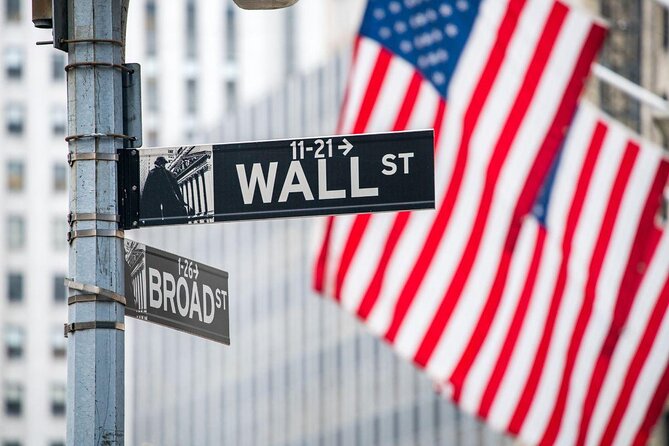
- Twelve historic stops in two hours: The route covers Battery Park, Bowling Green, the Stock Exchange, Federal Hall, Stone Street, and Fraunces Tavern.
- A group capped at 10 people: You get a better chance to hear the guide and ask questions than on a large city tour.
- A strong introduction to New York’s beginnings: The walk connects Dutch, British, and early American history with the modern financial district.
- The guide can shape the experience: Tom is specifically noted for answering questions and allowing extra time when the group is small.
- No admission fees are built into the route: The sights are viewed from public streets and outdoor spaces, though Fraunces Tavern Museum is an optional point of interest rather than a stated included admission.
- Weather matters: The experience can be moved or refunded if poor weather prevents the tour from running.
Why Lower Manhattan works so well on foot
Lower Manhattan is one of the few parts of New York where a short walk crosses several centuries. In a few blocks, you move from the edge of the harbor to a colonial park, then to the financial district, the first national capital, and an old stone lane now lined with cafés.
That compact layout gives this tour a clear advantage. You are not spending half the morning on a bus moving between sights. Instead, the guide can point to a building, street, or fence and explain why it matters right where you are standing.
The route is also useful if you have just arrived in New York and want a quick sense of the city’s beginnings. It does not try to cover every chapter of New York history. Its focus is narrower and more useful: how the Dutch settlement, British takeover, American founding, and financial district grew on the same small patch of land.
At $30 per person, the value comes from the interpretation rather than from entry to attractions. The stops are mainly outdoor landmarks, so you are paying for the guide’s storytelling, organization, and answers to your questions. For a two-hour introduction, that is a reasonable price, especially with a group limited to 10.
More Lower Manhattan Tours:
- Guided Bike Tour of Lower Manhattan and Brooklyn Bridge
★ 4.5 · 113 reviews - Wall Street, Financial District Walking Tour Lower Manhattan, NYC
★ 5.0 · 108 reviews - Lower Manhattan Secrets And History Walking Tour
★ 5.0 · 96 reviews
Battery Park and the $24 Manhattan story
The tour begins at 1 State Street, close to Battery Park. This is a sensible meeting point because it places you at the southern tip of Manhattan, where the harbor shaped the early settlement and later the city’s trade.
Here, you hear the famous story of Peter Minuit purchasing Manhattan for $24 in beads. The tale is memorable, but it also opens the door to a more careful look at how European settlement changed the island. The guide can give the story a human scale before the walk turns toward formal monuments and large financial institutions.
Battery Park is also a useful place to orient yourself. You are at the lower end of the island, and the rest of the tour moves north through streets that helped define New York. The stop lasts about 10 minutes, so expect a focused introduction rather than a long park visit.
From the Custom House to Bowling Green
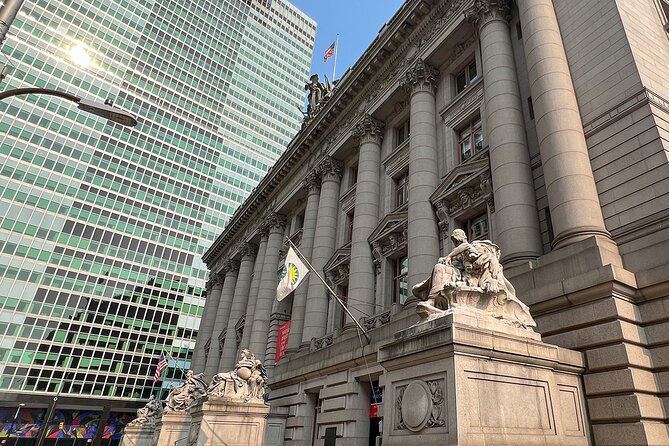
The next stop is the Alexander Hamilton U.S. Custom House, a building connected to the location of a fort dating to 1625. Control of the site passed from the Dutch to the British, and the location later became tied to the history of the United States.
This stop helps explain why Lower Manhattan became so important. Customs, shipping, defense, and government all gathered near the harbor. You do not need a specialist’s interest in architecture or politics to see the point: power followed commerce, and commerce followed the waterfront.
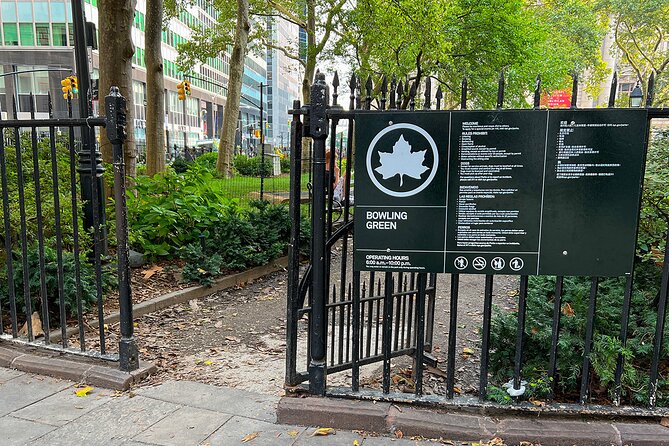
At Bowling Green, you visit New York’s oldest park. Its iron fence dates to 1773, giving you a physical object to look at while the guide explains the park’s place in the colonial city.
Bowling Green is a good example of this tour’s method. It does not simply point out an old park and move on. It uses the fence, the open space, and the nearby buildings to show how a growing city organized public land. The 10-minute stop should be enough to hear the main story and take a few photographs, though not enough for an extended visit.
The Charging Bull and the stories around Wall Street
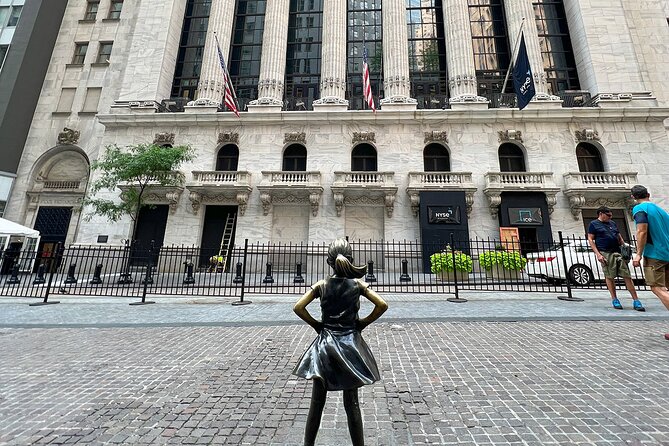
The Charging Bull statue is one of Lower Manhattan’s most photographed sights. The tour uses it as a bridge between old New York and the modern financial district.
The bull is easy to understand as a symbol of financial confidence, but the nearby story of Fearless Girl adds a second layer. Her placement beside the bull became a public conversation about power, gender, and corporate culture. The guide includes that controversy rather than treating the statue as a simple photo stop.
You should expect this area to be busy at times. The tour group is small, but the public space around a famous statue is not private. Your guide can explain the story, but you may need to wait for a clear moment if you want a photograph.
More Wall Street and Financial District Tours:
- NYC City Tour: Statue of Liberty, 9/11 Memorial, Wall Street
★ 4.5 · 2,059 reviews - Wall Street Insider Tour with a Finance Professional
★ 4.5 · 660 reviews - Wall Street Insider Tour with a Finance Professional
★ 4.5 · 571 reviews - Manhattan Group Tour Including Wall Street and 911 Memorial
★ 5.0 · 408 reviews
Alexander Hamilton’s grave and the birth of American finance
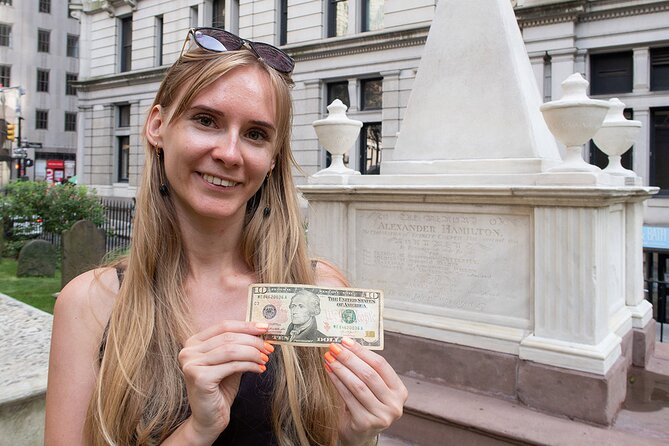
At Alexander Hamilton’s gravesite, the focus turns to one of the people most closely tied to the early American financial system. Hamilton served as the first Secretary of the Treasury, and the tour connects his work in government with the financial institutions you see later in the walk.
You also hear the story of his death in a duel with Vice President Aaron Burr. It is a dramatic episode, but the stop has more value than a famous final chapter. Hamilton’s grave gives the guide a natural way to discuss the fragile new republic, its financial plans, and the rivalries that shaped early American politics.
This stop is particularly useful if you know Hamilton mainly from popular culture. The walk places him in a real setting and links his political life to Federal Hall, the Treasury, and the financial district around you.
Wall Street, the Stock Exchange, and Federal Hall
Walking down Wall Street makes the name itself part of the lesson. The guide explains how Wall Street got its name, turning what may seem like an ordinary office canyon into evidence of the old city’s edge and defenses.
The New York Stock Exchange follows. You see the exterior of one of the world’s best-known financial institutions and learn how the surrounding district became a global center for finance. This is not a trading-floor tour, and you should not expect to go inside. The value is in understanding the institution’s place in the street grid and the city’s economic story.
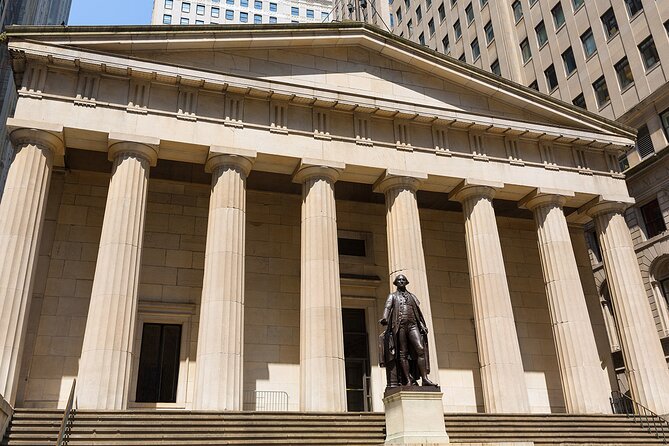
Federal Hall offers a sharp change of subject. This is where George Washington took the oath of office, and the building served as the country’s first capital. The stop gives the tour a national scale. Lower Manhattan was not only a port and business center. For a short time, it was the seat of the new United States government.
You may find the sequence of the Stock Exchange followed by Federal Hall especially effective. One building represents modern finance, while the other points to the early republic. They sit close together, but they belong to very different chapters of the city’s past.
The Federal Reserve and the gold beneath the street
The Federal Reserve Bank of New York adds another financial landmark to the route. The building is associated with about $400 billion in gold stored beneath its foundations, a detail that gives the stop immediate drama.
The guide uses the bank to explain the scale of the financial district. After hearing about colonial trade, the first Treasury secretary, and the Stock Exchange, you reach a modern institution tied to the international monetary system.
Again, this is an exterior stop. The tour does not promise access to the vaults or an inside visit. You are there to understand the role of the building and the concentration of financial power in this part of Manhattan.
Stone Street and the remains of old New Amsterdam
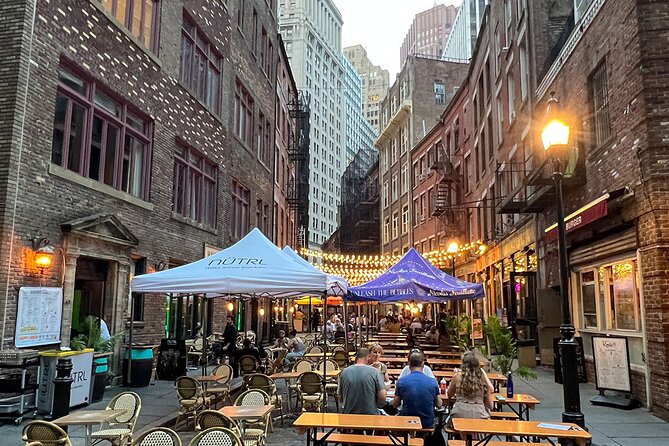
Stone Street is one of the most enjoyable parts of the route because it feels different from the broad avenues and office towers nearby. It was the city’s first paved street, and today it has cafés and outdoor life.
That contrast is the point. You can stand on an old street surface while surrounded by a modern financial district. The lane makes New York’s layers easier to picture than a plaque or museum label might.
The tour also visits a portal down to old New York, where you can explore the footprints of a 17th-century tavern and remnants of the old City Hall of New Amsterdam. These traces are not grand monuments. They are fragments, which means the guide’s explanation matters. Without context, you might walk past them. With context, they become clues to the small Dutch settlement beneath the modern city.
Because this part of the route is easy to miss on your own, it is one of the better reasons to choose a guided walk instead of simply following a financial district map.
Fraunces Tavern and the final stop
The tour ends at Fraunces Tavern, described as New York’s oldest tavern. It is tied to George Washington’s farewell to his officers, giving the walk one last link to the founding period.
The building also brings the route back to ordinary city life. Earlier stops focus on government, finance, monuments, and national events. A tavern suggests the social world around those events: meals, meetings, political talk, and farewell gatherings.
The activity ends back at the meeting point, so you do not need to arrange a separate pickup. If you want more time at the tavern or museum, ask the guide what can be visited after the walk. The tour itself gives you the historical setting, but the available information does not promise an included museum admission.
What the small group changes
A maximum of 10 people is a real advantage here. Lower Manhattan has narrow sidewalks, busy corners, and places where a large group can block the view or lose contact with the guide. A small group is easier to keep together and makes questions practical.
The experience can be even more personal when the booking is very small. Tom, one guide associated with the experience, is described as answering questions and allowing extra time when one family made up the whole group. That matters if you enjoy conversation rather than a fixed speech.
Still, a small group does not guarantee a private tour every time. The stated limit is 10, not one family or one booking. The weather policy also means you should keep an eye on conditions, since this is an outdoor walking activity.
Who will get the most from this walk
I would choose this tour for a first visit to New York, a short stay, or a morning when you want a clear introduction to Lower Manhattan. It also suits New York residents who know the area by sight but want the stories behind the streets.
Families can benefit from the short stops and the mix of famous figures, statues, money, duels, and old taverns. The small group makes it easier for children or teenagers to ask questions, though the subject matter is still history rather than entertainment at every moment.
You should be comfortable walking outdoors for about two hours. The route includes 12 stops and is built around public streets, parks, and building exteriors. If you prefer long visits inside museums or a slow architectural study, this may feel too quick.
Confirmation arrives at booking, service animals are allowed, and the meeting point is near public transportation. Most people can participate, but the tour requires good weather. Cancel at least 24 hours before the start time for a full refund. Late cancellations and changes are not accepted, and the activity may be rescheduled or refunded if bad weather or low participation prevents it from running.
Should you book the Wall Street walking tour?
Book it if you want a compact, well-connected story of New York’s southern tip. The best parts are the small group, the link between old and modern Manhattan, and the lesser-known details around Stone Street, the old City Hall, and the first paved road.
At $30, the tour is good value for a guided introduction, not because it includes expensive admissions. You are paying for a well-planned route and the chance to ask questions in a group of no more than 10.
Skip it if you want substantial indoor sightseeing or plenty of time at each stop. Twelve locations in two hours means the tour keeps moving. For most visitors who want to understand why Lower Manhattan looks and matters the way it does, that brisk pace is a fair trade.
FAQ
Where does the tour begin?
The tour begins at 1 State Street, New York, NY 10004, near Battery Park and public transportation.
Where does the tour end?
The activity ends back at the meeting point.
How long does the walking tour last?
The tour lasts approximately two hours.
How much does the tour cost?
The listed price is $30 per person.
How many people can join the tour?
The group has a maximum of 10 travelers.
What places are included along the route?
Stops include Battery Park, the Alexander Hamilton U.S. Custom House, Bowling Green, the Charging Bull, Hamilton’s gravesite, Wall Street, the New York Stock Exchange, Federal Hall, the Federal Reserve Bank of New York, Stone Street, the portal down to old New York, and Fraunces Tavern.
Is Fraunces Tavern Museum admission included?
The tour ends at Fraunces Tavern Museum, but the provided tour information does not state that museum admission is included.
What happens if the weather is poor?
If poor weather causes the activity to be canceled, you will be offered a different date or a full refund. You can also cancel up to 24 hours before the start time for a full refund.
More Historical Tours in New York City
- New York City: American Museum of Natural History Ticket
★ 4.5 · 15,447 reviews - NYC: Starship Landmark 90 Minute Sightseeing Cruise
★ 4.6 · 3,666 reviews - Starship Landmark 90 Minute Sightseeing Cruise
★ 4.5 · 2,073 reviews - American Museum of Natural History Admission Ticket
★ 4.0 · 1,931 reviews
More NYC Walking Tours
- SoHo, Little Italy, and Chinatown Walking Tour in New York
★ 5.0 · 3,153 reviews - Secrets of Grand Central Station Walking Tour New York City
★ 5.0 · 1,796 reviews - Greenwich Village Walking and Food Tasting Tour
★ 5.0 · 1,572 reviews - Artistic, Alternative Greenwich Village Walking Tour
★ 5.0 · 971 reviews
Recently added in New York City
- Brooklyn: 3-Hour Williamsburg Bites Food Tour★ 4.5 · 58 reviews
- World Trade Center, 911 and Ground Zero Walking Tour★ 5.0 · 4 reviews
- Welcome to New York: A Tour of Taylor Swift Hotspots★ 5.0 · 11 reviews
- Your NYC Story in Photos: Custom 2-Hour Tour & Photo Shoot★ 4.9 · 60 reviews
- Wall Street: The birth place of NYC in French/English tour★ 5.0 · 6 reviews
- Washington from New York in Spanish★ 5.0 · 4 reviews
- NYC: Empire State Building Sunrise Experience Ticket★ 4.6 · 55 reviews
- New York City: Walk This Way Harlem Hip Hop Walking Tour★ 4.8 · 42 reviews
Wall Street and Financial District Tours, compared.

NYC City Tour: Statue of Liberty, 9/11 Memorial, Wall Street
Read our review →
Wall Street Insider Tour with a Finance Professional
Read our review →Wall Street Insider Tour with a Finance Professional
Read our review →
Manhattan Group Tour Including Wall Street and 911 Memorial
Read our review →
Wall Street Tour with 9/11 Memorial and Statue Ferry
Read our review →
Wall Street and Financial District Walking Tour
Read our review →

Wall Street and Financial District Walking Tour
Read our review →Browse the lists this tour appears in