
Reviewed · HIGH LINE AND CHELSEA TOURS
Chelsea and the High Line NYC Architecture Walking Tour
The most interesting part of this tour is the way it connects the High Line’s old freight-rail past with Chelsea’s new skyline. In about two hours, you walk from the Whitney Museum through the elevated park and on to Hudson Yards, while the guide explains how public space, architecture, and air rights changed this part of Manhattan.
I like the small group, capped at 15, and the personal headsets, which make it easier to follow the guide beside a noisy city street. I also like the route itself: you get the High Line, art galleries, Little Island, Zaha Hadid’s 520 West 28th Street, and Hudson Yards in one tidy outing.
The main consideration is pace. You cover a lot of ground and stop briefly at several buildings, so this is better for an overview than for close study. It also requires good weather, and the $49 price makes the most sense if you care about design, city planning, or the story behind the buildings.
Key points to know before you book
- The route links two major urban projects: You begin at the Whitney Museum and finish at 20 Hudson Yards, seeing how the High Line helped reshape Chelsea.
- Guide Ivan Shumkov brings a strong architecture focus: He explains the park’s history, the air-rights system used in funding, and the ideas behind the buildings along the way.
- You see major works by leading architects: The route includes 520 West 28th Street by Zaha Hadid Architects, 100 11th Avenue by Jean Nouvel, 15 Hudson Yards by Diller Scofidio + Renfro, and The Spiral by BIG.
- The group is limited to 15 people: That keeps the walk more personal than a large sightseeing outing.
- You walk for about two hours: Wear comfortable shoes and expect an active city outing rather than an indoor museum visit.
- The tour ends in Hudson Yards: You can continue exploring the complex after the guide finishes, but admission to attractions is not included.
From the Whitney Museum into Chelsea’s changing story
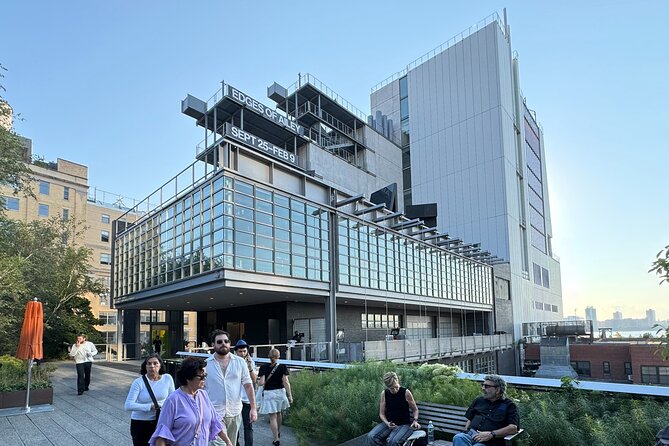
Meet at 2 p.m. outside the Whitney Museum of American Art at 99 Gansevoort Street. This is a useful starting point because the museum sits at the southern end of the High Line and puts you right beside the former meatpacking district, one of Manhattan’s most altered areas.
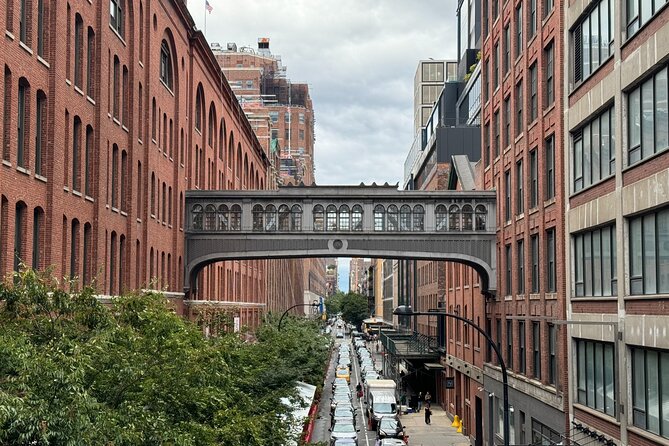
The tour is not built around entering museums or buildings. Instead, you read the city from the street, looking at old industrial remnants, new towers, public parks, and the spaces between them. That approach suits you if you want to understand how New York changes, rather than simply collect famous building photos.
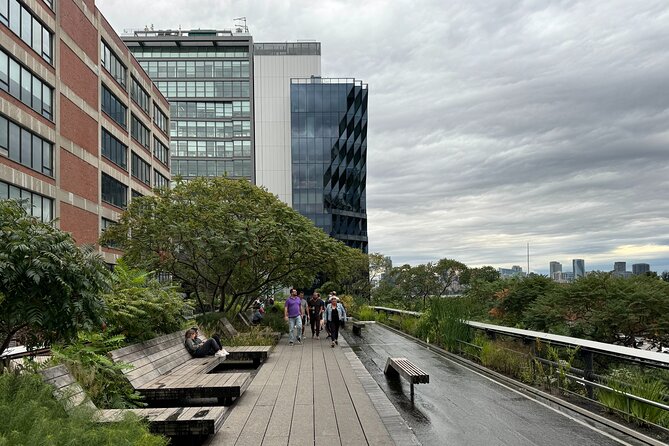
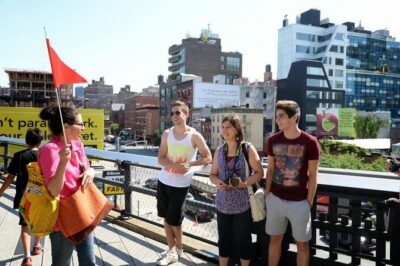
The High Line is the first major stop, with about an hour devoted to the park. The former elevated rail line now provides a planted walking path above the streets, with views toward Chelsea’s buildings and the Hudson River. Your guide sets the park within the larger story of urban renewal and explains how its funding involved air rights.
That last subject may sound dry, but it helps explain why the High Line is surrounded by so much new construction. Air rights concern the ability to build above or around a property. On this walk, they are part of the practical story of how a public park and private development came to exist side by side.
The route is especially useful if you have already heard that the High Line is beautiful but want to know why it happened. The guide connects design decisions with money, development, and public space. That gives the park more meaning than a simple stroll through plants and viewpoints.
More High Line and Chelsea Tours:
- High Line and Chelsea Small Group Tour
★ 5.0 · 1,238 reviews - Chelsea Market and High Line Guided Food Tour
★ 5.0 · 827 reviews - Manhattan Adventure Sightseeing Boat Tour – from Chelsea Piers
★ 5.0 · 688 reviews
Walking the High Line with an architecture guide
The High Line itself takes roughly an hour, so this is not a quick photo stop. You have time to walk, look up, and hear how the rail structure shaped Chelsea’s later development.
Personal headsets are supplied for every guest. That matters here. The High Line can be busy, and city traffic can make a normal conversation hard to catch. With a headset, you can look toward a building or planting area without needing to stay shoulder to shoulder with the guide.
Ivan Shumkov leads the tour and brings particular attention to public spaces, urban design, and renewal. He also covers the history of the High Line and the architectural ideas behind the surrounding buildings. His explanations are aimed at helping you connect the pieces, not just identify them.
The small group helps. With no more than 15 people, you should have a better chance of hearing the guide and asking a question than on a large bus or sidewalk tour. Still, remember that this is Manhattan. You will be walking through a public park and along active streets, not through a controlled museum setting.
Whitney Museum, The Standard, and the first new landmarks
Near the start, you see the Whitney Museum, designed as a major contemporary art institution at the southern end of the High Line. The stop is brief, about five minutes, so do not expect an interior visit or an art collection tour. The value is in seeing how the museum relates to the park and the surrounding streets.
You also pass The Standard, High Line, a hotel closely associated with the area’s new identity. Again, the stop is short. The guide uses buildings like this to show how the High Line became part of a district filled with hotels, galleries, restaurants, residences, and new public spaces.
The Chelsea art-gallery scene is another part of the walk. The route passes some of the neighborhood’s notable galleries, though the tour does not include gallery admissions. If you enjoy contemporary art and architecture together, this combination is useful. You see the kind of district that has developed around the High Line, rather than viewing the park in isolation.
This is also where the tour’s limits become clear. Five-minute stops are enough for context and photographs, but not enough for a serious inspection of a façade or a full discussion of each building. You are buying a guided city walk with many examples, not a detailed study of one project.
Little Island and 100 11th Avenue
The route includes Little Island Park in the Hudson River, another public-space project that gives the walk a different angle. Instead of an elevated rail structure, you see a park built out over the water. The stop helps you compare different approaches to creating public room in a crowded city.
The tour also points out 100 11th Avenue by Jean Nouvel. Its location beside the High Line makes it a good example of how new residential architecture responds to the park. You can consider the relationship between the tower, the rail line, the open space, and the older buildings nearby.
You should not expect to enter Little Island or 100 11th Avenue as part of the tour. These are exterior viewing points, and the guide’s role is to explain what you are seeing from the public route.
For me, this part gives the tour its strongest city-planning lesson. The High Line is not just a destination. It acts as a line through the neighborhood, linking parks, galleries, hotels, apartment buildings, and large developments. The walk lets you see that chain in sequence.
More NYC Skyline and Architecture Tours:
- Statue of Liberty & NYC Skyline Cruise – Freedom Liberty Tour
★ 4.0 · 1,499 reviews - Manhattan Architecture Yacht Cruise
★ 5.0 · 1,395 reviews - NYC: Dyker Heights Christmas Lights & Skyline View Bus Tour
★ 4.7 · 1,192 reviews - From Manhattan: Dyker Heights Lights & Skyline Tour
★ 4.6 · 1,005 reviews
520 West 28th Street and Zaha Hadid’s bold corner
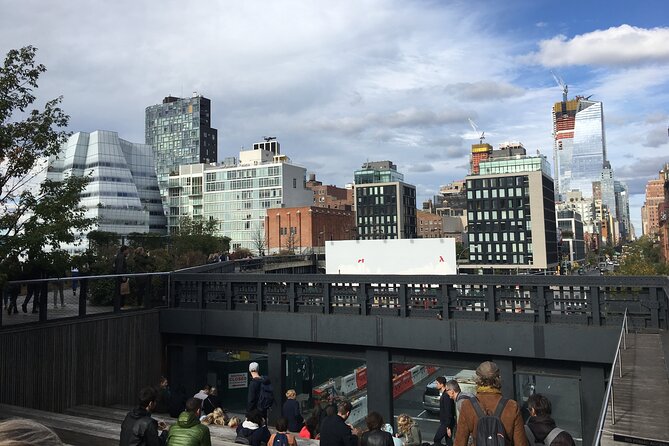
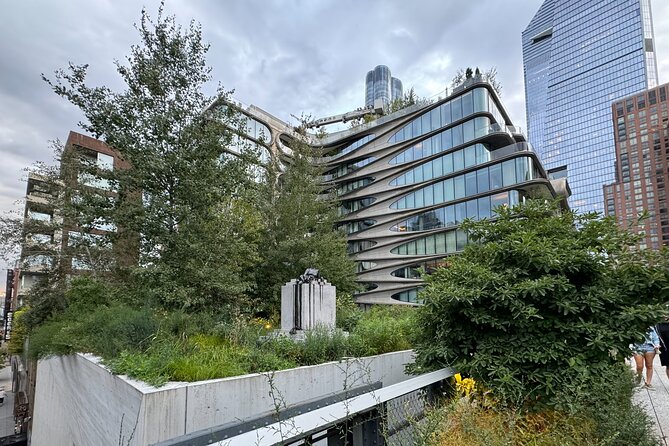
One of the most memorable architectural stops is 520 West 28th Street, designed by Zaha Hadid Architects. The building sits beside the High Line and is easy to appreciate from the park because its form responds directly to the elevated path.
The stop lasts about five minutes, so your guide focuses on the building’s design rather than taking you inside. You get a chance to study its exterior and hear how the project fits into Chelsea’s changing architecture.
This is a useful stop for anyone who likes contemporary buildings but does not always know how to read them. The tour gives you a framework for looking at shape, materials, structure, and the way a building meets a public walkway.
It is also a reminder that the High Line’s success brought more than planting and pedestrian access. It helped make the surrounding property more desirable, which encouraged ambitious new projects. That connection between public investment and private construction is one of the tour’s central ideas.
The Shed, Hudson Yards, and the Vessel
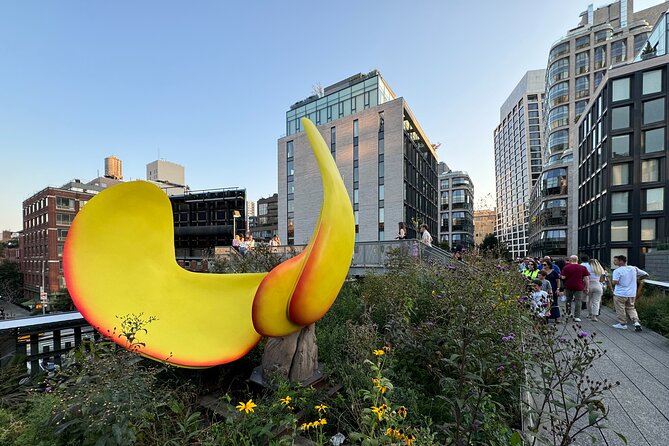
The walk continues toward The Shed, a flexible cultural building at Hudson Yards. The stop is brief, but its unusual exterior makes it a natural subject for an architecture tour. You look at how a modern cultural venue can be designed to change or adapt, rather than functioning as a conventional fixed hall.
Next comes the Vessel, the large honeycomb-like structure at Hudson Yards. The tour includes a visit to see it, but no admission is listed, and the route does not promise interior access. Treat this as an exterior architecture stop and photo opportunity.
Hudson Yards itself receives about ten minutes. That is enough to explain the development’s role in the west side of Manhattan and to place the nearby towers, plazas, cultural buildings, and public areas in context.
The district can feel very different from the older streets around Chelsea. That contrast is part of the point. In a short distance, you move from a former industrial rail route and converted warehouse district to a planned cluster of new towers and public spaces.
If you want a tour centered on old New York character, this section may feel polished and new. If you want to understand how a major part of Manhattan was redeveloped, it is essential.
15 Hudson Yards and The Spiral
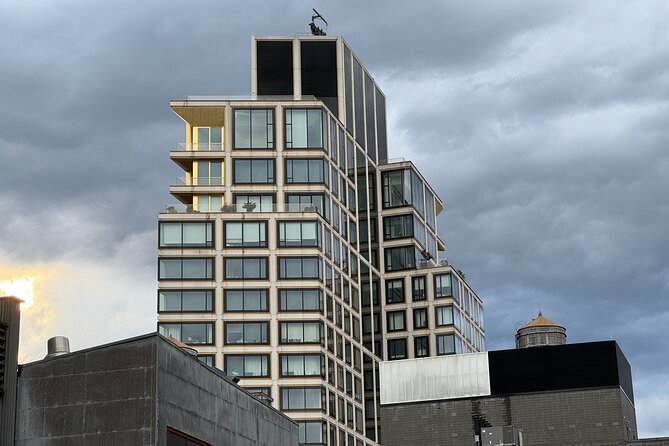
The tour points out 15 Hudson Yards by Diller Scofidio + Renfro. This is another short exterior stop, with about five minutes devoted to the building. Its place in the Hudson Yards group lets you compare different tower forms and design approaches within one development.
You also see The Spiral, designed by BIG, Bjarke Ingels Group, and completed in 2021. The building is included as a current example of how offices and terraces are being shaped in the new west side district.
These stops are valuable because the guide does not treat Hudson Yards as one single style. Several architects and firms contributed different ideas, and the tour gives you a quick way to compare them. You may not become an expert in each building during a five-minute stop, but you will leave with a clearer sense of the district’s variety.
The walk ends at 20 Hudson Yards. From there, you can continue on your own, look for food, shop, or explore more of the complex. Since the tour starts at the Whitney and ends at Hudson Yards, it also works well as a bridge between downtown Chelsea and the far west side.
What $49 buys you
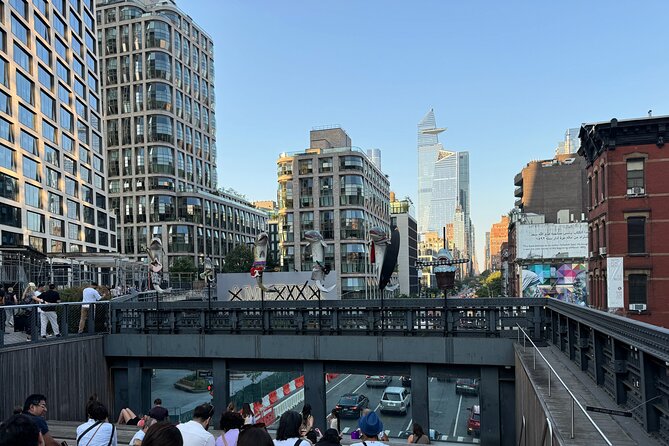
The price is $49 per person, including the guide, taxes and fees, and an individual headset. There are no listed admission charges, so you are mainly paying for the guide’s interpretation and the structure of the walk.
That can be fair value if you would otherwise stroll the High Line without understanding the air-rights system, the funding story, or the architectural plans behind the surrounding buildings. It is less compelling if you only want a free walk through the park, since the High Line itself has no admission fee.
The guide is the main reason to book rather than go alone. Ivan Shumkov explains the history of the park, identifies the buildings, and connects architecture with public-space planning. The supplied headsets make that information easier to hear, while the group limit keeps the walk from becoming unwieldy.
Tips are not included. The tour lasts about two hours, and the start time is 2 p.m. That gives you a useful afternoon plan, though you should allow extra time if you want to stay in Hudson Yards afterward.
Who will get the most from this walk
I would choose this tour if you have an interest in architecture, design, public parks, or the way cities are rebuilt. It is also a good fit if you want a guided introduction to Chelsea without committing half a day to a museum or a long neighborhood tour.
Families can join, and most people can participate. Service animals are allowed, and the route is near public transportation. You should still be comfortable walking for two hours through city streets and the High Line.
The tour is especially helpful on a first New York visit if you want to see several major projects efficiently. It also suits repeat visitors who have walked the High Line before but want more context about what they are looking at.
I would not choose it if you need a slow architectural photography session, extensive interior access, or a tour focused mainly on Chelsea’s older buildings. The itinerary moves steadily, and many building stops last only five minutes.
Book at least a little ahead if your schedule is fixed. It is commonly reserved about 30 days in advance, and the small group can fill. You receive confirmation when booking, and free cancellation is available up to 24 hours before the 2 p.m. start time. The tour depends on good weather and a minimum group size, so a cancellation can lead to another date, another experience, or a full refund.
Should you book the Chelsea and High Line tour?
Book it if you want the High Line explained, not merely photographed. The strongest parts are the hour on the park, the discussion of air rights and urban renewal, the small group, and the wide range of modern buildings between the Whitney and Hudson Yards.
At $49, the tour earns its price through interpretation rather than admission tickets. You will see plenty in two hours, but you will not study every building in depth. If that tradeoff suits you, this is a smart way to connect Chelsea’s industrial past with Manhattan’s newest public spaces and towers.
FAQ
How long does the Chelsea and High Line architecture tour last?
The tour lasts approximately two hours.
Where does the tour begin?
It begins at the Whitney Museum of American Art, 99 Gansevoort Street, New York, NY 10014.
Where does the tour end?
The tour ends at 20 Hudson Yards, New York, NY 10001.
What time does the tour start?
The scheduled start time is 2 p.m.
How large is the tour group?
The tour has a maximum of 15 people.
Are tickets to the High Line and the buildings included?
The High Line has free admission, and the listed tour price includes fees, taxes, the guide, and individual headsets. The tour does not list admission to the Whitney Museum or interior access to the other buildings.
More NYC Walking Tours
- SoHo, Little Italy, and Chinatown Walking Tour in New York
★ 5.0 · 3,153 reviews - Secrets of Grand Central Station Walking Tour New York City
★ 5.0 · 1,796 reviews - Greenwich Village Walking and Food Tasting Tour
★ 5.0 · 1,572 reviews - Artistic, Alternative Greenwich Village Walking Tour
★ 5.0 · 971 reviews
Recently added in New York City
- Squid Game: The Experience New York City★ 4.0 · 9 reviews
- New York: Private Professional Photoshoot at Central Park★ 5.0 · 9 reviews
- Professional Photoshoot at Brooklyn Bridge in New York★ 5.0 · 5 reviews
- New York Queens Indoor Skydiving Experience With 2 Flights★ 5.0 · 4 reviews
- New York 4-Day Tour to Niagara Falls & Washington★ 4.0 · 13 reviews
- New York: Times Square Professional Photoshoot★ 4.5 · 17 reviews
- New York Princess Cruises★ 3.0 · 4 reviews
- New York News and Media Walking Tour★ 4.5 · 4 reviews
High Line and Chelsea Tours, compared.


Manhattan Adventure Sightseeing Boat Tour – from Chelsea Piers
Read our review →
High Line Park and Greenwich Village Food Tour
Read our review →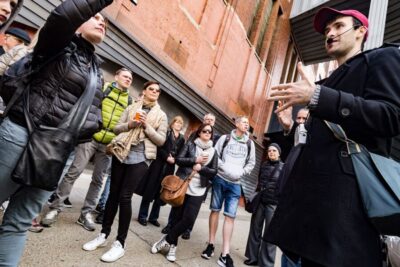
High Line, Chelsea, & Meatpacking District Walking Tour
Read our review →
Statue of Liberty Speedboat Tour – from Chelsea Piers
Read our review →
Foods of NY Tours Chelsea Market Food Tour & High Line Park
Read our review →
Hudson Yards & High Line Tour with Optional Edge Ticket
Read our review →Browse the lists this tour appears in