
Reviewed · WALL STREET AND FINANCIAL DISTRICT TOURS
The Battery: A Self-Guided Audio Tour from Bowling Green Park to Stone St
Lower Manhattan’s story begins with a small fort, a trading outpost, and a few artillery batteries. On this self-guided walk, you follow that story from Bowling Green to Stone Street, passing memorials, Castle Clinton, Peter Minuit Plaza, Fraunces Tavern, and the waterfront along the way.
I like the freedom to walk at your own pace, and I like the practical offline access, which means you do not need cellular service or Wi-Fi once the tour is downloaded. The main drawback is that this is an audio tour, not a live guide, so you will need your own smartphone and headphones and must pay attention to the route.
Key points to know before you go

- Start at Bowling Green: The tour begins at the bottom of Broadway, beside the Bowling Green Greenmarket meeting point.
- Follow New York’s beginnings: Hear how a dirt-walled fort and trading post grew into one of the world’s most powerful cities.
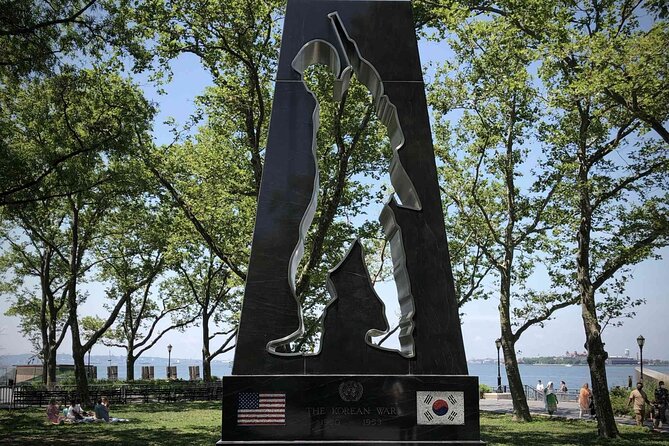
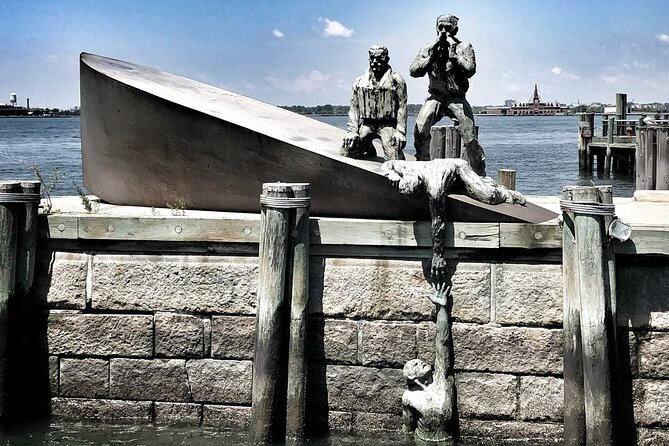
- See major memorials: The route passes the Korean War Memorial, American Merchant Marines Memorial, and East Coast Memorial.
- Explore changing Castle Clinton: Learn how the old fort became a variety of public attractions, including the New York Aquarium.
- Finish on Stone Street: The walk ends on one of Lower Manhattan’s oldest and most atmospheric cobbled streets.
- Bring your own setup: The price covers the VoiceMap app, audio, maps, and geodata, but not a phone, headphones, food, transportation, or attraction tickets.
Why this walk gives Lower Manhattan a clear beginning

Many New York sightseeing walks begin with skyscrapers or famous streets. This one begins with the city’s first chapter. At Bowling Green, you are at the lower end of Broadway, where the tour explains how New York grew from a modest fortified settlement and trading post into a major world city.
That opening gives the rest of the walk a useful frame. Instead of seeing the Battery as simply a pleasant park at the southern tip of Manhattan, you begin to understand it as a place shaped by defense, commerce, immigration, war, public entertainment, and transportation.
The audio format works well for this kind of route. You can stop when you want, look around, take photographs, or pause the narration without holding up a group. The tour is private in the practical sense that only your party takes part, though the experience is still self-guided rather than led by a person walking beside you.
Plan on about 90 minutes to two hours. Your pace, photo stops, and time spent looking at memorials will affect the total. The route is available Monday through Sunday, around the clock, so you can fit it into a morning, afternoon, or evening plan.
More Wall Street and Financial District Tours:
- NYC City Tour: Statue of Liberty, 9/11 Memorial, Wall Street
★ 4.5 · 2,059 reviews - Wall Street Insider Tour with a Finance Professional
★ 4.5 · 660 reviews - Wall Street Insider Tour with a Finance Professional
★ 4.5 · 571 reviews
Bowling Green and the first chapter of New York
Bowling Green is a useful starting point because the tour quickly connects the present-day city to its earliest years. You hear how New York got its start and how a small settlement protected by artillery batteries became the foundation for a much larger city.
I would take a moment here before pressing play. Check that the VoiceMap app is working, put on your headphones, and make sure the tour has been downloaded for offline use. The offline maps, audio, and geodata are important benefits, especially if you do not want to rely on a phone signal while walking.
The tour introduces how VoiceMap works at the beginning. That matters because the experience depends on following the app as you move. You are not simply listening to a podcast while wandering in a general direction. The route takes you from one place to the next, with the audio tied to the walk.
The Battery, where defense became public space
The Battery is the heart of the experience. Its name points back to the artillery batteries that once helped protect the settlement. Today, the setting is far less threatening, but the route uses this area to explain the change from military outpost to civic park and major city gateway.
The narration follows New York’s growth from a humble dirt-walled fort and trading station. That contrast is one of the tour’s best ideas. You can look at modern Lower Manhattan while hearing about a time when the city was small, exposed, and still taking shape.
Construction at the Battery may affect what you see along the route. The experience can still work during construction, but some views or walking areas may not feel as polished as they would after the work is complete. I would allow a little flexibility instead of expecting every section of the park to look exactly as pictured.
Three memorials, three different wartime stories
The route passes the Korean War Memorial, where you hear about The Universal Soldier. The monument serves as a symbolic tribute to people who died or disappeared during the conflict. It is a brief stop, but the subject adds a serious note to the walk.
Next comes the American Merchant Marines Memorial. Here, the audio turns to the danger beneath New York Harbor during World War II, including the story of German U-boat submarines entering the harbor secretly in 1940 on a daring mission.
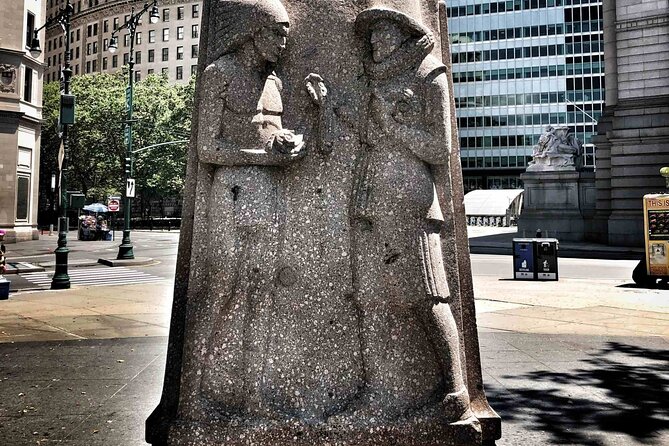
The East Coast Memorial brings another wartime story. It honors American service members who lost their lives in the Atlantic during World War II. These memorials make the waterfront feel less like a scenic edge of the city and more like a place connected to military service, shipping, and loss.
I appreciate that the tour does not treat every stop as another photo opportunity. The memorials ask you to slow down and listen. You can keep walking, but you will get more from the route if you pause at each one.
More NYC Walking Tours:
- SoHo, Little Italy, and Chinatown Walking Tour in New York
★ 5.0 · 3,153 reviews - Secrets of Grand Central Station Walking Tour New York City
★ 5.0 · 1,796 reviews - Greenwich Village Walking and Food Tasting Tour
★ 5.0 · 1,572 reviews - Artistic, Alternative Greenwich Village Walking Tour
★ 5.0 · 971 reviews
Castle Clinton, from fort to public attraction
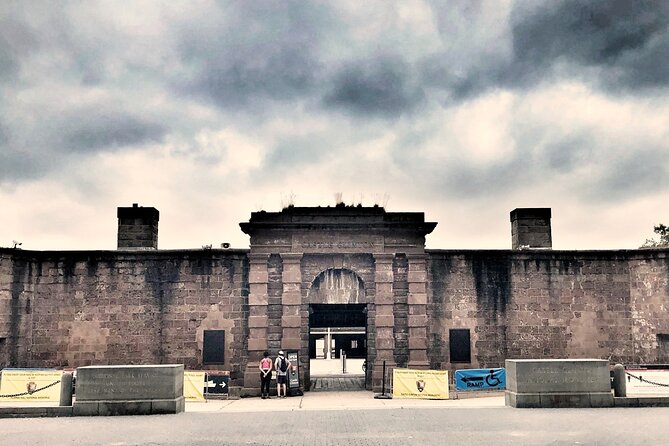
Castle Clinton is one of the most useful stops because the building has taken on several roles over time. The tour explains the different versions of the 19th-century fort and connects it to one of New York’s most powerful Clintons, DeWitt Clinton, not Bill or Hillary.
The building’s changing purpose gives you a good lesson in how New York reuses old structures. Castle Clinton began as a defensive fort, but its later history includes public entertainment and the New York Aquarium. The nearby carousel draws on that aquarium connection, recalling the time when this part of the Battery offered a very different kind of attraction.
That combination of fort, aquarium, and carousel gives the area an almost unusual mix of military and family history. If you are walking with children, the carousel may provide a welcome visual break from memorials and historical narration. If you are mainly interested in architecture, the fort is the more important stop.
The tour passes by Castle Clinton rather than including admission to an attraction. Any museum or other entrance fees are separate, so you should think of this as an outdoor audio walk, not a ticketed Castle Clinton visit.
Immigration stories at The Immigrants statue
The Immigrants statue brings the tour to one of the most human parts of Lower Manhattan’s story. The narration covers the immigrant experience and introduces Annie Moore, the first immigrant to disembark at Ellis Island’s inspection station.
This stop helps explain why the harbor mattered far beyond trade and defense. For many arrivals, New York was the first American place they saw. The audio connects individual arrivals with the larger movement of people that helped shape the city.
You do not need to visit Ellis Island for this portion of the route to make sense. The walk stays around the Battery, but it uses the nearby harbor and immigration landmarks to show how Lower Manhattan connected the city to the wider world.
I would not rush this section. The story of Annie Moore gives the tour a personal focus after the broader accounts of forts, memorials, and city growth.
Peter Minuit Plaza and the Dutch beginning
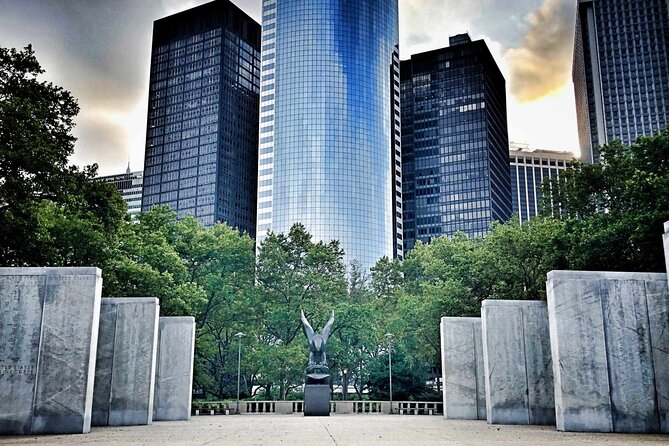
The route passes through Peter Minuit Plaza, named for the Dutchman associated with the purchase of the island of Manahatta with wampum. This stop takes you back to the Dutch period and the earliest European development of Manhattan.
It also works as a reminder that New York’s origin story is not one simple tale. The city’s growth involved Indigenous land, Dutch settlement, trade, fortification, immigration, and later American expansion. The audio tour keeps the focus on the places directly around you, which makes the history easier to connect to the walk.
Because this is a self-guided route, you can choose how much time to give each point. If the historical details interest you, pause the audio and look around before continuing. If you are using the tour as a quick orientation walk, you can keep moving and still reach Stone Street within the advertised time.
Fraunces Tavern and the older city
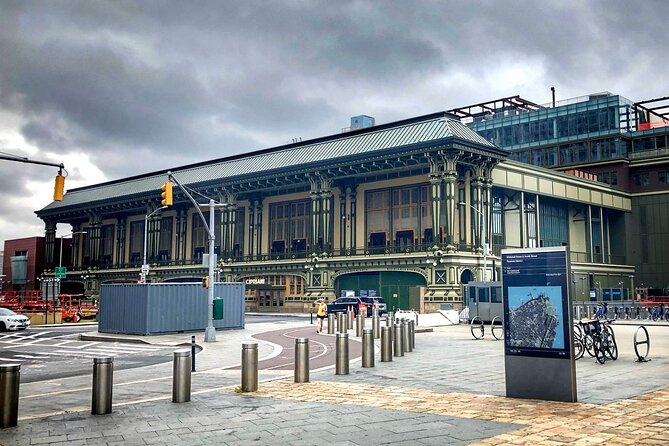
Fraunces Tavern is one of the strongest stops near the end of the route. It is identified as Manhattan’s oldest surviving building, and the audio recounts some of the remarkable events that took place inside its walls.
This is where the tour shifts from the harbor and open parkland into the tighter streets of the old city. The change in setting helps you imagine Lower Manhattan before the grid of modern avenues and tall office towers dominated the area.
Fraunces Tavern also gives the walk a good sense of arrival. After hearing about early settlement, immigration, military service, and the waterfront, you reach a building tied to the city’s political and social past. The tour does not include food, drinks, or admission, so you can decide separately if you want to enter or stop nearby after the audio ends.
Ending on Stone Street
The final stop is Stone Street, a cobbled stretch that many people miss even while exploring Lower Manhattan. Ending here is a smart choice because the street feels different from the broad avenues and modern towers nearby.
Stone Street provides a satisfying finish to a walk about New York’s beginnings. You have moved from Bowling Green, past the Battery and its memorials, through Peter Minuit Plaza, and into one of the city’s older surviving street settings.
The end point is Stone Street, New York, NY 10004. Since the tour finishes there, you can treat the audio walk as part of a larger outing in the area. The tour itself does not provide transportation, meals, or drinks, so plan those separately.
What the $14.99 price includes
At $14.99 per person, the value depends on how much you want from a self-guided walk. You receive lifetime access to the English tour, plus offline audio, maps, and geodata through the VoiceMap app for Android and iOS. You also receive lifetime access to the virtual tour.
That is a reasonable arrangement if you like to revisit a walk, share the app with your own future plans, or take the route at a relaxed pace. A live guide would offer conversation and the chance to ask questions, but this format costs less than many guided sightseeing options and lets only your own group participate.
You need to bring a smartphone and headphones. The price does not cover food or drinks, transportation, museum admission, or other attraction tickets. Downloading the tour before you start is the most useful preparation, since offline access is one of its main advantages.
The tour is non-refundable and cannot be changed after booking. I would buy it only when you are confident that Lower Manhattan fits your schedule.
Who will get the most from this audio tour
I would recommend this walk to first-time visitors who want an introduction to Lower Manhattan without joining a large group. It also suits repeat visitors who have seen the major skyscrapers but have not paid much attention to the Battery, Castle Clinton, or Stone Street.
History-minded families may like the mix of forts, submarines, immigration, memorials, and the carousel. The walk also works for independent people who dislike fixed departure times and want to stop for photos or take breaks.
It is less suitable if you want a live guide, a deep interior tour of Castle Clinton, or included admission to museums and historic buildings. You should also expect some Battery construction during the current period, which can affect parts of the route.
Should you book it?
Book this tour if you want a low-cost, flexible way to connect Lower Manhattan’s landmarks into one story. The strongest parts are the offline access, the freedom to set your pace, and the range of subjects, from New York’s first fort to wartime memorials, immigration, Fraunces Tavern, and Stone Street.
Skip it if you need personal guidance or prefer an attraction ticket with indoor visits. For an independent walk lasting about an hour and a half to two hours, $14.99 is a fair price, especially since access continues after your first visit.
FAQ
Where does the tour begin?
The tour begins at Bowling Green Greenmarket, near Broadway and Whitehall Street in New York, NY 10004.
Where does the tour end?
The tour ends on Stone Street in New York, NY 10004.
How long does the audio tour take?
The tour takes approximately one hour and 30 minutes to two hours.
What language is the tour offered in?
The tour is offered in English.
Do I need Wi-Fi or cellular service during the walk?
No. The tour includes offline access to the audio, maps, and geodata through the VoiceMap app.
What do I need to bring?
You need a smartphone and headphones. Food, drinks, transportation, museum admission, and other attraction tickets are not included.
Can I cancel or change the booking?
No. The experience is non-refundable and cannot be changed for any reason after booking.
More Self-Guided Tours in New York City
- NYC: Metropolitan Museum of Art Guided or Self-Guided Tour
★ 4.0 · 56 reviews - NYC Central Park Self-Guided Walking Tour
★ 5.0 · 27 reviews - NYC Grand Central Terminal Self-Guided Walking Tour
★ 4.5 · 19 reviews - Self-Guided Tour of the Museum at Eldridge Street
★ 4.3 · 13 reviews
More Audio Tours in New York City
- Skyline Night Bus Audio Narrated Tour Experience
★ 4.5 · 138 reviews - NYC: St. Patrick’s Cathedral Official Self-Guided Audio Tour
★ 3.5 · 45 reviews - Statue Of Liberty & Ellis Island Skip The Queue Audio Guide Tour
★ 5.0 · 19 reviews - A Gilded Age Audio Guide: New York’s Millionaire Row
★ 5.0 · 13 reviews
Recently added in New York City
- Brooklyn: 3-Hour Williamsburg Bites Food Tour★ 4.5 · 58 reviews
- World Trade Center, 911 and Ground Zero Walking Tour★ 5.0 · 4 reviews
- Welcome to New York: A Tour of Taylor Swift Hotspots★ 5.0 · 11 reviews
- Your NYC Story in Photos: Custom 2-Hour Tour & Photo Shoot★ 4.9 · 60 reviews
- Wall Street: The birth place of NYC in French/English tour★ 5.0 · 6 reviews
- Washington from New York in Spanish★ 5.0 · 4 reviews
- Wall Street and Financial District Private Walking Tour★ 5.0 · 6 reviews
- NYC: Empire State Building Sunrise Experience Ticket★ 4.6 · 55 reviews
Wall Street and Financial District Tours, compared.

NYC City Tour: Statue of Liberty, 9/11 Memorial, Wall Street
Read our review →
Wall Street Insider Tour with a Finance Professional
Read our review →Wall Street Insider Tour with a Finance Professional
Read our review →
Manhattan Group Tour Including Wall Street and 911 Memorial
Read our review →
Wall Street Tour with 9/11 Memorial and Statue Ferry
Read our review →
Wall Street and Financial District Walking Tour
Read our review →

Wall Street and Financial District Walking Tour
Read our review →Browse the lists this tour appears in