
Reviewed · GILDED AGE MANSION TOURS
New York, Private Tour: New York in the Gilded Age
New York’s Gilded Age comes into focus on Fifth Avenue, where fortunes built in railroads, oil, banking, and real estate turned into grand homes, private clubs, and fierce social rivalries. This private two-hour walk connects the buildings with the people behind them, from John Jacob Astor and Cornelius Vanderbilt to Andrew Carnegie and J.P. Morgan.
I like the tour’s human stories, especially its attention to power struggles, social rules, class divisions, and family life. I also like the chance to see several mansions from the outside, including the Carnegie, Frick, and Duke Mansions, without committing half a day to a museum visit. The main consideration is that much of the tour is exterior viewing, so its value depends on how much you enjoy architecture, urban history, and storytelling on foot.
Key points at a glance
- Follow the money up Fifth Avenue: Connect America’s industrial fortunes with the homes and institutions they financed.
- See Millionaires’ Row: View surviving mansions and former mansion sites in one of Manhattan’s most famous districts.
- Meet the major players: Hear about Astor, Vanderbilt, Rockefeller, Carnegie, Morgan, and others.
- Explore elite New York: Learn how private clubs, museums, and social circles shaped the city’s upper class.
- Book a private walk: Your group has a professional licensed English-speaking guide rather than a large shared tour.
- Prepare for real city weather: The walk runs year round, rain or shine, so comfortable shoes and suitable clothing matter.
Why the Gilded Age works best as a walking story
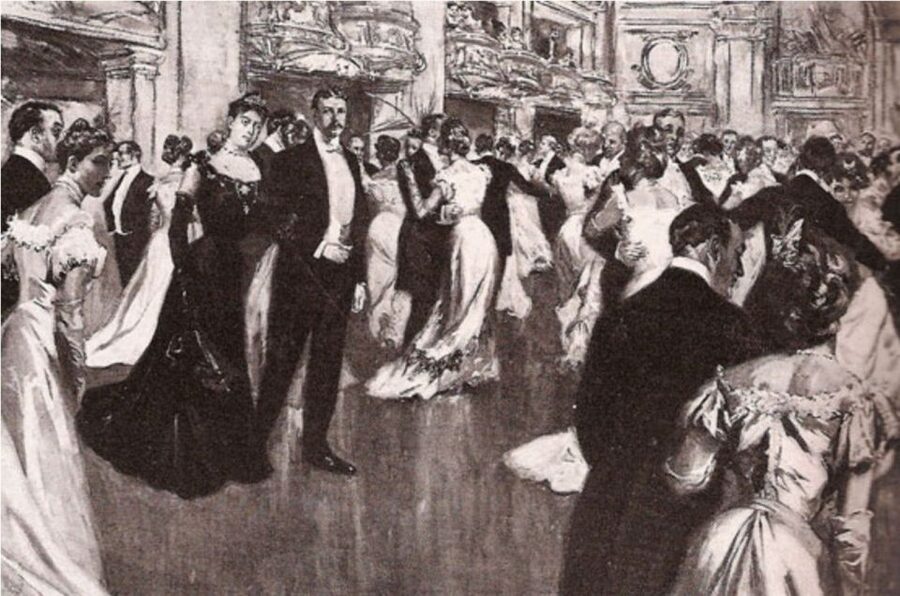
The Gilded Age is easy to reduce to marble facades and oversized houses. This tour aims at the more interesting question: what did all that money do to New York?
The answer appears in layers. Industrial fortunes paid for mansions. Mansions helped families claim social rank. Private clubs controlled access to the right circles. Museums turned private collections into public institutions, while the original owners fought for influence, status, and control.
That makes a guided walk useful. You are not simply looking at old buildings and trying to guess who lived there. You are given a thread linking business success, family ambition, architecture, social life, and New York’s changing public identity.
The strongest part of the subject is its tension. These men built enormous fortunes through modern industry, yet they often copied the manners and symbols of European aristocracy. They were self-made businessmen who wanted to look like inherited nobility. That contradiction gives the walk plenty to discuss.
More Gilded Age Mansion Tours:
- Gilded Age Mansions Tour in New York
★ 5.0 · 980 reviews - NYC: Gilded Age Mansions Guided Tour
★ 4.8 · 374 reviews - Fifth Avenue Gilded Age Mansions Walking Tour
★ 5.0 · 280 reviews
Starting at Grand Army Plaza
The meeting point is in front of the General William Tecumseh Sherman Monument at Grand Army Plaza. Arrive a few minutes early. This is a busy part of Manhattan, and beginning calmly gives you time to find the monument, meet your guide, and adjust your shoes or clothing before the walk begins.
From here, the tour moves into the Fifth Avenue district associated with New York’s old money and new industrial wealth. The route is urban rather than secluded. Traffic, pedestrians, and city noise are part of the setting, so you should expect a real Manhattan walk, not a quiet heritage site.
That setting actually fits the story. The avenue was not merely a row of beautiful residences. It was a public stage where wealthy families displayed taste, position, and social power. As you walk, look beyond the facades. The key issue is who had the money to live here, who was admitted to the nearby clubs, and who remained outside that world.
Fifth Avenue and the surviving mansions
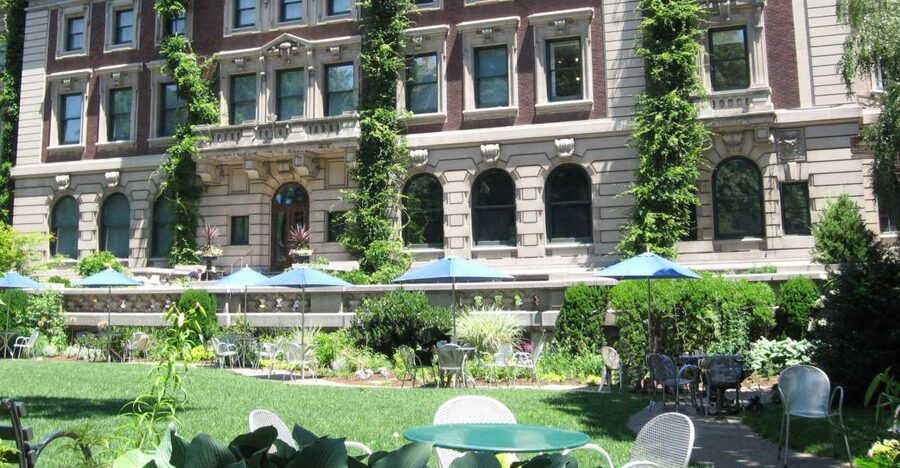
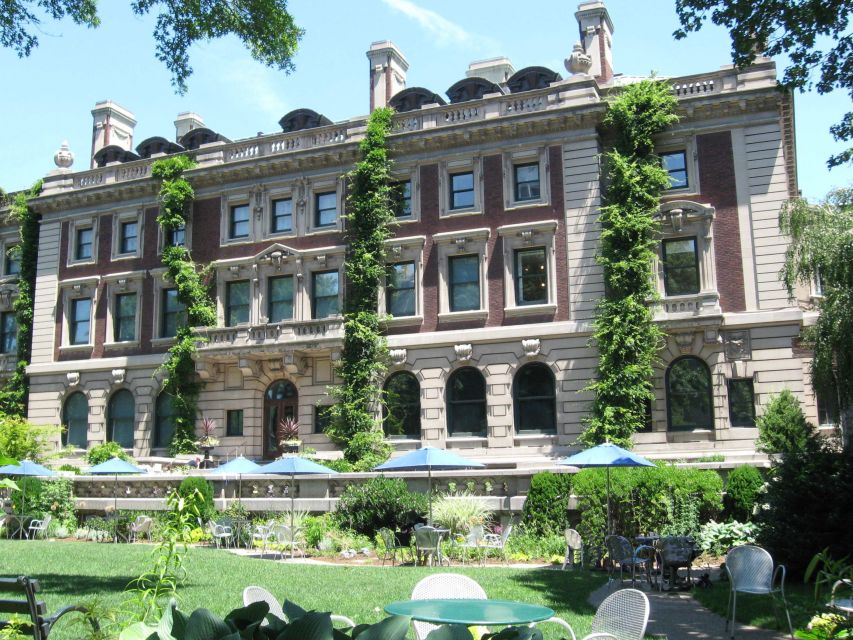
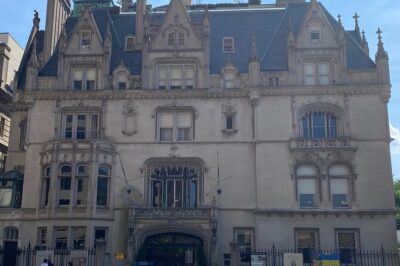
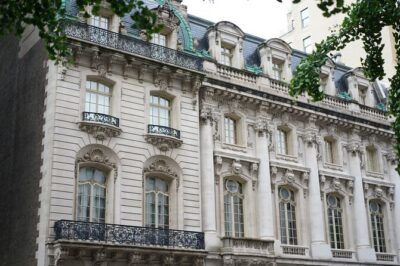
The tour’s central pleasure is the walk along Fifth Avenue, once known for its concentration of enormous private homes. The homes connected to the Carnegie, Frick, and Duke families give you a sense of the scale and ambition of the period.
You will view these places from the outside, which is both a strength and a limit. The strength is pace. You can cover several important addresses and understand how they fit into the avenue without spending your entire visit inside one building. The limit is that exterior exploration cannot show every room, collection, or private detail.
That is where the guide matters. Dan has led this walk with an energetic, friendly style, pointing out details that are easy to miss. Levy and Levin are also associated with the tour, so the exact guide depends on the date. The strongest reported qualities across the guiding team are clear explanations, engaging delivery, and a willingness to answer questions.
You might notice changes in the neighborhood that reveal the city’s later development. A mansion may now serve an organization or another public purpose. A grand building can survive while its original family disappears from daily life. Those changes help you see the Gilded Age not as a frozen period, but as one layer in an evolving city.
The Carnegie, Frick, and Duke addresses
The Carnegie Mansion is one of the key stops. Andrew Carnegie’s name is tied to steel, philanthropy, and the creation of cultural institutions. His home offers a useful case study in how industrial wealth moved into architecture and public life.
The Frick Mansion brings another type of collector and financier into the story. The house is closely tied to the world of private art collections and elite taste. Even from outside, the building helps explain how wealthy New Yorkers used art and architecture to create a public image.
The Duke Mansion adds another family fortune to the route. It expands the story beyond the best-known names and shows that the avenue was filled with competing dynasties, not just one or two famous households.
You should not expect full interior tours of each mansion. The emphasis is on exterior views and the stories linked to them. If your main goal is to examine decorative arts indoors, you may want to pair the walk with a separate museum visit. If you want a compact overview of the people and places, the exterior approach keeps the tour moving.
More New York City Tours:
- NYC: SUMMIT One Vanderbilt Tickets
★ 4.7 · 51,195 reviews - NYC: Empire State Building Tickets – Observatory & Museum
★ 4.7 · 25,757 reviews - New York City: Statue of Liberty & Ellis Island with Ferry
★ 4.6 · 18,683 reviews - New York City: American Museum of Natural History Ticket
★ 4.5 · 15,447 reviews
The Metropolitan Club and the rules of high society
The Metropolitan Club represents the social machinery behind the mansions. Wealth alone was not enough. Membership, introductions, family connections, and accepted behavior helped define who belonged.
A stop here gives the guide a chance to explain the role of men’s clubs and private social networks. These were places where business deals, political influence, and social standing could overlap. The club was not simply a comfortable room for wealthy men. It was part of the system that helped decide who gained access to power.
This subject also gives the tour a useful balance. You hear about fortunes and grand homes, but you also learn about exclusion and class division. The city’s wealth was highly visible, while the people who built and serviced that world were much less likely to control it.
For me, this is one of the best reasons to choose a private guide. A guide can spend more time on the part of the story that interests you, such as architecture, social rules, or business rivalries. The supplied format describes a private group, but it does not specify the maximum number of people, so ask if group size matters to you.
The Metropolitan Museum of Art and private wealth turned public
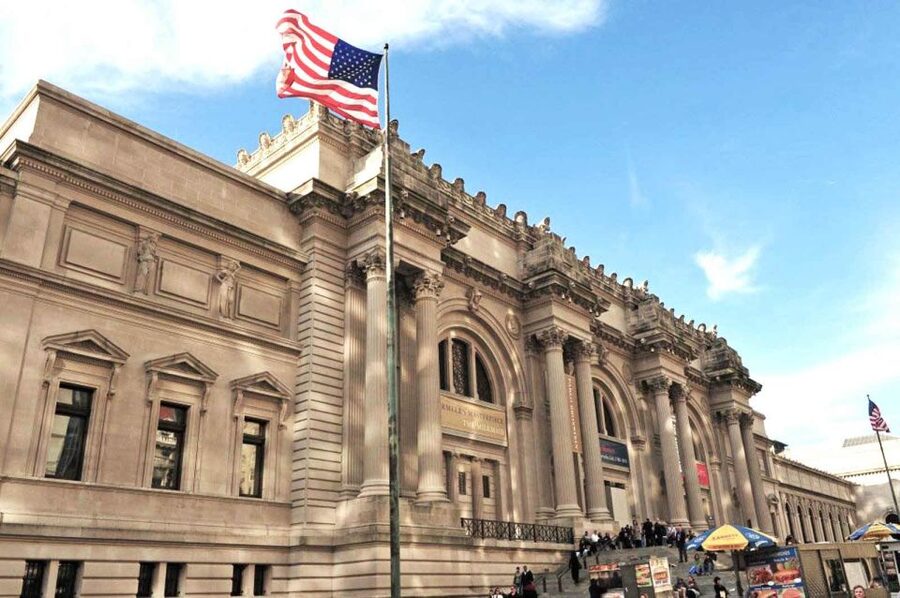
The Metropolitan Museum of Art is another major point of interest. Its connection to the Gilded Age helps show how private wealth could shape public culture.
The museum is not just a backdrop for impressive art. It reflects a larger pattern in New York, where wealthy families collected objects, supported institutions, and helped define what the city considered important. Donations and patronage could improve public life, but they could also strengthen the social influence of the donors.
The tour explores the museum from the outside rather than providing a full museum visit. That distinction matters. You get context for its role in the city’s cultural world, but museum admission and interior touring are not described as part of the experience.
If you plan to visit the Metropolitan Museum on your own, this walk can give you a useful introduction first. You will arrive with a clearer sense of how the museum fits into the ambitions of the era. If you have only two hours in the area, the guide’s explanation may be enough to connect the building with the larger story.
Astor, Vanderbilt, Rockefeller, Carnegie, and Morgan
The tour covers several major American fortunes, each with a different path to power. John Jacob Astor represents an early New York fortune tied to real estate and trade. Cornelius Vanderbilt built his influence through transportation and railroads. John D. Rockefeller became a symbol of oil wealth and industrial scale.
Andrew Carnegie brings steel, philanthropy, and public institutions into the picture. J.P. Morgan represents finance and the ability to organize, rescue, or control major business interests. The tour also includes other figures connected to New York’s wealthy society, allowing the story to move beyond a short list of famous names.
The value is not simply memorizing who was richest. You learn how these men competed, cooperated, built empires, and used social connections to reinforce business power. Their personal lives also enter the story, including the family and social details that made their public identities more complicated.
A good guide can make these names easier to remember by attaching each one to a building, rivalry, or personal choice. That is the advantage of seeing the city while hearing the story. The addresses give the names a physical setting.
What two hours can realistically cover
Two hours is enough for a focused introduction, not a complete study of New York’s Gilded Age. The route concentrates on Fifth Avenue, Millionaires’ Row, nearby mansions, clubs, and museum connections.
The short length works well if you have a busy New York schedule. You can fit the tour into a morning or afternoon without giving up a full day. It also suits you if this is your first visit to the area and you want a clear framework before exploring independently.
The tradeoff is depth. A two-hour walk cannot cover every mansion, family, architect, or business conflict. It also cannot provide extensive interior access. Expect a brisk selection of important places, supported by stories and explanation.
Wear comfortable shoes. The activity is a walking tour, and the organizer specifically advises clothing suitable for the weather. It operates year round, rain or shine, so a wet forecast should not surprise you. A fully charged camera is useful for architectural details, though the guide’s explanation is more important than collecting facade photographs.
Is the $149 price good value?
At $149 per person, this is not a budget sightseeing walk. You are paying for a two-hour private experience with a professional licensed guide, not simply a ticket to a building.
The value improves if you are traveling with a small group that wants a focused subject and the freedom to ask questions. A private format can feel worthwhile when your group shares an interest in architecture, American business, New York society, or urban history. You are also getting a specialized route rather than a general city overview.
The value is weaker if you mainly want interior access, a long museum visit, or a low-cost orientation walk. The listed points of interest are explored from the exterior, and the tour does not describe meals, transportation, or museum admission as included.
I would compare the price with your priorities. If you want the stories behind Fifth Avenue’s mansions and prefer a guide who can respond to your questions, $149 may be reasonable for a private group. If you are happy reading plaques and walking the avenue alone, you can see many of the buildings without booking a tour.
Accessibility, weather, and booking details
The tour is listed as wheelchair accessible, which is useful for anyone assessing a city walking route. Since it takes place outdoors and weather conditions vary, confirm that the pace and route suit your needs when booking.
The language is English, and the tour is led live by a guide. Cancellation is free up to 24 hours before the start time, and you can reserve now and pay later. Availability and starting times vary, so check the current schedule before making plans.
There is also a separate entrance for skipping a line, although the information provided does not identify which stop this applies to. Do not assume that every mansion or museum visit includes priority admission.
Who should book this private Fifth Avenue walk?
I would choose this tour if you enjoy seeing a city through its buildings and the personalities connected to them. It is especially suited to you if names such as Rockefeller, Carnegie, Vanderbilt, Morgan, and Astor already interest you, or if you want a stronger historical frame for Fifth Avenue.
It also works for visitors who prefer a private guide over a large group. Dan has been described as energetic and attentive, and the guides connected with the walk are known for explaining details that are easy to overlook. That personal delivery is likely to matter more than the number of addresses covered.
I would hesitate if your main goal is indoor sightseeing. This is not a mansion-interior tour or a full museum program. It is an outdoor history walk, with architecture as the setting and high society as the subject.
Should you book it?
Book it if you want a compact, private look at how New York’s industrial fortunes reshaped Fifth Avenue and American public life. The best parts are the links between mansions, clubs, museums, business empires, and social rules.
Skip it if $149 feels high for two hours or if exterior viewing will leave you wanting more. For the right audience, the private format and strong guide-led storytelling make the price easier to justify. Bring good shoes, dress for the forecast, and arrive ready to look up from the sidewalk.
FAQ
How long does the New York in the Gilded Age tour last?
The tour lasts two hours.
What is the price?
The listed price is $149 per person.
Is this a private tour?
Yes. The experience is offered for a private group.
What language is the tour conducted in?
The live tour is conducted in English.
Where does the tour meet?
You meet in front of the General William Tecumseh Sherman Monument at Grand Army Plaza in New York.
Which people are covered on the tour?
The tour covers figures including John Jacob Astor, Cornelius Vanderbilt, John D. Rockefeller, Andrew Carnegie, and J.P. Morgan.
Which buildings and places are included?
Points of interest include exterior explorations of the Metropolitan Club, the Metropolitan Museum of Art, the Carnegie Mansion, the Frick Mansion, the Duke Mansion, and other Gilded Age sites.
Is the tour wheelchair accessible?
Yes. The activity is listed as wheelchair accessible.
What should I bring?
Bring comfortable shoes, weather-appropriate clothing, and a fully charged camera if you want to take photographs.
Does the tour operate in bad weather?
Yes. The tour operates year round and takes place rain or shine.
Recently added in New York City
- New York City: West Village Food Tour★ 5.0 · 3 reviews
- NEW YORK HARLEM GOSPEL WALKING★ 5.0 · 8 reviews
- NY: Bear Mountain State Park&Beacon Day Tour | Kids 50% Off★ 5.0 · 4 reviews
- NYC: Traditional Immigrant Foods Guided Walking Tour★ 4.9 · 4 reviews
- NYC: Magical Christmas Lights Carriage Ride★ 4.5 · 121 reviews
- New York City: Harlem Gospel Experience Walking Tour★ 4.0 · 25 reviews
- New York: Times Square Professional Photoshoot★ 4.9 · 20 reviews
- NYC: Iconic Brooklyn – Bridge, Dumbo & Coney Island tour★ 4.7 · 18 reviews
Gilded Age Mansion Tours, compared.


Fifth Ave Gilded Age Mansions Guided Walking Tour
Read our review →Browse the lists this tour appears in