
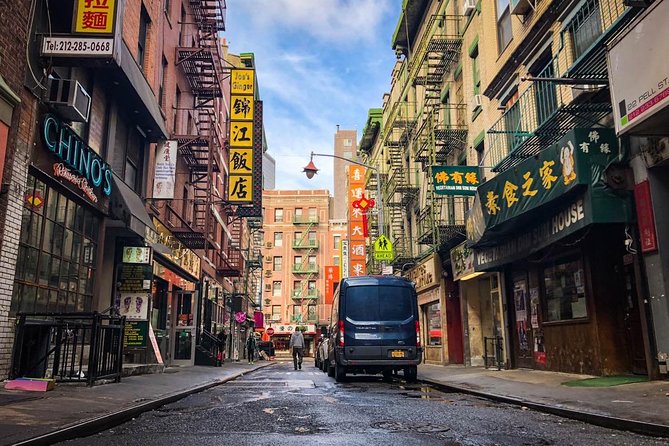
Reviewed · LITTLE ITALY AND CHINATOWN TOURS
Guided tour of Lower East Side, Chinatown and Little Italy in French
The most interesting thing about this French-language walking tour is the way it links three neighboring districts without treating them as separate postcard stops. You move from the immigrant story of the Lower East Side to the Chinese shops and public life of Chinatown, then finish among the Italian restaurants and delis of Mulberry Street.
I like the small maximum group of 12, which should make it easier to hear the guide and ask questions. I also like the human focus: Fred, Marc, Marie, and Aymeric are named guides praised for clear explanations, good pacing, memorable anecdotes, and a strong feel for New York’s past.
The main consideration is the pace and length. Three and a half hours on city sidewalks can feel long if you want a light introduction, and snacks are not included. You should also plan around the 2:30 pm start and the tour’s outdoor weather requirement.
Key points to know before booking
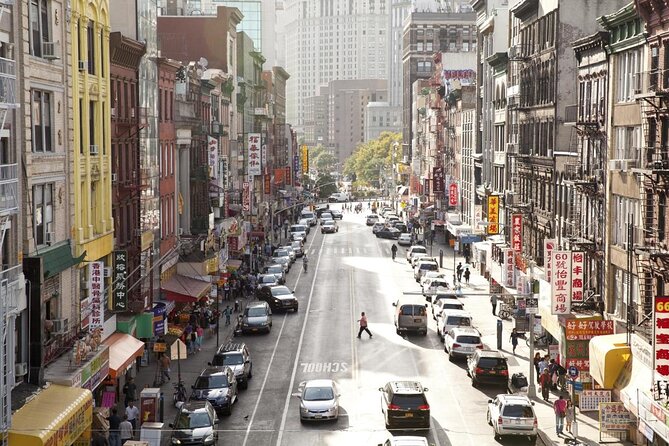
- Three districts in one walk: Follow the changing identity of the Lower East Side, Chinatown, and Little Italy in a single 3.5-hour route.
- French-speaking guidance: A professional French guide leads the experience, with Fred, Marc, Marie, and Aymeric among the named guides.
- Small group size: The tour accepts a maximum of 12 people, a useful advantage for a walking tour with frequent commentary.
- History beyond monuments: Expect stories about immigration, the Mafia, Prohibition, urban change, and daily community life.
- A lively finish on Mulberry Street: The tour ends at 176 Mulberry Street, near the restaurants, delis, and San Gennaro traditions of Little Italy.
- Strong published rating: The experience has a 5 rating from 65 reviews, with 100 percent recommended.
Why this route explains New York so well
New York can be hard to understand if you only visit major sights. The Lower East Side, Chinatown, and Little Italy show the city at street level, where migration, work, religion, food, housing, and business shaped whole neighborhoods.
I like the route because the three areas sit close together but feel different. That contrast gives the tour its structure. You are not simply collecting three names on a map. You are watching one part of Manhattan change from one community center to another.
The guide’s job matters here. A good guide can point out how history survives in a street name, a building style, a shop, a public park, or a restaurant row. The French-speaking format also helps if you want to ask detailed questions without searching for words in English.
This is not a museum tour with a long stop inside one building. It is an outdoor walk with history delivered as you move. That makes the city itself the subject, but it also means you should wear comfortable shoes and be ready for the conditions of the day.
More Lower East Side Tours:
- Lower East Side Food Tour: Taste NYC’s American Dream
★ 5.0 · 1,031 reviews - NYC Lower East Side Walking and Food Tour
★ 5.0 · 646 reviews - NYC: Taste the American Dream a Lower East Side Food Tour
★ 4.8 · 307 reviews
Starting in the Lower East Side at 2:30 pm
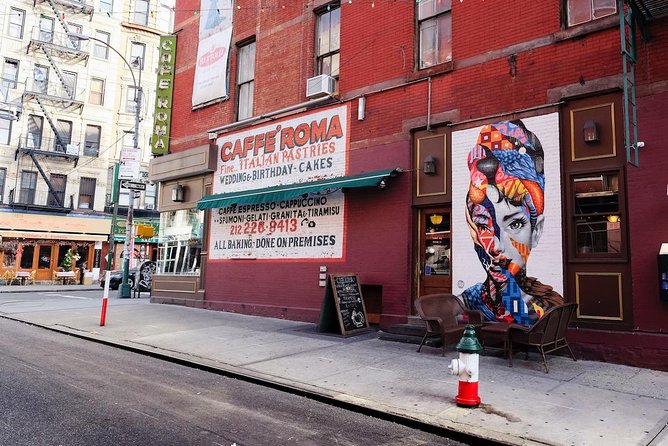
The tour begins on East Houston Street at 2:30 pm. This is a useful starting point because the Lower East Side gives you the broadest historical frame for the afternoon.
The area is tied to New York’s immigrant story and to the city’s difficult problems of housing, crowding, urban growth, and coexistence. Your guide is expected to explain how the neighborhood developed, not simply point out attractive façades.
The district also carries a strong film connection. The Lower East Side helped provide the setting and atmosphere for films such as Gangs of New York and Once Upon a Time in America. That does not mean the tour is a movie-location walk. The films are more useful as a doorway into the area’s older streets, rough reputation, and changing identity.
Stories of the Mafia and Prohibition add another layer. These subjects can easily become sensational, but on a good walking tour they help explain how power, commerce, law, and neighborhood life overlapped. The published comments about Marc, Fred, Marie, and Aymeric repeatedly highlight precise information and personal anecdotes, so you can expect more than a list of dates.
The modern Lower East Side gives the walk a different tone. Street art and art galleries have grown in the area, while restaurants and bars now draw a new crowd. I like this part of the route because it lets you see change rather than freeze the neighborhood in an old story.
That change is also something to think about critically. A district shaped by immigrant hardship can later become known for nightlife, art, and dining. The tour’s value lies in helping you hold both facts together. You get the older story and the present-day scene, rather than a polished version of either one.
Chinatown and the everyday life of Columbus Park
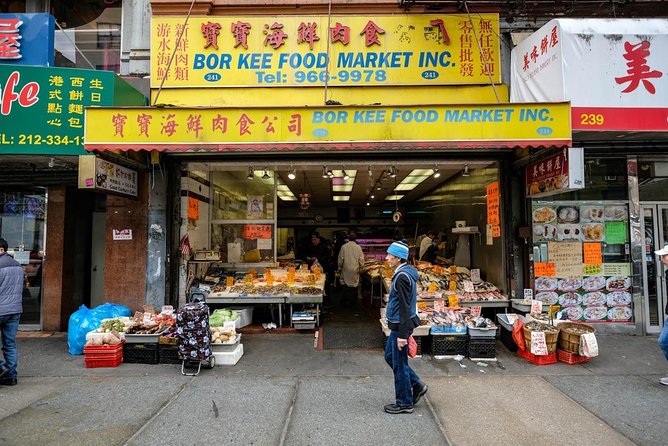
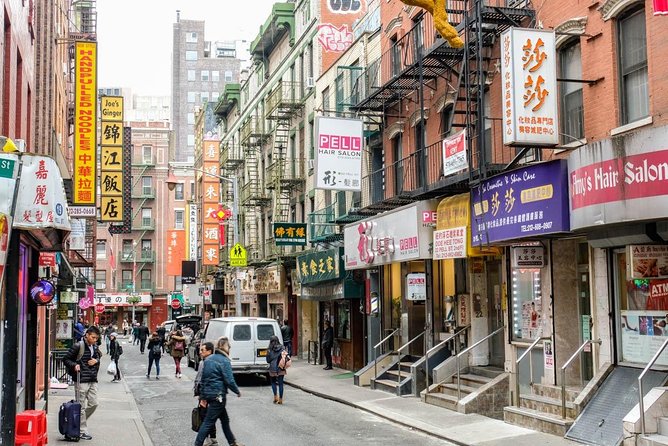
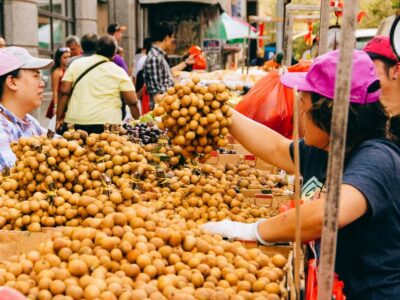
From the Lower East Side, the route moves into Chinatown, where the visual and social codes shift quickly. The area is described through its many shops, fishmongers, small workshops, and local businesses.
This is a good place to pay attention to ordinary activity. The appeal is not only a famous building or a single photo stop. It is the way storefronts, workspaces, markets, and public areas show how a neighborhood functions day by day.
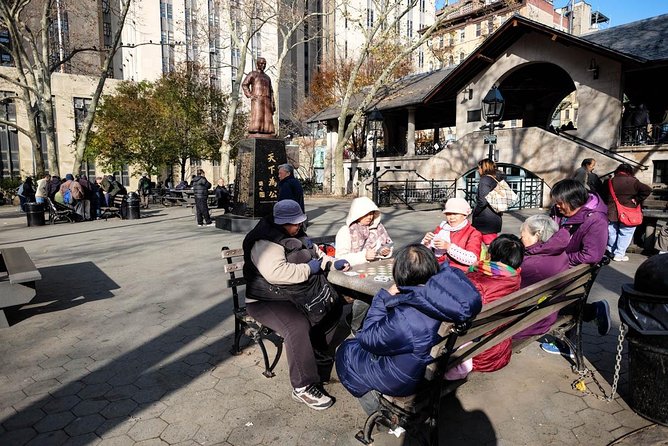
Columbus Park provides an important pause in the route. It occupies the former site of Five Points, a place strongly linked with the rough early city portrayed in popular accounts of nineteenth-century New York. Today, the park serves local residents who come to walk, play xiangqi, also called Chinese chess, or practice tai chi chuan.
That contrast is one of the smartest parts of the tour. A location once associated with poverty, crime, and overcrowding now serves as a place for recreation and community life. The guide can use that change to explain how New York’s public spaces and neighborhoods evolve.
Do not expect Chinatown to be presented only as a food stop. Shops and food businesses are part of the character, but the tour also points to social habits and public life. If you want a quick list of restaurants, this may not be the right format. If you want context for what you are seeing, the guided walk is more useful.
The route remains outdoors, and the tour does not include snacks. You might find food shops and restaurants along the way, but you should not count on a formal tasting or meal. Have something to eat before the start if you know you will be hungry during a 3.5-hour walk.
Finishing in Little Italy on Mulberry Street
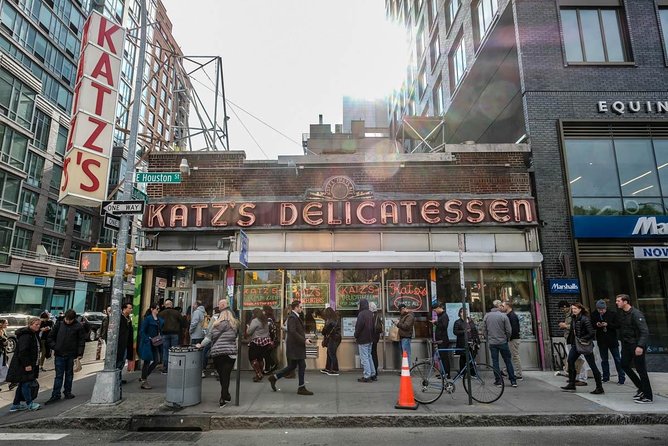
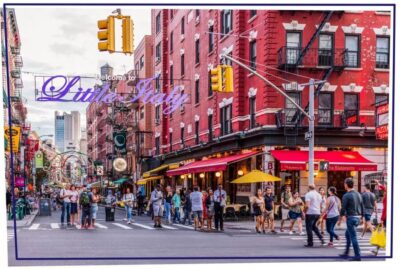
The final district is Little Italy, whose physical size has become smaller over time but whose identity remains easy to spot. Mulberry Street is the center of the visit, with Italian restaurants and delicatessens displaying the neighborhood’s heritage.
This part of the route works best when you see it as a surviving historic district, not as a perfectly preserved Italian town. The shrinking footprint is important. It shows that ethnic neighborhoods are not fixed forever. Communities grow, move, mix, and change, while certain streets, businesses, celebrations, and family traditions keep an older identity visible.
San Gennaro is the area’s best-known annual celebration. Mulberry Street displays Italian colors and hosts the festival each year, giving the neighborhood a public tradition that reaches beyond its restaurants.
The tour ends at 176 Mulberry Street, which is convenient if you want to continue exploring on your own afterward. You can use the final stop as a practical launch point for dinner, though the experience itself does not include food.
I would not book this tour solely for Little Italy if you want a large festival or a dedicated culinary experience. The strength of the stop is its place in the larger story. After seeing the Lower East Side and Chinatown, you can better understand how Little Italy fits into the changing pattern of Manhattan’s immigrant districts.
More Little Italy and Chinatown Tours:
- SoHo, Little Italy, and Chinatown Walking Tour in New York
★ 5.0 · 3,153 reviews - NYC: Chinatown & Little Italy Food Tour with 7 Flavorful Tastings
★ 5.0 · 2,733 reviews - Original NYC Guided Food Tour of Chinatown and Little Italy
★ 5.0 · 2,194 reviews - NYC: Chinatown and Little Italy Food Tour
★ 4.7 · 703 reviews
What the French-speaking format adds
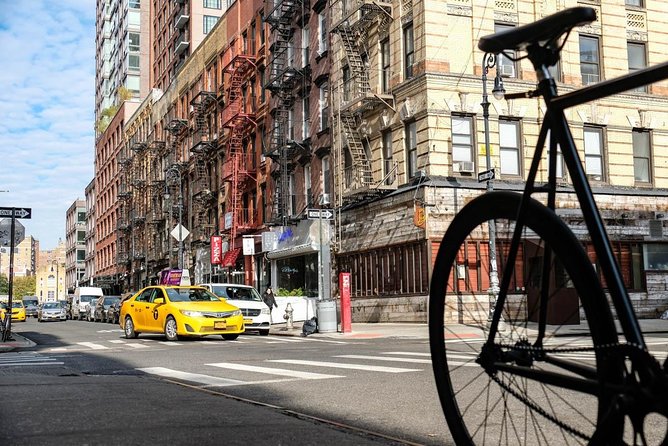
A French guide can make a real difference when the subject is social history. You are likely to hear explanations of immigration, religion, organized crime, Prohibition, and city planning in your own language, with room to ask follow-up questions.
The guide names give you a sense of the experience’s personal character. Fred is praised for explaining the beginnings and growth of New York at a steady pace. Marc is noted for passionate and precise information. Marie is described as experienced and skilled at holding attention through history and small curiosities. Aymeric is remembered for anecdotes and notable places.
Those details point to a tour that depends heavily on the person leading it. That is common with neighborhood walks. The route gives the guide a framework, but the quality comes from how clearly the story is told and how well the guide connects small details to larger events.
The published rating is 5 from 65 reviews, and the recommendation rate is 100 percent. Those figures suggest consistent satisfaction, especially with the guides’ explanations and personal style. I would still keep your expectations sensible: no walking tour can cover the full history of three districts in one afternoon.
The French format also makes this a practical choice for French-speaking visitors who want more than a basic orientation. You can focus on the story instead of translating signs or guide commentary in your head.
Group size, timing, and physical demands
The maximum group size is 12. That is small enough to feel more personal than a large city tour, and it should help when the guide is explaining a detail on a crowded sidewalk.
The duration is about 3 hours and 30 minutes. That gives the guide time to discuss all three districts, but it also asks you to stay engaged for most of an afternoon. The pace was praised in the comments about Marc and Fred, which is useful because a tour can be accurate yet tiring if it moves too quickly or stops too often.
The start is at 2:30 pm, with the end at 176 Mulberry Street. You should allow time to reach East Houston Street before the start, especially if you are crossing Manhattan or relying on public transportation.
The tour is near public transportation, and most people can participate. Service animals are allowed. The information does not describe a special accessible route, so if you have specific mobility needs, confirm the details with the provider before booking.
Comfortable footwear matters more than fashionable footwear here. The experience is built around walking through three adjacent districts, with outdoor commentary rather than a seated presentation.
Is $63.86 a fair price?
At $63.86 per person, this is not the cheapest way to wander through these neighborhoods. You can walk the same streets on your own for free.
The price makes more sense if you value interpretation. You are paying for a professional French-speaking guide, a planned route, local context, and the chance to ask questions in a small group. The tour also connects subjects that are easy to miss when you explore alone, such as the relationship between immigration, city growth, organized crime, public parks, and neighborhood change.
There is no snack, tasting, entrance ticket, or meal included. That keeps the focus on the walk, but it means you should compare this experience with a food tour only if food is your main goal. For history and neighborhood context, the price is easier to justify.
The fact that it is booked an average of 85 days ahead is a useful planning signal. If your dates are fixed, reserve early rather than assuming you can find a last-minute place, especially with a 12-person maximum.
Who should book this walk?
I would recommend it most strongly to French-speaking visitors who want a clear introduction to downtown Manhattan’s immigrant districts. It also suits repeat visitors who have seen the major sights and want to understand how ordinary streets carry New York’s past.
It is a good fit if you enjoy history, architecture, street art, local businesses, and social change. You will get more from the walk if you are curious about why a neighborhood looks and feels the way it does.
Families and mixed-age groups may also find the format workable because the route includes varied subjects, from films and Mafia stories to Chinese chess and Italian festivals. Still, the 3.5-hour length may be too much for young children who dislike long walks.
I would be cautious if you want a food-focused experience, a short orientation, or guaranteed indoor shelter. The tour requires good weather, and it can be canceled if the weather is poor or if the minimum number of participants is not reached.
Free cancellation is available up to 24 hours before the start time for a full refund. Changes or cancellations made less than 24 hours before the start are not accepted for a refund. If the provider cancels because of weather or insufficient participation, you can choose another date or experience, or receive a full refund.
My recommendation for this French-language New York walk
Book this tour if you want the Lower East Side, Chinatown, and Little Italy explained as parts of one changing city. The best features are the small group, the French commentary, the strong guide feedback, and the mix of serious history with street-level details.
Skip it if you mainly want to eat, shop, or take a short stroll. At $63.86, the value comes from the guide’s storytelling and the connections between neighborhoods, not from included food or attractions.
For the right reader, this is a thoughtful afternoon walk that turns three familiar New York names into a clearer story about immigration, identity, and urban change.
FAQ
How long does the tour last?
The tour lasts approximately 3 hours and 30 minutes.
What language is the tour conducted in?
The tour is conducted in French by a professional French-speaking guide.
Where does the tour begin?
The tour begins on East Houston Street in New York City at 2:30 pm.
Where does the tour end?
The tour ends at 176 Mulberry Street, New York, NY 10013.
How many people can join the tour?
The tour has a maximum capacity of 12 participants.
Is cancellation free?
You can cancel up to 24 hours before the experience starts for a full refund. Cancellations or changes made less than 24 hours before the start time are not accepted for a refund.
Recently added in New York City
- Guided tour of SoHo, Greenwich Village and Meatpacking District in French★ 5.0 · 90 reviews
- Visit in French the must-see neighborhoods of NYC★ 5.0 · 53 reviews
- Boho Greenwich Village: A Self-Guided Audio Tour★ 5.0 · 3 reviews
- Central Park Guided Walking Tour in French★ 5.0 · 39 reviews
- Victorian Flatbush , Brooklyn Private Tour★ 5.0 · 5 reviews
- Village Nights: Greenwich Village Food & History Walk★ 5.0 · 38 reviews
- Beat the Lines – Viral Food Tour of the West Village★ 5.0 · 77 reviews
- VIP Rock Pass: Includes SKYLIFT, Beam, Rooftop Garden★ 5.0 · 102 reviews
Little Italy and Chinatown Tours, compared.
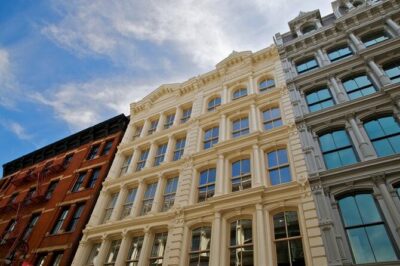
SoHo, Little Italy, and Chinatown Walking Tour in New York
Read our review →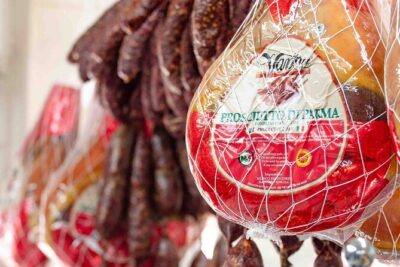
Chinatown & Little Italy Food Tour with 7 Flavorful Tastings
Read our review →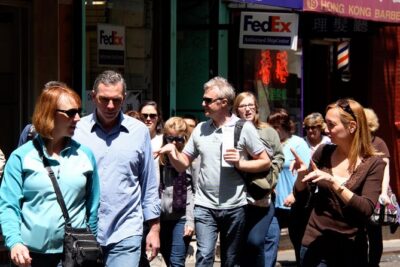
Original NYC Guided Food Tour of Chinatown and Little Italy
Read our review →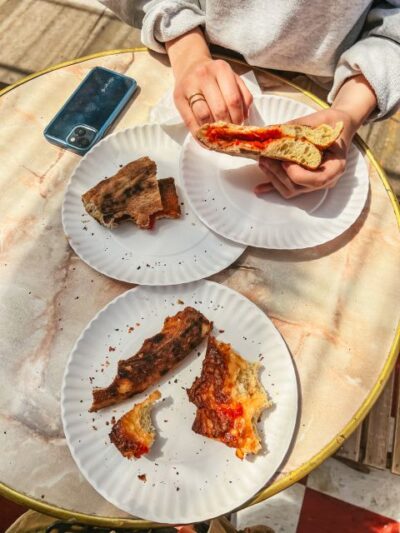
SoHo, Little Italy, and Chinatown 2-Hour Guided Walk
Read our review →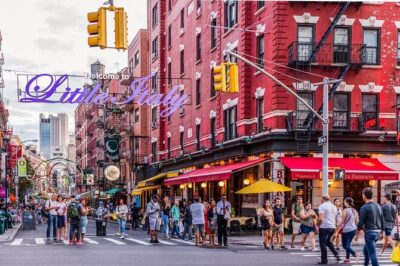
SoHo, Little Italy, and Chinatown NYC Guided Walking Tour
Read our review →
3 Neighborhoods Tour: Soho, Chinatown & Little Italy
Read our review →Browse the lists this tour appears in