
Reviewed · UPPER EAST SIDE TOURS
New York Upper East Side Art and Architecture Tour
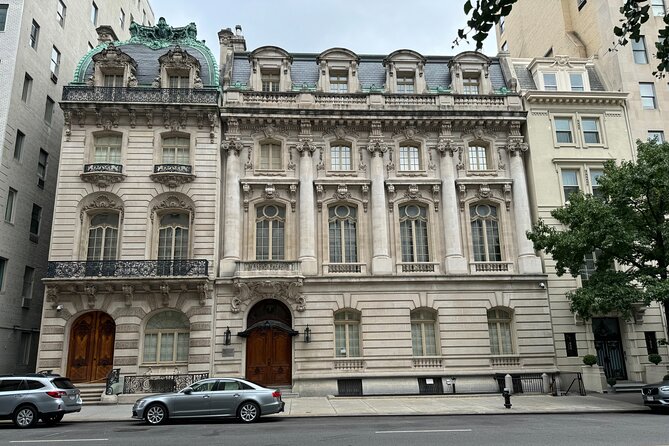
The Upper East Side is more than Fifth Avenue museums and polished apartment buildings. On this two-hour walk, you connect grand facades with the people, money, and design choices that shaped one of Manhattan’s most famous neighborhoods. Guide Ivan, the business founder, has led the tour himself, and the route includes both major landmarks and less familiar buildings.
I especially like the small maximum of 15 people, which gives the guide room to answer questions, and the personal headsets, a smart touch on noisy New York streets. I also like the compact afternoon timing: a 3 p.m. start fits neatly around a museum morning or an evening reservation.
The main limitation is that this is an exterior architecture walk, not a museum admission tour. You discuss the Met, Frick Collection, Guggenheim, and nearby buildings from the street, so you will need separate tickets and time if you want to go inside.
Key points at a glance
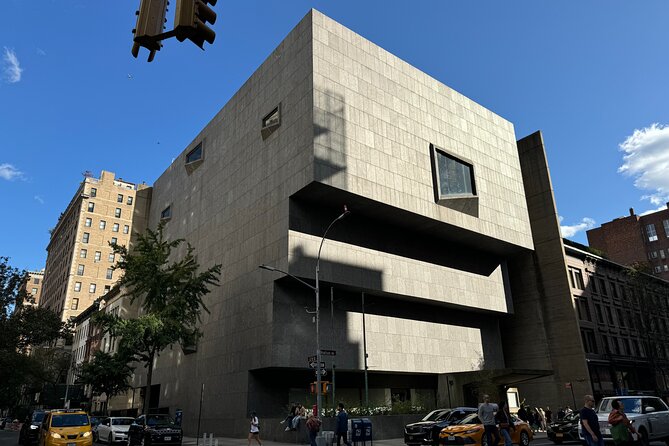
- See three major cultural landmarks: The route includes the Guggenheim Museum, Metropolitan Museum of Art, and Frick Collection.
- Look beyond the famous facades: Ivan has included lesser-known buildings, including what was described as New York City’s first luxury home.
- Keep up with the guide: Individual headsets help you hear commentary over traffic and city noise.
- Small-group format: The group is capped at 15 people, a useful size for questions and close attention.
- A manageable two-hour walk: The 3 p.m. departure works well for a busy New York sightseeing day.
- Multilingual guiding: In-person guiding is offered in English, Spanish, and Italian.
Why the Upper East Side works so well on foot
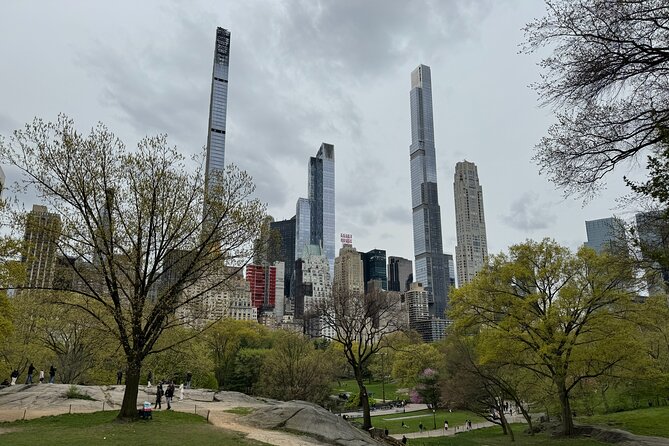
The Upper East Side gives you a concentrated lesson in New York’s changing fortunes. Within a short stretch, you see monumental museums, former mansions, apartment houses, and buildings linked to the city’s Gilded Age and industrial growth.
That mix is the reason I would choose a guided walk here instead of simply strolling along Fifth Avenue. On your own, you can admire stonework, columns, setbacks, and elaborate entrances, but you may miss why a particular building mattered or how residential life changed as Manhattan grew denser.
The tour also makes room for buildings that are not the usual postcard subjects. One especially interesting detail from the experience is the mention of what was considered the first luxury home in New York City. That kind of stop gives the walk a stronger sense of place than a simple list of famous museums.
You should expect a discussion-led outing rather than a theatrical performance. The value is in learning how architecture reflects wealth, taste, social status, and the changing role of the Upper East Side. If you enjoy design and city history, two hours can give you a useful framework for exploring the area afterward.
More Upper East Side Tours:
- Private Food Tour in the Upper East Side | Tasty Tours NYC
★ 5.0 · 66 reviews - The Psychiatric History of New York: Upper East Side Tour
★ 5.0 · 31 reviews - Central Park and Upper East Side Walking Tour
★ 4.5 · 7 reviews
Meeting at the Plaza and heading north
The tour begins at The Plaza, at 768 Fifth Avenue, with a scheduled start at 3 p.m. This is a practical starting point because you are already beside one of Manhattan’s best-known luxury hotels and close to Fifth Avenue’s museum corridor.
The walk ends at the Solomon R. Guggenheim Museum at 1071 Fifth Avenue. Travel time is included in the roughly two-hour duration, so this is not two hours of stationary talks. You should plan for a steady urban walk with stops for architectural discussion.
The listing identifies the Guggenheim as the first stop, while the meeting point and end point show that the overall experience moves north from The Plaza toward the museum. In practical terms, plan to meet at The Plaza, follow the guide through the Upper East Side, and finish at the Guggenheim.
Wear comfortable shoes. The tour is short by New York standards, but city walking includes pavement, traffic crossings, and pauses outdoors. The experience requires good weather, so poor conditions can lead to a different date or a full refund.
The Metropolitan Museum of Art from Fifth Avenue
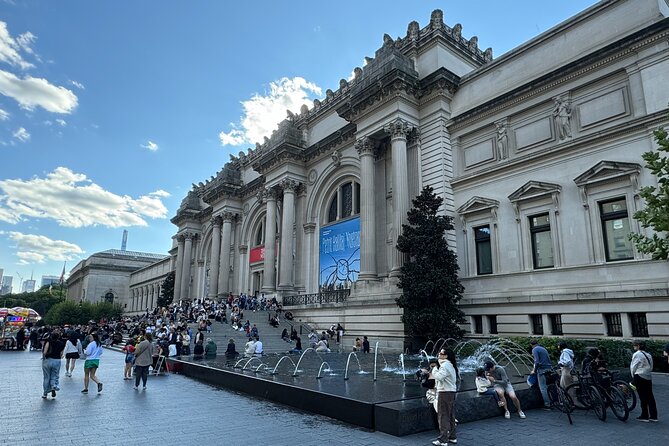
The Metropolitan Museum of Art receives about 15 minutes of focused attention. You view the Met from Fifth Avenue and discuss its architecture rather than entering for a full museum visit.
That distinction matters. The Met is enormous, and even a hurried interior visit can take several hours. A street-level architecture talk lets you concentrate on the building itself, its scale, and its place along Fifth Avenue without trying to squeeze a museum tour into the same afternoon.
For me, this is one of the best uses of a short guided walk. You can reserve a separate block of time for the galleries and still understand why the exterior matters. The guide can also connect the museum to the wider design language of the avenue and the grand institutions around it.
The drawback is simple: 15 minutes is not enough for a detailed examination of such a large complex. If the Met is your main reason for visiting the Upper East Side, buy or arrange separate museum time. This tour gives you context, not an interior collection visit.
The Frick Collection and the world of private mansions
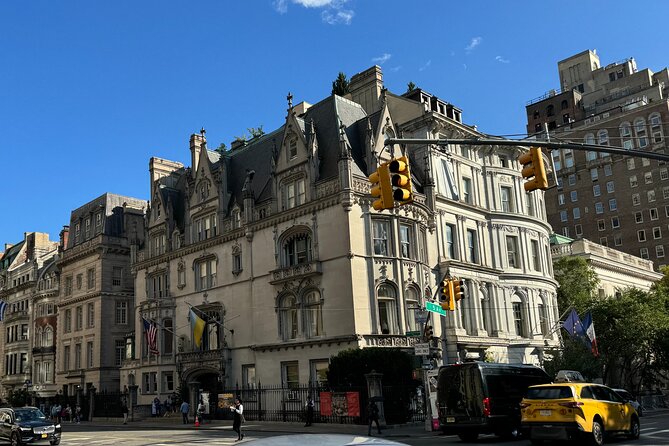
The Frick Collection gets roughly 10 minutes of discussion. The focus is the building, which helps explain how a private residence can become a public cultural institution.
The Frick is especially useful for understanding the Upper East Side’s transition from private wealth to public access. You are not simply looking at an attractive facade. You are considering the relationship between the home, the collection, and the social world that produced such grand residences.
The experience also connects to the area’s Gilded Age and industrial past. One review described the tour as covering industrial and Gilded Age history while honoring the layers of residential and commercial change. That is a useful way to approach the neighborhood: the buildings are not isolated monuments, but clues to how New York’s elite lived and how the district developed.
Again, this is an exterior discussion. The tour does not include a full Frick Collection visit, so you should allow separate time if you want to see the art inside. The 10-minute stop is best for orientation and architectural context.
More NYC Skyline and Architecture Tours:
- Statue of Liberty & NYC Skyline Cruise – Freedom Liberty Tour
★ 4.0 · 1,499 reviews - Manhattan Architecture Yacht Cruise
★ 5.0 · 1,395 reviews - NYC: Dyker Heights Christmas Lights & Skyline View Bus Tour
★ 4.7 · 1,192 reviews - From Manhattan: Dyker Heights Lights & Skyline Tour
★ 4.6 · 1,005 reviews
Finishing at the Guggenheim’s famous curve
The Solomon R. Guggenheim Museum is the tour’s endpoint and receives about 10 minutes. Its unusual form gives the guide an ideal final subject, especially for anyone interested in modern architecture and design.
You can study the museum from outside and discuss how its shape differs from the more traditional institutional buildings along Fifth Avenue. The contrast between the Guggenheim, the Met, and the Frick helps show how many architectural ideas meet within a relatively small part of Manhattan.
The Guggenheim is also a useful ending point. After the tour, you are in a strong position to continue with your own visit or move on to another Upper East Side plan. Since the walk finishes at 1071 Fifth Avenue, you do not need to backtrack to The Plaza simply to collect your bearings.
Do not confuse the included stop with included museum admission. The scheduled experience centers on viewing and discussing the building. If you want to see the galleries, check the museum’s own admission arrangements separately.
The buildings between the headline stops
The major museums are the easy part to find. The less obvious buildings give this experience its character.
Ivan’s tour has been praised for including remarkable structures beyond the Guggenheim and other famous institutions, including the first luxury home in New York City. That detail suggests a useful approach to the walk: keep your eyes on side streets, entrances, rooflines, and residential facades rather than focusing only on the next major museum.
This is where a guide can add real value. A casual walk may leave you with the impression that the Upper East Side is simply a polished stretch of expensive real estate. A guided explanation can show how domestic architecture, commercial activity, industrial wealth, and institutional building all shaped the neighborhood at different times.
You may also find that the most memorable stop is not the one you already know from a guidebook. The famous buildings provide the structure, but the lesser-known residences help you understand what made the district attractive to powerful families and later residents.
Why the headsets and small group matter
New York is not a quiet place for a walking lecture. Traffic, sirens, buses, construction, and ordinary street noise can easily swallow a guide’s voice. The individual headsets are one of the most practical features of this experience because you can hear the commentary without needing to crowd around the guide.
The group limit is 15 people. That is small enough to keep the walk orderly and gives you a reasonable chance to ask questions. It is not a private tour, so you should not expect the guide to rebuild the entire route around your interests, but it is more personal than a large sightseeing group.
The available guide languages are English, Spanish, and Italian. The guide is in person, rather than presenting prerecorded material through an app. Ivan, identified as the founder of the business, has led this tour himself and has also guided a Wall Street and Financial District walk. If he is leading your departure, you can expect a guide with a clear personal connection to the company and its New York themes.
Is $49 a fair price?
At $49 per person, this is not the cheapest way to walk Fifth Avenue. You can see the exteriors of the Met, Frick, and Guggenheim for free on your own.
The question is what you want from the outing. If you are comfortable researching buildings as you go, the price may not make sense. If you want a structured explanation of the neighborhood, a guide who points out less obvious residences, and commentary you can hear clearly, the cost is more reasonable.
The tour also saves planning time. You do not need to build your own route from The Plaza to the Guggenheim or decide which buildings deserve attention. The two-hour length limits the cost and time commitment, while the small group and headsets improve the basic walking experience.
I would consider the price fair for someone with a real interest in architecture, design, or New York’s social history. It is less compelling if you simply want a quick photo stop at the Guggenheim or plan to spend the afternoon inside the Met.
All fees and taxes are included, but tips are not. Plan for gratuity if you feel the guide provided a useful experience.
Who should book this walk?
This experience suits you best if you like buildings as much as museums. It is a good choice for a first or second New York visit when you want a clear introduction to the Upper East Side without committing half a day to a long walking tour.
It also works well for repeat visitors. If you have already seen the Met and Guggenheim, the guide can shift your attention toward residential architecture, the neighborhood’s changing wealth, and lesser-known structures.
The short format is useful for couples and small groups with a packed schedule. A 3 p.m. start leaves the morning open for another museum or neighborhood, and the finish at the Guggenheim gives you a natural next stop.
You may want to skip it if you dislike outdoor walking, need a private pace, or expect to enter every museum along the route. This is a guided look at buildings and their setting, not a ticketed museum crawl.
Most people can participate, and service animals are allowed. The route is near public transportation, which makes the start and finish easier to reach, though the available information does not give a detailed accessibility breakdown.
Practical planning for the afternoon
Book with the weather in mind. This experience requires good weather, and a cancellation caused by poor conditions offers either another date or a full refund.
You can cancel for a full refund up to 24 hours before the 3 p.m. start time. Changes or cancellations made less than 24 hours ahead are not accepted for a refund. The cutoff uses New York local time.
Confirmation arrives at booking, and the ticket is mobile. Keep your phone charged and make sure you can display the confirmation at the meeting point.
Since the route uses personal headsets, arrive ready to receive the equipment and follow the guide’s instructions. You do not need a long block of time, but give yourself enough margin to reach The Plaza before the 3 p.m. departure.
My take: a smart architecture primer
I would book this tour if I wanted to understand the Upper East Side rather than simply pass through it. The combination of the Met, Frick, Guggenheim, grand homes, and lesser-known buildings gives the walk a useful range.
The best reasons to go are the small group, clear headset commentary, and Ivan’s focus on both famous landmarks and overlooked buildings. The main tradeoff is that the tour stays outside and gives each major stop only a short discussion.
Book it when you want a compact, guided introduction before exploring the museums on your own. Skip it when your priority is interior access or a long, detailed examination of a single collection. At $49, the value comes from interpretation and route planning, not admission tickets.
FAQ
How long does the Upper East Side Art and Architecture Tour last?
The tour lasts approximately two hours, including travel time between stops.
Where does the tour begin?
The meeting point is The Plaza at 768 Fifth Avenue, New York, New York 10019.
Where does the tour end?
The tour ends at the Solomon R. Guggenheim Museum at 1071 Fifth Avenue.
What time does the tour start?
The scheduled start time is 3 p.m.
Which languages are available?
The in-person guide is available in English, Spanish, and Italian.
Is the tour suitable for a small group?
Yes. The activity has a maximum of 15 participants, and each person receives a professional individual headset.
Recently added in New York City
- Squid Game: The Experience New York City★ 4.0 · 9 reviews
- New York: Private Professional Photoshoot at Central Park★ 5.0 · 9 reviews
- Professional Photoshoot at Brooklyn Bridge in New York★ 5.0 · 5 reviews
- New York Queens Indoor Skydiving Experience With 2 Flights★ 5.0 · 4 reviews
- New York 4-Day Tour to Niagara Falls & Washington★ 4.0 · 13 reviews
- New York: Times Square Professional Photoshoot★ 4.5 · 17 reviews
- New York Princess Cruises★ 3.0 · 4 reviews
- New York Midtown Scavenger Hunt Adventure★ 3.5 · 9 reviews
Upper East Side Tours, compared.

Private Food Tour in the Upper East Side | Tasty Tours NYC
Read our review →
The Psychiatric History of New York: Upper East Side Tour
Read our review →

Browse the lists this tour appears in