
Reviewed · UPPER EAST SIDE TOURS
The Psychiatric History of New York: Upper East Side Tour
New York’s psychiatric past is written into ordinary streets, apartment houses, theaters, and former medical buildings. This two-hour walk turns the Upper East Side into an open-air storybook, linking places connected with psychiatry, neurology, child study, and medical care.
I like the small group of no more than 12, which should make it easier to hear the guide and ask questions. I also like the route’s variety: you get East River views, German Yorkville history, handsome town houses, and Park Avenue architecture along with the medical stories. The main drawback is that the subject can feel heavy, and one poor review raises a fair concern about guide delivery. The quality of the walk may depend strongly on who leads it.
Key points to know before you book
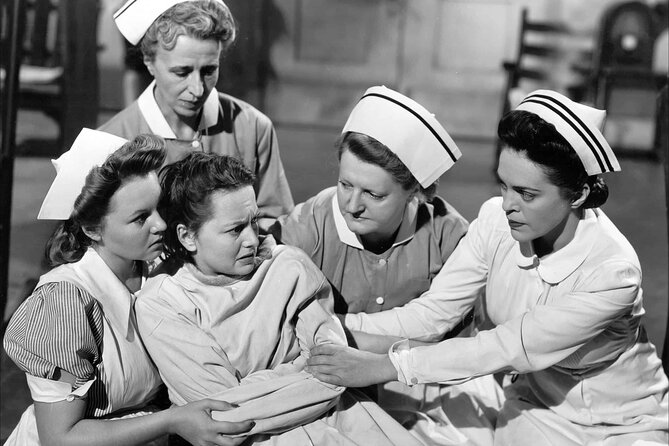
- A rare New York theme: The walk focuses on psychiatric and neurological history rather than the usual skyline, movie sites, or famous museums.
- Eight carefully chosen stops: The route links the East River, Yorkville, former medical sites, Park Avenue Armory, and Madison Avenue.
- A compact two-hour format: You cover a lot without giving up an entire afternoon.
- A maximum of 12 people: The small group suits anyone who wants a more personal discussion.
- Krombe may lead the walk: Feedback names Krombe, with one mention spelled Krumbie, as a lively and informed guide.
- Good value for a specialist walk: At $40, the price is reasonable if you care about New York’s medical and social past.
Why psychiatric history works so well in the Upper East Side
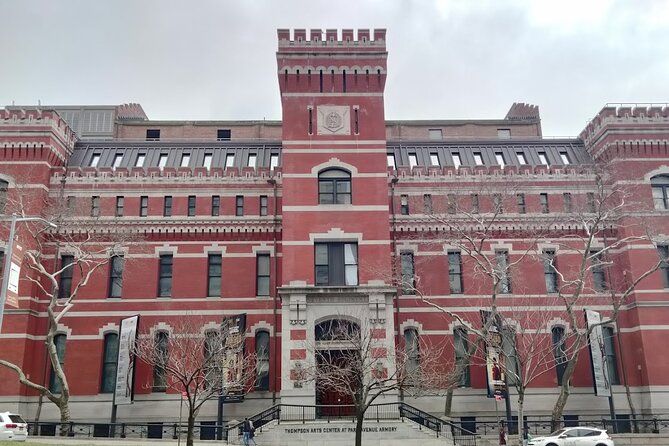
I find this tour appealing because it asks you to look twice. A building may seem like another handsome Manhattan address, yet its past can involve a dispensary, a neurological institute, a child study center, or a society devoted to psychoanalysis.
That approach gives the walk a useful local feel. You are not simply shown a famous landmark and handed a date. You are encouraged to connect architecture, medicine, social attitudes, and the changing city around you.
The subject also requires a thoughtful guide. Psychiatric history can involve suffering, outdated treatments, and families coping with serious illness. The strongest version of this tour should treat those subjects with care while still telling an engaging story. The best feedback describes the walk as unusual, informative, scenic, and fun, while one critical comment says the guide read from a book and offered few memorable stories. I would keep that variation in mind when booking.
More Upper East Side Tours:
- Private Food Tour in the Upper East Side | Tasty Tours NYC
★ 5.0 · 66 reviews - Central Park and Upper East Side Walking Tour
★ 4.5 · 7 reviews - NYC: Private Upper East Side Guided Food Tour
★ 5.0 · 6 reviews
Starting beside the East River at East 87th Street
The tour begins at East 87th Street and East End Avenue at 3:00 pm. The opening stop is John Finley Walk, where you look across the East River toward Roosevelt Island and Wards Island.
This is a smart place to begin. You get open sky and water before moving into the dense Upper East Side, and the view helps you understand the city’s geography. Roosevelt Island is especially relevant to the area’s institutional past, so the outlook is more than a pleasant photo stop.
The stop lasts about 12 minutes and has no admission fee. You should arrive ready to walk at once, since the tour has a set start time and several stops to cover. Comfortable shoes matter more than formal clothing, and the route is best suited to someone who enjoys learning while moving through city streets.
Yorkville’s glockenspiel and the neighborhood’s German past
The next stop is the Yorkville Glockenspiel at the southwest corner of East 83rd Street and York Avenue. The mural pays tribute to the German Yorkville neighborhood, adding a cultural layer to a tour that could otherwise focus only on doctors and institutions.
I like this change of pace. It shows that psychiatric history did not unfold in a vacuum. Medical buildings existed within neighborhoods shaped by immigrant communities, music, work, language, and daily life.
The stop is again planned for about 12 minutes, with no admission charge. Do not expect a long museum visit here. The value comes from the guide explaining what you are looking at and tying the mural to the surrounding streets.
The New York Psychoanalytic Society and Institute
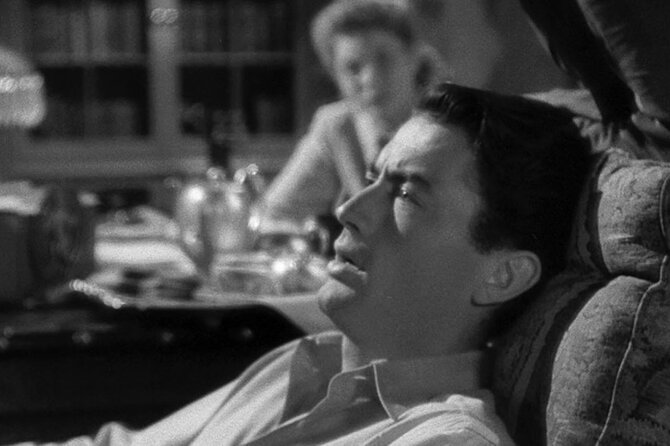
At 247 East 82nd Street, the route reaches the New York Psychoanalytic Society and Institute. This is one of the clearest links between the modern Upper East Side and the history of psychoanalysis.
The name alone may mean different things to different people. If you have read about psychoanalysis, you may appreciate the institutional connection. If you know little about it, this is a useful point to hear how ideas about the mind entered New York professional life.
The planned stop lasts 12 minutes. That is enough for an explanation outside, but not enough for a full lecture on psychoanalytic theory. I would approach this part as a focused introduction, not a substitute for a museum or academic course.
More Historical Tours in New York City:
- New York City: American Museum of Natural History Ticket
★ 4.5 · 15,447 reviews - NYC: Starship Landmark 90 Minute Sightseeing Cruise
★ 4.6 · 3,666 reviews - Starship Landmark 90 Minute Sightseeing Cruise
★ 4.5 · 2,073 reviews - American Museum of Natural History Admission Ticket
★ 4.0 · 1,931 reviews
East 80th Street houses and the power of ordinary buildings
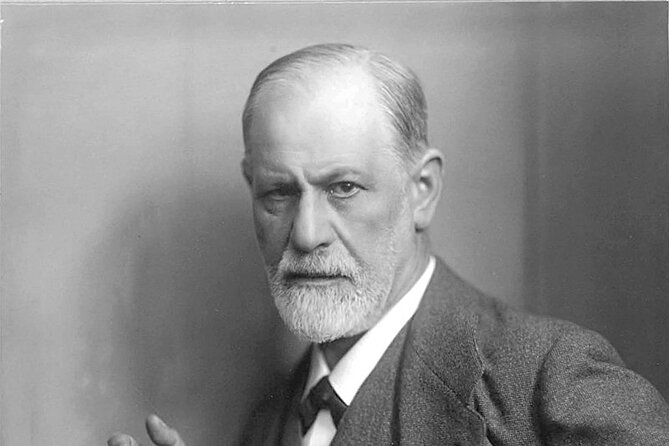
The East 80th Street houses are a reminder that important stories can hide behind familiar facades. The route does not rely only on grand public buildings. It also asks you to notice private homes and residential architecture.
This is where a guide’s storytelling matters most. Without context, a row of houses can look like a pleasant but anonymous stretch of Manhattan. With the right explanation, you may begin to see how private residences connect to the people and institutions that shaped psychiatric practice in New York.
The stop is listed for about 12 minutes and costs nothing to enter. The tour’s emphasis on places that locals might walk past makes it a good choice if you have already seen the Empire State Building, Central Park, and the major museums and want a more specific subject.
Hunter College’s Baker Theatre Building at East 67th Street
The route then moves south to the Hunter College Baker Theatre Building at 149 to 151 East 67th Street. Its earlier roles included the Mount Sinai Dispensary, the Neurological Institute, and the Kennedy Child Study Center.
This may be the most information-packed stop. One address connects several stages of medical and educational work, allowing the guide to explain how services for physical illness, neurological conditions, and children changed over time.
I would pay close attention here because the building’s present use can make its earlier purpose easy to miss. The tour’s strength is not simply naming the former institutions. It is showing how the same piece of the city can carry several different chapters.
The stop lasts about 12 minutes and is viewed from the outside. That means the guide’s account does the heavy lifting, so this is another place where delivery can shape the experience.
Park Avenue Armory and a change of architectural scale
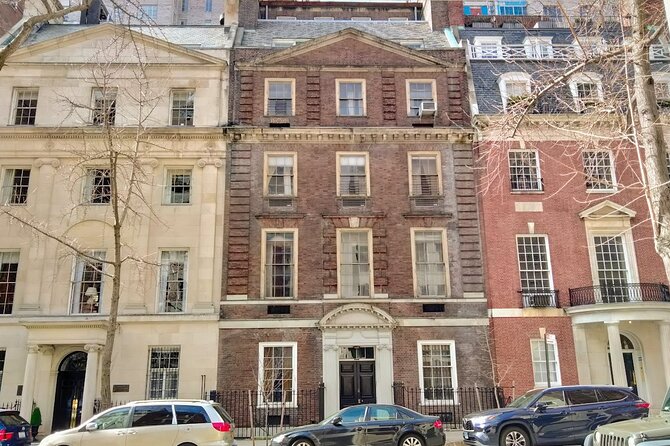
At 643 Park Avenue, you reach the Park Avenue Armory. The building gives the walk a larger architectural presence after the smaller streets and private houses.
The Armory is one of the route’s best-known visual landmarks, but the tour places it within a medical and psychiatric story rather than treating it as an isolated photo opportunity. That wider framing is useful. You see how institutions, elite addresses, civic buildings, and public life overlap on the Upper East Side.
The planned visit is about 12 minutes, with no admission ticket included or required for this outdoor stop. If you already know the Armory, the guide’s historical angle may still give you a fresh reason to look at it.
Tillinghast House on East 64th Street
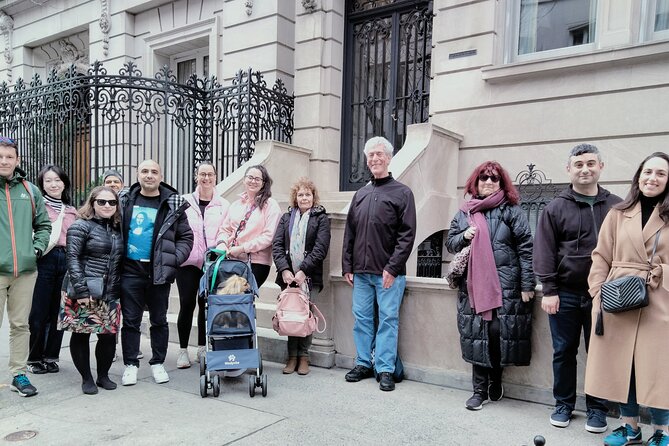
The next stop is Tillinghast House at 26 East 64th Street, just off Madison Avenue. This brings the walk into an area where grand residences and prestigious cultural addresses sit close together.
I like the way the route gradually moves south. You begin by the river, pass through Yorkville, and finish near Central Park and Madison Avenue. The changing streets give the walk a clear sense of place, even when the subject remains specialized.
The stop lasts about 12 minutes. As with the East 80th Street houses, the interest depends on learning why the address matters. You will not be entering a museum collection, so listen for the connection between the house, its occupants, and the wider psychiatric story.
East 62nd Street and the final Madison Avenue addresses
The final stop is at 15 to 17 East 62nd Street, off Madison Avenue, and lasts about 18 minutes. This is the longest stop on the route, which suggests that the guide has more to explain here than at the earlier points.
You finish at East 62nd Street and Madison Avenue, a few blocks from the southeast corner of Central Park. That ending is convenient if you want to continue sightseeing, find a meal, or walk toward the park after the tour.
The final stretch also gives the route a satisfying urban contrast. You have moved from the quieter East End Avenue side of Manhattan to one of the city’s most polished avenues. The psychiatric story ends in a setting many people associate with art, shopping, and grand architecture, which helps reinforce the tour’s main idea: history is often close at hand, even when you are not looking for it.
What $40 buys you
The price is $40 per person. For a two-hour walk, that is not the cheapest way to spend an afternoon in New York, but it is fair for a specialized small-group tour with a maximum of 12 people.
You are paying for interpretation, not admission tickets. Every listed stop is free, and the value depends on the guide making the addresses meaningful. If you want a standard sightseeing circuit, you may find the subject too narrow. If you enjoy unusual city stories and prefer a guide to a self-guided walk, the price makes sense.
The small group improves the value. A dozen people is large enough for energy but small enough to keep the conversation manageable. It also gives you a better chance to ask about a building or idea that catches your attention.
Guide style and the importance of expectations
The guide identified in the feedback is Krombe, with one spelling appearing as Krumbie. The strongest comments describe a guide who is funny, passionate, engaging, and well informed about New York’s psychological past. One person also said the walk prompted further reading and helped fill gaps in their understanding of the subject.
That tells me this tour works best when you want a story-led experience, not just a list of dates. You should expect interpretation and conversation around the buildings, not access to the interiors.
At the same time, the critical response is worth taking seriously. A guide who reads heavily from a book could make an unusual subject feel flat. Since the group is small, an engaging guide can make the walk feel personal, while a less effective presentation may be more noticeable than it would be in a large group.
Who will enjoy this walk most
I would recommend it to repeat visitors, Upper East Side residents, students of psychology or medicine, and anyone who likes overlooked corners of New York. It also suits people who have already covered the classic sights and want a tour with a clear theme.
The subject may interest families touched by bipolar disorder or other mental health issues, though the tour is not presented as a support program or clinical discussion. You should book because you want historical context, not personal medical advice.
This is also a good fit for independent-minded visitors who like seeing a neighborhood on foot. The route includes free outdoor stops, city views, and architecture, so the psychiatric theme is balanced by a pleasant walk through one of Manhattan’s most recognizable districts.
Practical details that affect the day
The tour is offered in English and uses a mobile ticket. Confirmation arrives when you book, and service animals are allowed. The route is near public transportation, and most people can participate.
You start at 3:00 pm and finish around two hours later at East 62nd Street and Madison Avenue. The start and end points are several avenues apart, so plan to meet at East 87th Street and East End Avenue rather than assuming the tour begins near Central Park.
Free cancellation is available if you cancel at least 24 hours before the start time. Cancellations or changes made within 24 hours are not accepted for a refund. The cutoff uses New York local time.
Should you book the Upper East Side psychiatric history tour?
Book it if you want a focused, unusual walk that reveals the medical stories behind ordinary New York addresses. The combination of East River views, Yorkville culture, former medical sites, handsome houses, and Park Avenue architecture gives the two hours a good rhythm.
Skip it if you want interior access, a broad general tour of Manhattan, or a light sightseeing outing with no serious subject matter. The tour depends heavily on the guide’s storytelling, so I would choose it with realistic expectations. At $40, a small group, a clear theme, and eight free stops make it a worthwhile pick for curious visitors who want to see the Upper East Side differently.
FAQ
How much does the tour cost?
The tour costs $40 per person.
How long does the tour last?
The tour lasts approximately two hours.
Where does the tour begin?
It begins at East 87th Street and East End Avenue in New York.
What time does the tour start?
The scheduled start time is 3:00 pm.
Where does the tour finish?
It ends at East 62nd Street and Madison Avenue, a few blocks from the southeast corner of Central Park.
How many people can join the tour?
The maximum group size is 12 people.
What language is the tour offered in?
The tour is offered in English.
Are admission tickets needed for the stops?
The listed stops have no admission charge.
Is the tour near public transportation?
Yes, the tour is near public transportation.
Can I cancel for a full refund?
Yes. You can cancel for a full refund at least 24 hours before the experience start time. Changes or cancellations made less than 24 hours before the start time are not accepted for a refund.
Recently added in New York City
- NYC: Midtown Hands-On Bagel Baking Class★ 5.0 · 12 reviews
- Personalize Sightseeing Tour★ 5.0 · 92 reviews
- Central Park Pedicab Tour with Guide★ 5.0 · 63 reviews
- Central Park Pedicab Guided Tour★ 5.0 · 17 reviews
- Photographer, Professional Photo shoot – New York★ 5.0 · 16 reviews
- Official Central Park Pedicab Ride ( UP TO 3 PERSONS )★ 5.0 · 4 reviews
- JFK or LGA package only (Round trip transfer plus VIP Contrasts)★ 5.0 · 3 reviews
- Official Central Park Pedicab Tours★ 5.0 · 35 reviews
Upper East Side Tours, compared.

Private Food Tour in the Upper East Side | Tasty Tours NYC
Read our review →

New York Upper East Side Art and Architecture Tour
Read our review →Browse the lists this tour appears in