
Reviewed · GRAND CENTRAL TERMINAL TOURS
Grand Central Terminal Walking Tour
Grand Central Terminal is far more than a place to catch a train. It is a lesson in New York ambition, engineering, scandal, and preservation, all packed into one grand public building. This guided walk explains why the terminal was built here, what stood on the site before it, and how a deadly accident helped shape its future.
I like the clear focus on one landmark and the way the tour connects architecture with New York history. I also like the efficient two-hour length, which gives you a useful introduction without swallowing half your day. The main drawback is that the experience stays centered on Grand Central Terminal, so you may want more time afterward if you enjoy examining architectural details at your own pace.
Key points about the Grand Central walk
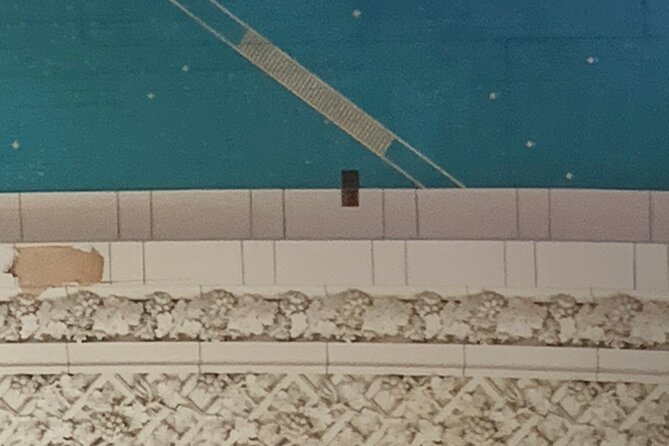
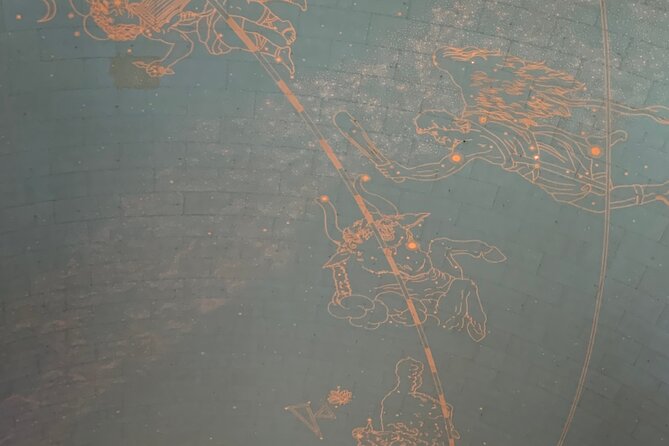
- The astronomy ceiling gets proper attention: Learn how the Main Concourse ceiling was designed and why its star-filled image has caused so much discussion.
- A tragic accident shaped the station: The tour explains the event that helped lead to Grand Central Terminal’s construction.
- Jacqueline Kennedy Onassis enters the story: Discover how her efforts helped save this New York landmark.
- Guide Martin brings visual aids: Historical photographs help connect the present terminal with earlier versions of the site.
- Morning and afternoon times keep your schedule open: You can fit the walk around other Midtown plans.
- Small groups are possible, but not guaranteed: The stated maximum is 35 people, while some departures may be much smaller.
Why Grand Central deserves a guided visit
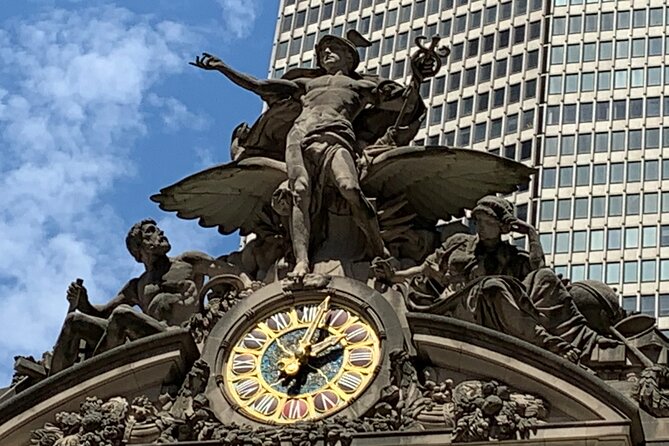
You can walk into Grand Central Terminal on your own and admire the Main Concourse in a few minutes. You can also spend an hour there and leave without understanding why the building exists, how close it came to disappearing, or why its design matters.
That is where this tour earns its keep. It gives the building a story. You learn why the terminal was placed where it is and what occupied the area before the present structure. You also hear how a terrible accident pushed New York toward a new kind of rail station.
That context changes the way you look at the building. The massive concourse is not just a pretty room for commuters. Its size, layout, materials, and ceiling reflect the technology and confidence of an earlier New York. A guide can point out the choices that are easy to miss when you are busy finding a platform.
The tour also reaches beyond architecture. You hear about the Vanderbilt family, the people and forces behind the terminal’s development, and the campaign connected with Jacqueline Kennedy Onassis. Those details turn Grand Central from a postcard backdrop into a place shaped by money, politics, engineering, public use, and preservation.
More Grand Central Terminal Tours:
- Secrets of Grand Central Station Walking Tour New York City
★ 5.0 · 1,796 reviews - NYC: The Secrets of Grand Central Terminal
★ 4.8 · 718 reviews - NYC: Official Grand Central Terminal Tour
★ 5.0 · 458 reviews
Meeting at 90 East 42nd Street
The walk begins at 90 E 42nd St, New York, NY 10017, and returns to that same meeting point at the end. That makes the outing easy to plan, especially if you are already spending time in Midtown Manhattan.
You should arrive knowing that this is a walking tour rather than a private museum visit. The activity takes place around Grand Central Terminal, with the guide explaining the building and its stories as you move through the site.
The listed duration ranges from about one hour and 30 minutes to two hours, while the detailed tour description places the walk at approximately two hours. In practical terms, set aside two hours so you are not rushing to your next reservation.
Morning and afternoon departures are offered. That choice is useful because Grand Central can fit into several kinds of day plans. An earlier start can work before other sightseeing, while an afternoon time can follow a museum or Midtown visit. The exact departure time you choose matters more than the broad morning or afternoon label, so check it carefully when booking.
The story before the terminal existed
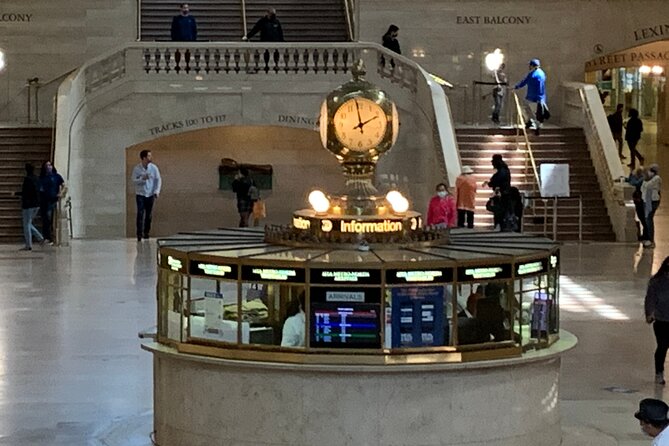
One of the strongest parts of the walk is the explanation of what came before Grand Central Terminal. The station did not simply appear in an empty part of Manhattan. Its location and design grew out of New York’s expanding rail system and the pressures created by urban growth.
The guide explains why the site was selected and how the earlier use of the area shaped what came next. This is useful because it gives you a sense of cause and effect. The terminal was not built only to impress people. It answered serious problems created by rail traffic, city growth, and the limits of older facilities.
The tour also covers the terrible accident that led to the terminal’s construction. That detail gives the building’s origin a darker edge. Grand Central was the result of both ambition and necessity, and the accident helps explain why New York needed a safer, more advanced station.
You will likely get more from this section if you enjoy the practical side of city history. Instead of hearing only dates and famous names, you learn how an event can force a city to rethink its infrastructure.
Reading the Main Concourse ceiling
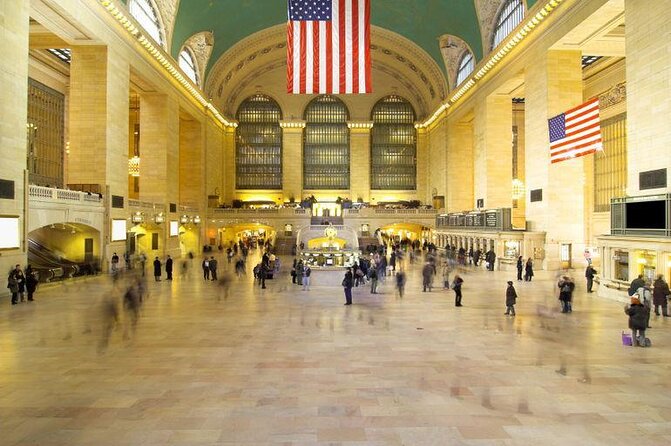
The Main Concourse is the visual heart of Grand Central, and the tour gives special attention to its astronomy-themed ceiling. Look up and you see a field of stars and constellations spread across the room. A guide can explain how the ceiling fits into the building’s design and why it has prompted myths and debate.
This is the sort of detail that rewards a guided visit. Most people naturally notice the scale and color of the ceiling, but a good explanation helps you look at it with more care. The astronomy design becomes part of the building’s larger idea: the terminal presents transportation as something grand, modern, and almost cosmic.
The guide also discusses the architecture and materials used throughout the station. One particularly useful approach, reflected in Martin’s tour, is the use of historical photographs. Seeing an older image beside the building you are looking at can make changes easier to understand.
Martin is described as an engaging and enthusiastic guide who uses photographs while explaining the terminal. He also has a reputation for handling questions and keeping the walk moving at a comfortable pace. That combination matters in a large, active building where it would be easy for a talk to become either too technical or too scattered.
More NYC Walking Tours:
- SoHo, Little Italy, and Chinatown Walking Tour in New York
★ 5.0 · 3,153 reviews - Greenwich Village Walking and Food Tasting Tour
★ 5.0 · 1,572 reviews - Artistic, Alternative Greenwich Village Walking Tour
★ 5.0 · 971 reviews - Central Park Guided Walking Tour
★ 5.0 · 774 reviews
Myths, secrets, and the human side of the station
Grand Central has inspired plenty of myths and urban legends. The tour sorts through common stories and secrets connected with the terminal, giving you a chance to separate popular tales from the building’s documented past.
This part should appeal to anyone who likes a little mystery with their architecture. It also helps keep the tour from becoming a dry sequence of dates, names, and construction facts. The best station stories are often the ones that make you look again at a familiar room.
The experience also reaches into the Vanderbilt connection and the early history of New York. That wider setting is important. Grand Central was not created in isolation, and understanding the people behind it helps explain the scale and polish of the finished building.
You should expect a broad introduction rather than an exhaustive study of every room and corridor. A two-hour walk can cover a surprising amount, but it cannot tell every story linked to Grand Central. If you already know the terminal well, you may want to ask questions and use the tour to fill gaps rather than expect a complete architectural survey.
How Jacqueline Kennedy Onassis enters the story
Grand Central’s survival is one of the key reasons this tour goes beyond a standard sightseeing walk. The building faced the kind of pressure that has erased or altered many historic structures in New York.
The tour explains how Jacqueline Kennedy Onassis helped save the terminal. Her role gives the preservation story a clear human focus, but the larger lesson is about public attitudes toward old buildings. Grand Central was not always treated as an untouchable landmark. Its continued presence came from people who recognized that a working city can still protect important architecture.
This section gives you a better reason to care about the details around you. The ceiling, the grand spaces, and the station’s materials are not guaranteed features of New York. They survived because the terminal became worth defending.
For me, this is one of the most valuable parts of the experience. It connects the station’s past with the city you see today. You are not just studying an old building. You are learning how New Yorkers argued over what kind of city they wanted.
What the two-hour format feels like
The tour is long enough to provide real context but short enough to fit into a busy New York schedule. That balance is a major strength. You do not need to commit to an entire day, and you still get more than a quick orientation.
The pace appears to be steady and conversational. A small departure of four people allowed Martin to answer questions and make sure everyone could hear. That kind of group can make the experience feel personal, though you should not assume every departure will be that small.
The stated maximum is 35 people. A group of that size can still work inside a large terminal, but it may feel less intimate than a very small walk. If you prefer plenty of time for questions, book with the understanding that group size can vary.
Weather may affect the experience because the tour includes exterior viewing. One account describes a chilly evening when the guide checked that everyone was comfortable while looking at the outside of the building. Dress for the conditions, especially if your departure includes time outdoors.
Is $35 a fair price?
At $35 per person, this is not the cheapest way to enter Grand Central, since you can walk into the terminal on your own. The value comes from the interpretation: the origin story, architecture, ceiling, myths, Vanderbilt connections, and preservation campaign are gathered into one organized visit.
If you are already interested in architecture, New York history, or famous railway stations, the price is easier to justify. You are paying for a guide who can connect details that would otherwise require separate reading and careful research.
The value is also practical. The tour takes around two hours and begins and ends at the same place. You get a focused introduction, then remain free to continue exploring Midtown, return to the terminal, or move on to another sight.
If you only want a quick photograph of the Main Concourse, skip the guided walk and visit independently. If you want to understand why the terminal looks the way it does and how it survived, $35 is a reasonable spend.
Who will get the most from this tour?
This experience suits first-time visitors who want an easy introduction to one of New York’s major landmarks. It also works well for people who have already seen Grand Central but never learned the stories behind it.
I would especially recommend it for:
- Architecture fans who want help reading the Main Concourse and its ceiling
- New York newcomers looking for a compact historical experience
- Families with older children who enjoy myths, accidents, and dramatic city stories
- Anyone interested in preservation and Jacqueline Kennedy Onassis
- People with a busy itinerary who want a focused activity lasting about two hours
It may be less useful if you dislike guided interpretation or prefer to wander without a schedule. The walk is also not designed as a full tour of Midtown. Its subject is Grand Central Terminal and the history attached to it.
The activity is offered in English, uses a mobile ticket, and permits service animals. It is near public transportation, and most people can participate. Those details make it easy to add to a New York day, though the tour’s exact physical demands are not described in detail.
Booking timing and cancellation
This experience is often reserved about 29 days in advance, so booking early is sensible if your New York dates are fixed. That is especially true if you need a particular morning or afternoon departure.
You can cancel for a full refund up to 24 hours before the start time. Changes or cancellations inside that 24-hour window are not accepted for a refund. The cut-off uses local New York time.
The tour requires good weather and a minimum number of participants. If poor weather or insufficient bookings causes cancellation, you are offered another date or experience, or a full refund.
Should you book the Grand Central Terminal walk?
Book it if you want Grand Central to make sense, not merely look impressive. The strongest material covers the accident that led to its construction, the astronomy ceiling, Vanderbilt connections, urban legends, and the preservation effort tied to Jacqueline Kennedy Onassis.
The tour is also a good choice when you want a compact activity with a clear start and finish. Martin’s use of historical photographs and his attention to questions add value, though the maximum group size of 35 means the atmosphere may vary by departure.
Skip it if you only need a quick look inside the station or if you prefer to explore completely on your own. For everyone else, $35 buys a useful layer of context for a building that is easy to admire but even better once you understand its story.
FAQ
Where does the Grand Central Terminal Walking Tour begin?
The tour begins at 90 E 42nd St, New York, NY 10017, USA.
Where does the tour end?
The activity ends back at the meeting point.
How long does the tour last?
The tour lasts approximately one hour and 30 minutes to two hours. The detailed description places it at about two hours.
What language is the tour offered in?
The tour is offered in English.
How much does the tour cost?
The price is $35 per person.
Are morning and afternoon departures available?
Yes. You can choose between morning and afternoon options.
What does the tour cover?
The tour covers Grand Central Terminal’s location, what existed there before it, the accident that led to its construction, the architecture, the Main Concourse astronomy ceiling, Jacqueline Kennedy Onassis’s preservation work, myths, and urban legends.
Is admission to Grand Central Terminal included?
The activity information lists an admission ticket as free. The tour takes place at Grand Central Terminal.
How large can the group be?
The maximum group size is 35 people.
Can I cancel for a full refund?
Yes. You can cancel at least 24 hours before the start time for a full refund. Cancellations made less than 24 hours before the start time are not refunded.
Recently added in New York City
- NYC: Midtown Hands-On Bagel Baking Class★ 5.0 · 12 reviews
- Personalize Sightseeing Tour★ 5.0 · 92 reviews
- Central Park Pedicab Tour with Guide★ 5.0 · 63 reviews
- Central Park Pedicab Guided Tour★ 5.0 · 17 reviews
- Photographer, Professional Photo shoot – New York★ 5.0 · 16 reviews
- Official Central Park Pedicab Ride ( UP TO 3 PERSONS )★ 5.0 · 4 reviews
- JFK or LGA package only (Round trip transfer plus VIP Contrasts)★ 5.0 · 3 reviews
- Official Central Park Pedicab Tours★ 5.0 · 35 reviews
Grand Central Terminal Tours, compared.
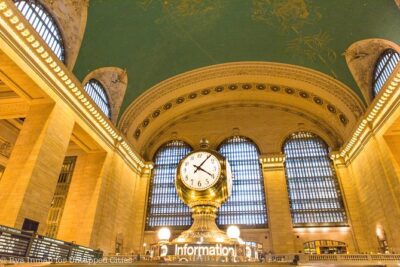
Secrets of Grand Central Station Walking Tour New York City
Read our review →
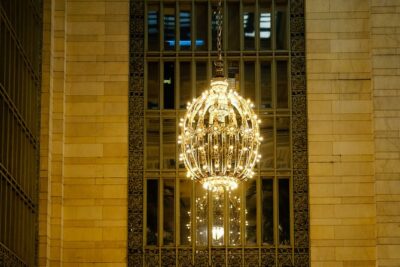

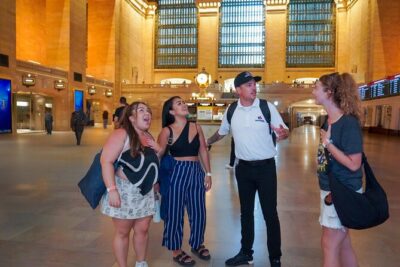
SUMMIT One Vanderbilt with Grand Central Terminal Tour
Read our review →
Best NYC Sightseeing Tour: Times Square, Grand Central, & More
Read our review →
SUMMIT One Vanderbilt Ticket and Grand Central Tour
Read our review →
Secrets of Grand Central Terminal and/or Penn Station – Private
Read our review →Browse the lists this tour appears in