
Reviewed · GRAND CENTRAL TERMINAL TOURS
NYC: Official Grand Central Terminal Tour
Grand Central Terminal is far more than a place to catch a train. In 90 minutes, this guided walk takes you from the famous four-faced clock to a former railroad tycoon’s office, a secret-sharing arcade, and a movie theater built for young rail passengers. You get a useful look at the station’s past and present without having to sort it out on your own.
I like the well-paced route and the range of stops. You see the grand public rooms, but also smaller corners many visitors miss. I also like the guides’ lively delivery. Joe, Kevin, Sean, Kathryn, Catherine, and Dwayne are among the guides praised for clear explanations, humor, and strong storytelling.
The main drawback is access. This is not a behind-the-scenes tour of restricted track areas, and some subjects may be limited by current MTA rules. If you already commute through Grand Central every day, parts of the route may feel familiar.
Key points to know before booking

- The tour covers five areas in about 90 minutes: You move through the main concourse, Vanderbilt Hall, Pershing Square, Campbell Apartment, the Whispering Gallery, Graybar Passage, and Grand Central Market.
- The focus is history and architecture: Expect stories about Cornelius Vanderbilt, the station’s earlier buildings, its decline, and its rescue in the 1980s.
- The group can include up to 20 people: That is small enough for a personal feel, though Grand Central itself can be noisy and crowded.
- You step outside briefly: The stop at 42nd Street offers a view of the huge Tiffany clock from Pershing Square.
- It is conducted in English: The guide leads a walking tour at a moderate pace.
- The price is $39 per person: That is a fair cost if you want context and access to less obvious parts of the terminal, but less appealing if you only want to see the main concourse.
Why Grand Central deserves a guided walk
You can enter Grand Central Terminal for free and see the main concourse in a few minutes. That is enough to admire the ceiling, the clock, and the steady movement of commuters. It is not enough to understand why this building matters.
A guide gives the station a clear storyline. You learn about Cornelius Vanderbilt and the original Grand Central Depot, then follow the building through its difficult years and its major restoration in the 1980s. The point is not just to collect dates. It is to see how a working transportation hub became one of New York’s most carefully protected public spaces.
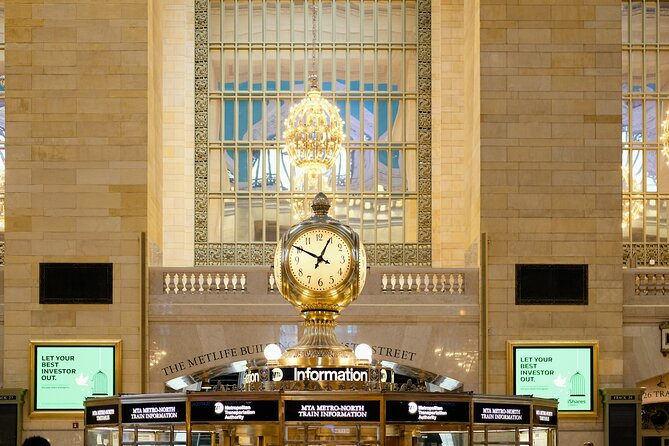
I especially like the balance between broad history and small details. You may hear about the famous clock on the information booth, including the eye-watering value often associated with its opal faces. You also get stories about how the building was used in its prime, including its former movie theater and the services created for rail passengers.
This is a good choice if you enjoy architecture, transportation, New York history, or places with several layers of public and private life. It also works well early in a New York visit because Grand Central sits close to several major Midtown sights.
More Grand Central Terminal Tours:
- Secrets of Grand Central Station Walking Tour New York City
★ 5.0 · 1,796 reviews - NYC: The Secrets of Grand Central Terminal
★ 4.8 · 718 reviews - NYC: Official Grand Central Terminal Guided Tour
★ 4.6 · 251 reviews
Starting beneath the main concourse clock
The walk begins inside Grand Central Terminal, in the main concourse. This is the natural meeting place, but it can be a confusing one. Look carefully at your confirmation details and allow time to locate the tour staff near the stated meeting area. The terminal has several entrances, retail passages, and information points, so arriving at the last minute is unwise.
The first 15 minutes center on the main concourse and Vanderbilt Hall. The famous clock above the information booth is the obvious visual anchor. Your guide uses it to explain the building’s design and the stories attached to its materials and construction.
Then you move into Vanderbilt Hall. The contrast is useful. The main concourse is noisy and active, while Vanderbilt Hall feels more formal and spacious. Its present condition is especially meaningful because the terminal was not always treated as one of New York’s great civic buildings. The 1980s restoration helped bring it back from a period of neglect.
This opening section is a good orientation. You learn where you are, what the building was made to do, and why its survival was not guaranteed. If you have already taken dozens of trains through Grand Central, you may know the visual basics, but the historical framing adds purpose to what you see.
Stepping outside for the Tiffany clock
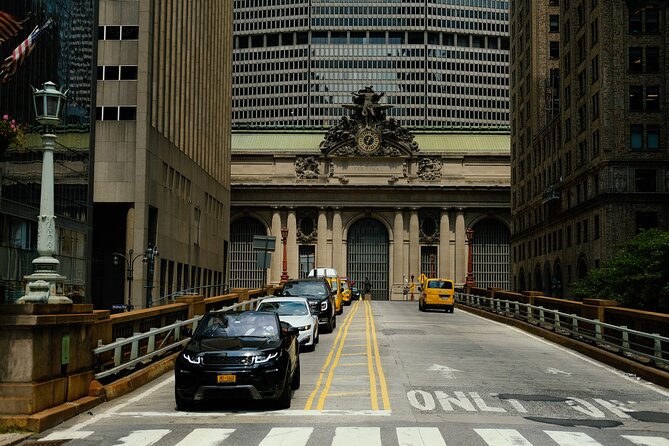
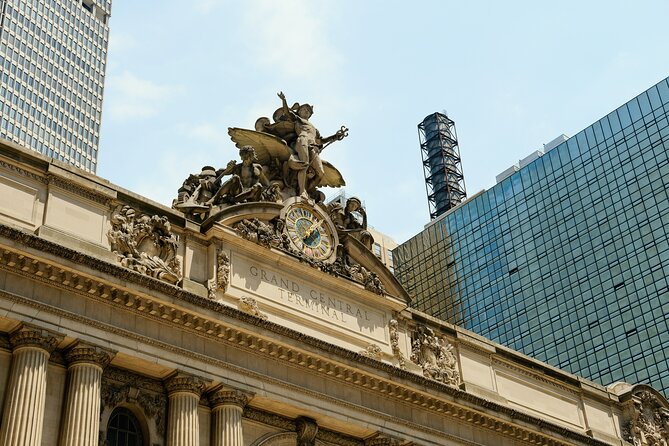
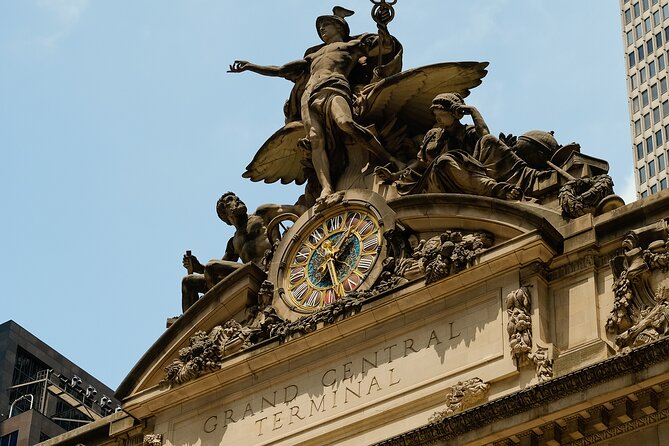
The group next goes outside for about 10 minutes. From Pershing Square and 42nd Street, you look up at the world’s largest Tiffany clock, positioned on the exterior of Grand Central.
This brief outdoor stop breaks up the indoor route and lets you see the terminal in its city setting. From inside, Grand Central can feel like a self-contained world. Outside, you see its relationship to 42nd Street, the Chrysler Building area, and the busy Midtown streets around it.
The Chrysler Building is passed by rather than visited. That matters if you are planning your day around both landmarks. You will not receive a full Chrysler Building tour here, but the exterior glimpse fits naturally into the Grand Central story.
The outdoor portion is short, so dress for the weather and wear comfortable shoes. The tour continues inside, and the walking pace is moderate rather than strenuous.
Campbell Apartment and the 1920s connection
Back inside, the route turns toward Campbell Apartment. This space once served as the private office of a prominent railroad tycoon. Today, it has the feel of a speakeasy-style bar, making it one of the tour’s most atmospheric stops.
The appeal here is not only the room itself. It gives you a sense of how Grand Central once mixed transportation, business, wealth, and nightlife. The terminal was not simply a place where people waited for trains. It was also a setting for deals, private meetings, and social life.
The stop lasts about 10 minutes, so expect a focused explanation rather than a long visit. The exact experience can depend on access and operating conditions, but the tour includes the space as part of its regular route.
I like this section because it changes the tone. After the huge public concourse and the exterior clock, Campbell Apartment offers a smaller, more personal view of the building’s past.
More New York City Tours:
- NYC: SUMMIT One Vanderbilt Tickets
★ 4.7 · 51,195 reviews - NYC: Empire State Building Tickets – Observatory & Museum
★ 4.7 · 25,757 reviews - New York City: Statue of Liberty & Ellis Island with Ferry
★ 4.6 · 18,683 reviews - New York City: American Museum of Natural History Ticket
★ 4.5 · 15,447 reviews
The Whispering Gallery and Grand Central’s practical secrets
The longest section of the walk takes about 35 minutes. It includes the Whispering Gallery, the lost-and-found department, Graybar Passage, and a former movie theater.
The Whispering Gallery is one of Grand Central’s best-known small discoveries. Two people can stand at opposite corners of the curved passage and hear a low voice clearly across the space. Your guide explains how the architecture carries the sound. The trick is simple, but it is more fun when you try it yourself.
This is also where the tour moves beyond famous photo spots. You get a look at one of the world’s largest lost-and-found departments, an everyday operation that says a great deal about the station’s scale. Grand Central serves as a place of departure, arrival, work, shopping, dining, and occasional forgetfulness.
Graybar Passage adds another layer. Its handcrafted designs and jewelry come from local artisans, so you see how the terminal continues to function as a commercial space. It is not frozen in the past. People still pass through it on the way to work, shop for gifts, and use the station as part of ordinary city life.
The former movie theater is another unusual stop. In Grand Central’s heyday, young rail passengers could watch entertainment there while waiting. That detail helps you picture the terminal as a complete travel center, built to keep people occupied during long journeys.
This is the part of the tour most likely to reward a first-time visitor. The main concourse is easy to find alone. The smaller passages and former facilities are easier to miss, especially if you are focused on catching a train.
Finishing through Grand Central Market
The final 15 minutes take you through Grand Central Market before returning to the main concourse. This food corridor gives the tour a more modern finish.
You see how the terminal works today as a marketplace as well as a transportation center. The route ends back where it began, which is practical if you want to continue exploring, catch a train, or visit nearby Midtown sights.
The itinerary is carefully packed. You do not spend a long time at any single stop, but you get several different views of Grand Central. That helps explain why many people find the 90-minute length about right. Shorter would feel rushed. Much longer could become tiring, particularly in a crowded terminal.
One useful tip is to check the operating days of places you want to visit afterward. The Oyster Bar, a famous Grand Central landmark, is closed on weekends. It is not a scheduled stop in the tour, but this detail can affect how you plan the rest of your visit.
What the guides add to the experience
The guide is the main reason to book this rather than simply walk through the terminal alone. The strongest guide feedback centers on clear delivery, humor, historical detail, and a good sense of pace.
Joe is praised for his energy and command of the station’s past. Kevin is described as warm and funny, while Sean is noted for strong presentation and clear explanations. Kathryn and Catherine bring humor to the stories, and Dwayne is praised for patience and an entertaining style.
You cannot choose your guide from the information provided, so treat these names as examples of the level of presentation you may receive, not a promise of a particular leader. The guide’s job is especially important in Grand Central because the building is noisy. Some tours provide earpieces, and several people found them helpful. One person reported headset problems, so it is sensible to speak up right away if you cannot hear.
The group size is capped at 20. That is not a private tour, but it is more manageable than a large crowd. A smaller group also gives you a better chance to ask questions and stay close to the guide.
Is $39 a fair price?
At $39 per person, this tour sits in the reasonable range for a 90-minute guided walk in Midtown. You are not paying for a separate museum admission or a special transportation ticket. The value comes from the guide, the route, and the time saved assembling the story yourself.
If you only want a photograph of the main concourse, save your money. Grand Central is free to enter, and you can admire its central features without a ticket.
If you want to understand how the terminal developed, see several less obvious spaces, and hear stories tied to the building, the price makes more sense. The tour also gives you a structured way to explore a huge public building without wandering past the same areas.
I would rate the value highest for first-time visitors, families who want a clear introduction, and New Yorkers who have used the terminal but never stopped to look closely. Regular commuters may find the main public areas familiar, so your expectations should focus on interpretation rather than restricted access.
Walking, access, and planning your visit
This is a walking tour at a moderate pace. Wear comfortable shoes and expect to stand and move through active public areas for about an hour and a half. You do not need hotel pickup or drop-off, and the starting point is Grand Central Terminal.
The terminal is served by public transportation and has elevators and ramps. The activity is listed as wheelchair and stroller accessible. Even so, the terminal can be crowded and noisy, so allow extra time at the start and stay attentive to the guide’s directions.
The tour is offered in English only. Confirmation is provided at booking, and the experience normally has a maximum of 20 people.
Cancellation is free up to 24 hours before the start time for a full refund. Cancellations or changes made within 24 hours are not refunded. Pay close attention to the meeting instructions because one person had trouble identifying the correct spot, while another was directed to the tour booth on the same wall as the ticket counter.
Who should book this Grand Central tour?
Book it if you want more than a quick look at the main concourse. The tour gives you a useful mix of architecture, transportation history, local stories, and small spaces that are easy to overlook.
It is especially suitable for:
- First-time New York visitors
- Families and couples who prefer a guided introduction
- Architecture and railroad enthusiasts
- New Yorkers who want a fresh look at a familiar station
- Visitors with about 90 minutes before another Midtown activity
Think twice if you mainly want restricted track access or technical details about the current rail system. The route stays largely in public areas, and some subjects may be limited by current MTA rules. A commuter who knows every public corridor may also want something more specialized.
Final recommendation
I recommend the tour for most first-time visitors who want Grand Central Terminal to make sense, not just look impressive. The 90-minute route is varied, the price is fair, and the best guides turn ordinary passages into memorable parts of the building’s story.
Book it if the Whispering Gallery, Campbell Apartment, old movie theater, lost-and-found operation, and Vanderbilt history sound more interesting than taking a few photographs and moving on. Skip it if you need behind-the-scenes track access or prefer to explore at your own speed.
FAQ
How long is the Grand Central Terminal tour?
The tour lasts approximately 1 hour and 30 minutes.
What language is the tour offered in?
The tour is offered in English.
How much does the tour cost?
The listed price is $39 per person.
Where does the tour begin?
It begins at Grand Central Terminal in New York, New York 10017.
Where does the tour end?
The listed ending point is 89 East 42nd Street, New York, New York 10017, near the Transit Museum area of Grand Central Terminal.
Is the tour wheelchair accessible?
Yes. Grand Central Terminal has public elevators and ramps, and the activity is listed as wheelchair accessible.
Is the tour stroller accessible?
Yes. The activity is listed as stroller accessible.
How many people can join the tour?
The maximum group size is 20 people.
Is hotel pickup included?
No. Hotel pickup and drop-off are not included.
Can I cancel for a refund?
Yes, if you cancel at least 24 hours before the experience start time. Cancellations within 24 hours are not refunded.
Recently added in New York City
- NYC: Midtown Hands-On Bagel Baking Class★ 5.0 · 12 reviews
- Personalize Sightseeing Tour★ 5.0 · 92 reviews
- Central Park Pedicab Tour with Guide★ 5.0 · 63 reviews
- Central Park Pedicab Guided Tour★ 5.0 · 17 reviews
- Photographer, Professional Photo shoot – New York★ 5.0 · 16 reviews
- Official Central Park Pedicab Ride ( UP TO 3 PERSONS )★ 5.0 · 4 reviews
- JFK or LGA package only (Round trip transfer plus VIP Contrasts)★ 5.0 · 3 reviews
- Official Central Park Pedicab Tours★ 5.0 · 35 reviews
Grand Central Terminal Tours, compared.
Secrets of Grand Central Station Walking Tour New York City
Read our review →


SUMMIT One Vanderbilt with Grand Central Terminal Tour
Read our review →
Best NYC Sightseeing Tour: Times Square, Grand Central, & More
Read our review →
SUMMIT One Vanderbilt Ticket and Grand Central Tour
Read our review →
Secrets of Grand Central Terminal and/or Penn Station – Private
Read our review →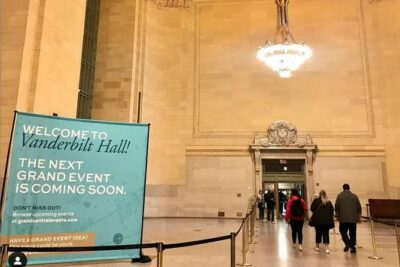
Browse the lists this tour appears in