
Reviewed · GRAND CENTRAL TERMINAL TOURS
Secrets of Grand Central Terminal and/or Penn Station – Private
Penn Station and Grand Central Terminal tell two very different New York stories. One was demolished and partly reborn, while the other still carries its grand public rooms and secret details. This private tour connects both, using the NYC subway to move between them and showing you things you could easily miss alone.
I like the one-group format, which lets Rain adjust the pace and answer every question. I also like the way the tour pairs original Penn Station artifacts with Moynihan Train Hall, then shifts to Grand Central’s older elegance. The main drawback is physical: you should be comfortable walking and going up and down steps for as long as two to three hours.
Key points about this private station tour

- See two generations of New York rail travel: Compare remnants of the original Penn Station with the newer Moynihan Train Hall, then visit Grand Central Terminal.
- Travel between stations by NYC subway: The subway ride is part of the experience, not just a way to get from one stop to the next.
- Get a private guide for up to 15 people: Your group can ask questions and shape the visit around rail history, architecture, subway facts, or family interests.
- Look beyond the obvious sights: The tour focuses on details and artifacts that are easy to miss when you visit either station on your own.
- Expect an English-language tour lasting about two to three hours: Plan for walking, station crowds, and stairs.
- Book ahead for a preferred date: The experience is often reserved about 125 days before the tour date.
Why these two stations make such a good pair
New York’s two best-known rail terminals offer a useful contrast. Penn Station is tied to a lost landmark and a modern rebuilding project. Grand Central Terminal presents a grander, more intact public interior. Seeing both in one outing gives you a clearer sense of how New York has treated rail travel across different eras.
You are not simply looking at train departure boards. You are learning how a station works as a public building, a piece of transportation infrastructure, and part of the city’s daily rhythm. That combination helps this tour appeal to first-time visitors and people who already know Manhattan fairly well.
The private format matters here. In a large group, a guide has to stick to a fixed script. With your own group, Rain can spend more time on the subway system, answer questions from children, or focus on architectural details if that is what interests you. The tour has also worked well at rush hour, when the stations feel most like working transportation hubs rather than museum spaces.
That busy timing has a tradeoff. Rush hour can add atmosphere, but it also means more people, more noise, and a less relaxed pace. If you prefer clear sightlines and quieter rooms, you may want to discuss timing with the guide before booking.
More Grand Central Terminal Tours:
- Secrets of Grand Central Station Walking Tour New York City
★ 5.0 · 1,796 reviews - NYC: The Secrets of Grand Central Terminal
★ 4.8 · 718 reviews - NYC: Official Grand Central Terminal Tour
★ 5.0 · 458 reviews
Penn Station: traces of a station New York lost
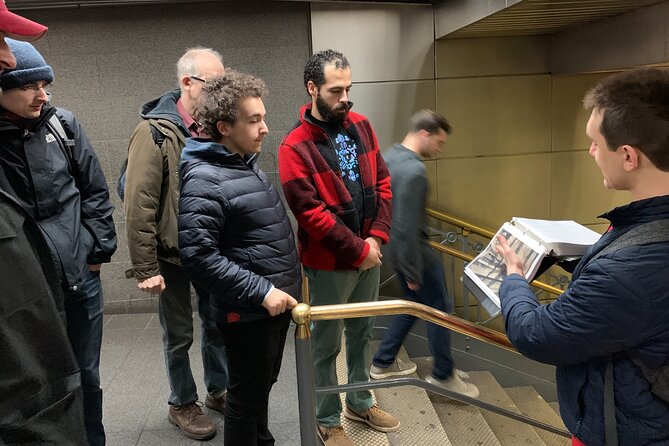
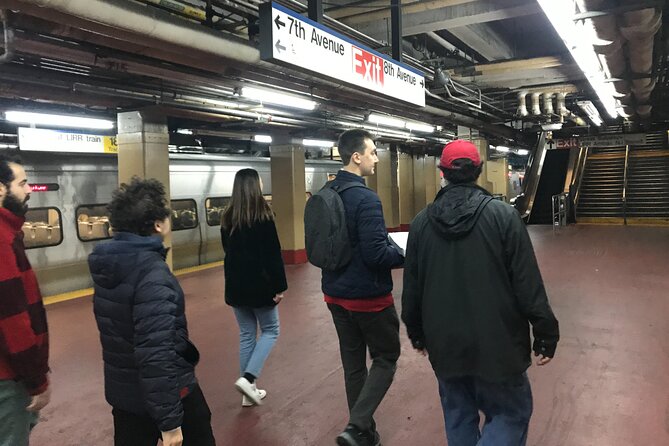
The Penn Station portion begins with artifacts and surviving clues from the original station. These details are especially useful because the current Pennsylvania Station complex does not present the old terminal in one intact, grand interior. You need someone to point out what remains and explain why it matters.
That makes this part more than a standard station orientation. You may find yourself looking at ordinary-looking features in a new way, noticing how a piece of the former station fits into the present building or how the surrounding transport complex changed over time. The value comes from learning what you are seeing instead of passing through without context.
The tour also includes Moynihan Train Hall, the newer public space created for rail passengers. Its presence gives the Penn Station stop a clear before-and-after quality. You can consider the older station through its remaining artifacts, then see how the modern hall gives rail passengers a more formal arrival and departure space.
I find this pairing useful for anyone who wonders why Penn Station feels so different from Grand Central. The answer is not just visual. The two terminals have different stories, different public interiors, and different relationships with the city around them.
Penn Station is still an active transportation setting, so do not expect a quiet museum visit. You may be moving around people catching trains, finding platforms, or changing routes. That is part of the point. You are seeing a working station while learning how the earlier terminal shaped the place.
The stop is listed at about one hour, with no separate admission charge. You should still budget enough time to enter the station, orient yourself, and stay with the group. A mobile ticket makes meeting up simpler, but the tour description does not identify a particular meeting point, so check the booking confirmation carefully.
Moynihan Train Hall and the modern side of rail travel
Moynihan Train Hall gives the Penn Station stop a present-day counterpoint. It is not presented as a replacement for every part of the old station story. Instead, it helps you see how New York has tried to give one of its busiest rail hubs a more welcoming public face.
You will benefit most if you pay attention to the relationship between the old and new elements. The guide can explain why a surviving artifact matters, then show you a newer space designed for current rail use. That comparison is far more useful than seeing either location in isolation.
This section also works well for families. The guide Rain has been praised for working well with children and for making subway information understandable and entertaining. Kids who find a conventional architecture tour slow may respond better to a moving station, active trains, and questions about how the subway operates.
Do keep the group’s energy in mind. Two to three hours in stations can be a lot for younger children, especially if they are not interested in trains. The private setup helps because you can ask for a shorter explanation on one subject and more time on another, but the walking requirement remains.
Riding the subway to Grand Central Terminal
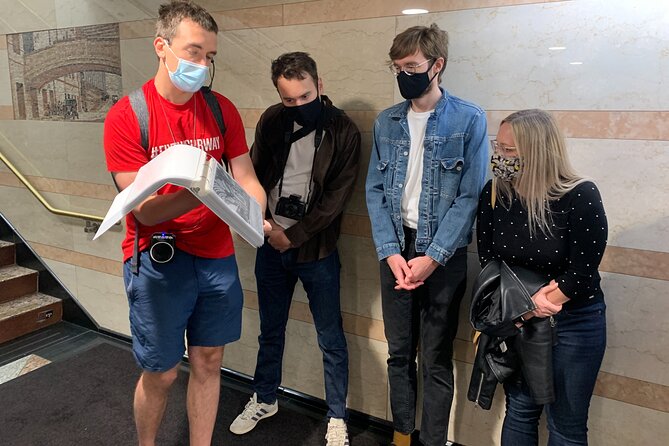
The move from Penn Station to Grand Central Terminal takes place by NYC subway. This is one of the tour’s most appealing features because the transportation system becomes part of the lesson.
You are not only being driven between two landmarks or led through a fixed sightseeing route. You are using the network that makes New York work. The guide can discuss subway facts along the way, and Rain has a particular strength in explaining the system and answering questions about it.
The subway portion also makes the tour feel more like daily New York life. You see how people transfer, move through stations, and use signs and platforms to navigate. At rush hour, that pulse becomes especially noticeable. One group enjoyed taking the tour during the busiest part of the day because it created the real New York feel they wanted.
There are practical limits. The subway ride means stairs or other changes in level may be part of the outing. The experience is not recommended for people who have difficulty walking up and down steps. If anyone in your group has mobility concerns, consider that carefully before reserving.
The exact subway route is not specified in the tour information, so you should not assume a particular line or station entrance. That is not a serious problem for a private outing, but it does make the confirmation details worth checking before you arrive.
More New York City Tours:
- NYC: SUMMIT One Vanderbilt Tickets
★ 4.7 · 51,195 reviews - NYC: Empire State Building Tickets – Observatory & Museum
★ 4.7 · 25,757 reviews - New York City: Statue of Liberty & Ellis Island with Ferry
★ 4.6 · 18,683 reviews - New York City: American Museum of Natural History Ticket
★ 4.5 · 15,447 reviews
Grand Central Terminal: details beneath the famous ceiling
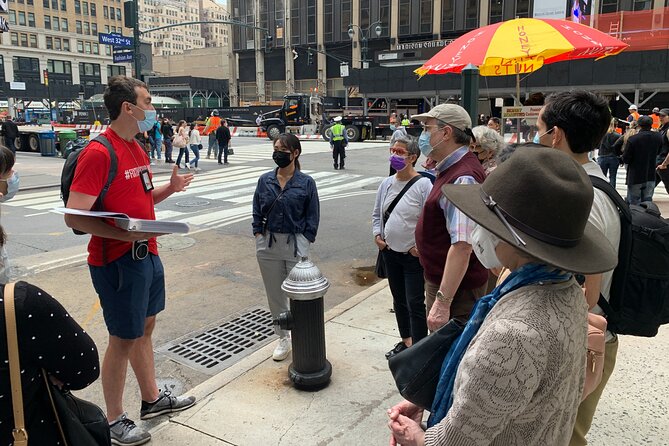
Grand Central Terminal receives about one hour of the tour. Its name draws people in, but the building rewards close attention rather than a quick look at the famous main room.
The guide’s role is to help you notice details you might otherwise walk past. A first-time visitor may see a grand terminal. A returning visitor can use the tour to learn why particular features matter, how the building functions, and what small details are easy to overlook.
This is where the private arrangement pays off again. You can ask about architecture, rail operations, subway connections, or the terminal’s place in New York life. If one subject catches your group’s attention, Rain can spend more time there instead of moving on because a large group schedule demands it.
Grand Central also provides a strong contrast to Penn Station. The two stops are not interchangeable. One emphasizes surviving traces and a modern train hall; the other gives you a more recognizable historic terminal interior. Together, they show two different ways to experience New York rail architecture.
You should expect other people to be present. Grand Central is an active station, not a private exhibit. The busiest periods can make it harder to hear or pause in a particular area, though that activity also gives the building its purpose and energy.
The admission for Grand Central is included. The information does not identify a separate ticket requirement for Penn Station, where the stop is listed as free admission. Your mobile ticket and booking confirmation should contain the practical meeting details.
What Rain adds to the experience
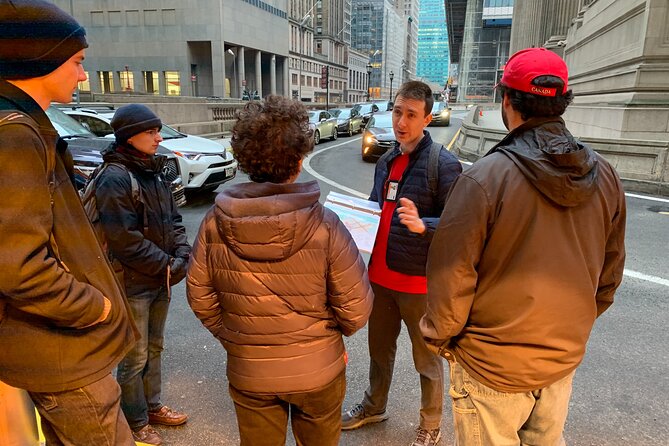
The guide is named Rain in the tour information, with the name also written as Rayn in one account. Rain’s strongest reported qualities are personal attention, flexibility, humor, and a strong grasp of the subway system.
Those traits matter more here than a memorized speech. The tour covers two large transportation sites and includes a subway ride, so you want someone who can shift between architecture, rail facts, local movement, and questions from your group.
Rain can also adapt the focus. If your group includes rail enthusiasts, you can spend more time on station design and railway details. If you are visiting with children, the guide can make the subway portion more accessible. If you are new to New York, you can ask basic questions without feeling rushed by a larger group.
The one-group format limits the number of people competing for attention. The price covers up to 15 people, so the value improves when several people share the booking. A couple paying $200 receives a very different value calculation from a family or group of 10, even though the experience itself is private in both cases.
Is $200 a fair price for up to 15 people?
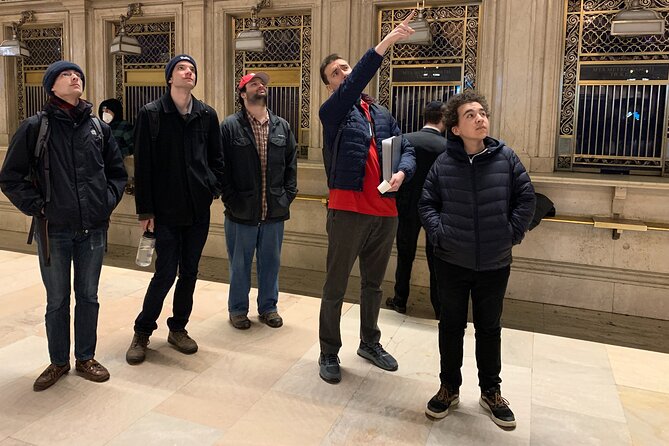
The price is $200 per group, not per person, with up to 15 participants allowed. For a full group, that works out to roughly $13 per person. For a smaller group, the per-person cost rises, but you are paying for private guiding rather than a seat on a standard group walk.
I see the best value for families, groups of friends, and rail enthusiasts who want to ask questions. The guide’s ability to adjust the focus is more useful when your group has a clear interest, such as the subway system, station architecture, or the lost original Penn Station.
For one or two people, the cost is harder to justify unless the subject has strong personal appeal. You are also paying for two to three hours, a private guide, and the chance to see both major terminals in one outing. If you would otherwise visit both stations on your own, the tour’s value depends on how much you want interpretation rather than simple access.
The tour is offered in English. Admission is included for Grand Central, while Penn Station is listed without an admission charge. The description does not state that food, drinks, or any other extras are included, so do not build those into the price comparison.
Timing, walking, and planning your day
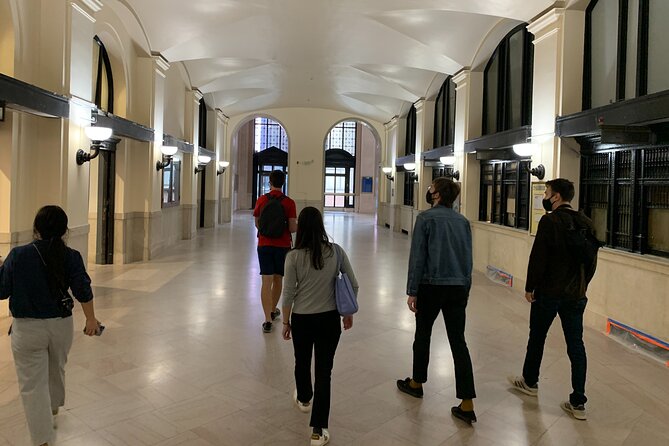
The experience lasts approximately two to three hours. The stated schedule gives about one hour at Penn Station and one hour at Grand Central, with the subway transfer between them. The extra time allows for movement, questions, and the changing pace of active stations.
Because the tour is often booked around 125 days in advance, reserve early if your New York dates are fixed. This is especially sensible for school breaks, holiday periods, or a trip with several family members who need the same time window.
The tour is near public transportation, which fits the subject well. You will still need to arrive at the agreed meeting point with enough time to check your mobile ticket and find the guide. The exact meeting instructions should come with your booking confirmation.
Wear shoes suitable for several hours of walking. The tour is not recommended for anyone who has difficulty with stairs, and the combination of two stations plus a subway connection may be tiring even if the route is not physically demanding for most people.
You can cancel for a full refund if you do so at least 24 hours before the start time. Cancellations or changes made less than 24 hours before the start are not accepted for a refund. The cut-off uses New York local time.
Who will get the most from this tour?
This outing suits you if you enjoy seeing how a city works, not just checking off famous buildings. It is particularly strong for rail enthusiasts, architecture fans, families with curious children, and repeat New York visitors who want a fresh subject.
First-time visitors can use it as an introduction to two important transportation centers. Returning visitors may appreciate the focus on details they missed during earlier trips. The tour also works well if you want a guide who can answer questions instead of giving you a fixed route with little room to pause.
It may not suit you if you want a quiet, slow architectural visit. Active stations can be noisy and crowded, and the subway transfer adds movement and stairs. It is also less attractive if you only want photographs of Grand Central and have little interest in transportation history or how the subway operates.
Should you book this private station tour?
Book it if the idea of finding old Penn Station traces, seeing Moynihan Train Hall, riding the subway, and examining Grand Central with a personal guide sounds worthwhile. The private format is the key advantage, especially for a group with mixed ages or specific rail questions.
I would be most comfortable recommending it to a group of four to 15 people. At that size, the $200 group price makes good sense, and Rain’s flexible approach can give everyone some attention. Couples should book only if the subject is a real priority.
Choose your timing with care. Rush hour adds the true working-city atmosphere, but a quieter period may be easier for anyone who wants to hear every explanation. If your group can manage stairs and several hours of walking, this tour offers a practical way to see two major New York terminals with far more context than you would get by wandering through them alone.
FAQ
How long does the tour last?
The experience lasts approximately two to three hours.
What locations does the tour visit?
It visits Penn Station, including original station artifacts and Moynihan Train Hall, then Grand Central Terminal.
How does the tour travel between Penn Station and Grand Central Terminal?
The group travels between the two stations using the NYC subway.
Is the tour private?
Yes. Only your group participates, with up to 15 people allowed.
What language is the tour offered in?
The tour is offered in English.
Is admission included?
Grand Central Terminal admission is included, and the Penn Station stop is listed with no admission charge.
Is the tour suitable for people with walking difficulties?
It is not recommended for people who have difficulty walking up and down steps. Most other participants can take part.
Can I cancel for a full refund?
Yes. You must cancel at least 24 hours before the experience start time for a full refund. Changes or cancellations made less than 24 hours before the start are not accepted for a refund.
Recently added in New York City
- Drama and Discourse in New York Theatre★ 5.0 · 14 reviews
- Small-Group Downtown, 911 Memorial, Wall Street Tour★ 5.0 · 16 reviews
- Skip the Line: Dueling Pianos Boozy Brunch! Ticket★ 4.5 · 17 reviews
- 3 Hour Lower Manhattan Walking Tour★ 5.0 · 11 reviews
- World Trade Center Area Underground Art and History Tour★ 5.0 · 3 reviews
- Wall Street & Financial District Private Walking Tour★ 5.0 · 8 reviews
- Affordable Door-To-Door Transport (NYC To Boston)★ 4.0 · 3 reviews
- NYC Night Bus Sightseeing Tour with Free Statue of Liberty Cruise★ 4.0 · 75 reviews
Grand Central Terminal Tours, compared.
Secrets of Grand Central Station Walking Tour New York City
Read our review →



SUMMIT One Vanderbilt with Grand Central Terminal Tour
Read our review →
SUMMIT One Vanderbilt Ticket and Grand Central Tour
Read our review →
NYC | French guided tour Grand Central & Midtown
Read our review →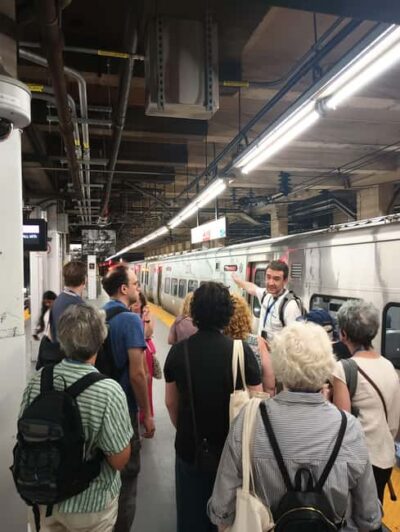
Browse the lists this tour appears in