
Reviewed · GRAND CENTRAL TERMINAL TOURS
NYC: Grand Central Terminal and/or Penn Station – Private
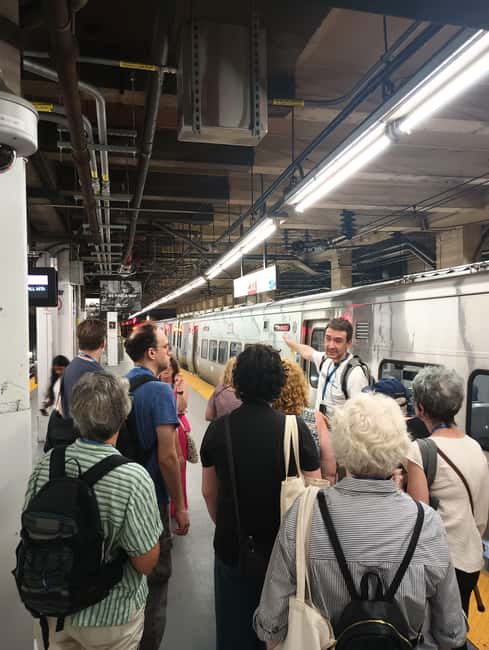
Penn Station was once one of New York’s grandest buildings. Today, much of its story survives only in fragments, photographs, and the exact spots where its vast 1910 halls once stood. This private tour with Rayn, a licensed guide and AICP-certified urban planner, connects that lost station to today’s Moynihan Train Hall and Grand Central Terminal.
I like the direct comparison between old and new Penn Station, and I like the chance to see Grand Central’s less obvious spaces, including a hidden tennis court, old theater, secret bar, and whispering walls. The subway ride between the two terminals adds a useful look at the machinery and history beneath the streets.
The main consideration is physical effort. You will use public subway areas, walk underground, and climb steps, so comfortable shoes are essential. The route may also shift slightly with the MTA’s weekend schedule.
Key points to know before booking
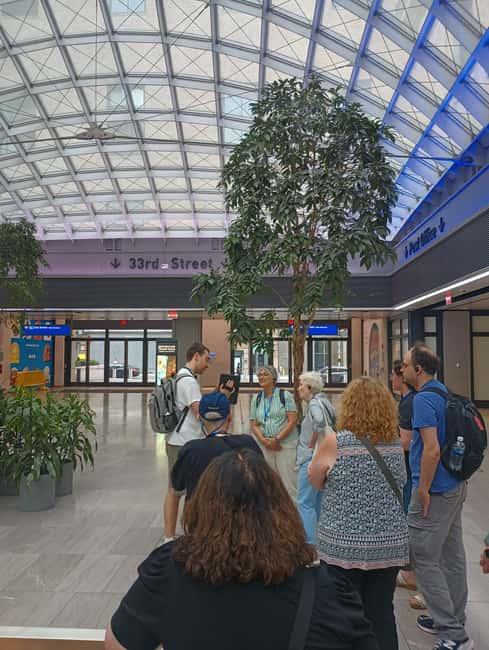
- Compare two generations of Penn Station: Stand in today’s station and Moynihan Train Hall while tracing the footprint and purpose of the demolished 1910 building.
- See more than Grand Central’s main hall: The tour can include a secret bar, old theater, hidden tennis court, whispering walls, glass walkways, and underground entrances.
- Ride between the terminals: Your subway fare is included, turning a short transfer into a lesson about NYC transit design and operation.
- Get a private guide’s full attention: The $200 price covers a group of up to 15 people, with Rayn tailoring explanations and answering questions.
- Expect an information-packed walk: Rayn brings historical images and technical context, including the devices and systems that make the subway work.
- Plan for stairs and public areas: The tour does not enter restricted spaces and is not suited to people with mobility impairments.
Why Penn Station gives this tour its strongest story
Grand Central is the famous survivor, but old Penn Station is the emotional center of this experience. The original Pennsylvania Station opened in 1910 as a vast Beaux-Arts complex. It was demolished in the 1960s, and the modern station that replaced it became a byword for cramped, confusing rail travel.
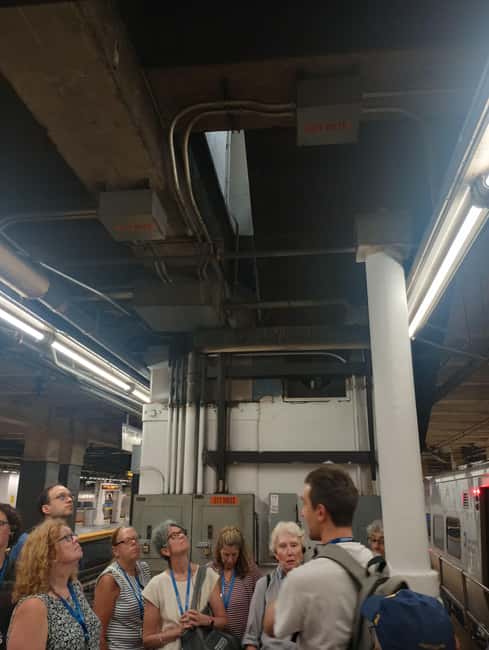
You do not simply hear that story in a lecture. You compare locations on the ground. Rayn can show you where major elements of the old structure once stood, then point out remnants and artifacts that remain among the modern fixtures. That makes the loss easier to understand. A photograph in a book is one thing. Standing in the same place and seeing how little of the original arrangement remains is another.
The tour also includes Moynihan Train Hall, the newer rail hall built in the former Farley Post Office. It gives you a useful contrast between Penn Station’s past, its difficult middle years, and its more recent attempt to create a brighter, clearer passenger space.
I especially like this part for visitors who care about city planning and public architecture. The tour is not only about ornate ceilings or old photographs. It asks why New York built certain stations, why it later changed them, and how a major transport center affects the streets and neighborhoods around it.
Penn Station remains the busiest train station in the Americas, according to the experience information, so the site also has present-day importance. You are looking at a working transport hub, not a preserved museum. That can make the visit noisier and less polished, but it also gives the history some urgency.
More Grand Central Terminal Tours:
- Secrets of Grand Central Station Walking Tour New York City
★ 5.0 · 1,796 reviews - NYC: The Secrets of Grand Central Terminal
★ 4.8 · 718 reviews - NYC: Official Grand Central Terminal Tour
★ 5.0 · 458 reviews
Moynihan Train Hall and the search for what survived
Moynihan Train Hall is one of the most useful stops for understanding modern Penn Station. You can see how a contemporary passenger hall tries to solve some of the problems associated with the older station below and beside it.
Rayn’s approach adds value here because he can explain the relationship between buildings, rail lines, passenger movement, and the city above. An urban planner sees more than decoration. He can help you notice how a station directs people, separates functions, and connects with other forms of transport.
The tour also looks for remnants of old Penn Station. These details may be easy to miss if you pass through on your own. Some are physical traces, while others are tied to the station’s original layout and appearance. Rayn uses historical images to help you match the past to the present.
You should keep expectations sensible. This is not a visit to a preserved section of the original terminal, and the tour does not enter restricted areas. The appeal comes from comparison, context, and careful observation rather than a grand surviving interior.
Taking the subway between Penn Station and Grand Central
The subway transfer is more than a way to get from one station to the other. It places you inside the system that made New York’s growth possible and lets Rayn explain how the network operates.
Your subway fare during the tour is included. That is a small practical benefit, but it also removes the fuss of figuring out payment during a guided walk. Rayn can point out technology, platform devices, and operating features that you might otherwise ignore.
One of the strongest parts of the experience is the attention to how the system works. The tour covers the history of the subway, including original 1904 stations, as well as the technology and design choices visible in stations today. You may learn why certain equipment is placed where it is, how the network developed, and how technical decisions affect the ride.
This is particularly good for anyone with an interest in trains, engineering, architecture, or infrastructure. It also helps ordinary subway riders see familiar places differently. A station platform can look plain until someone explains what the signals, devices, tracks, and circulation patterns are doing.
The subway portion does require walking and stairs. It is not a private vehicle transfer, and the route can vary slightly according to the MTA’s weekend schedule. If you need a perfectly fixed itinerary, this is worth keeping in mind.
Entering Grand Central’s public spaces
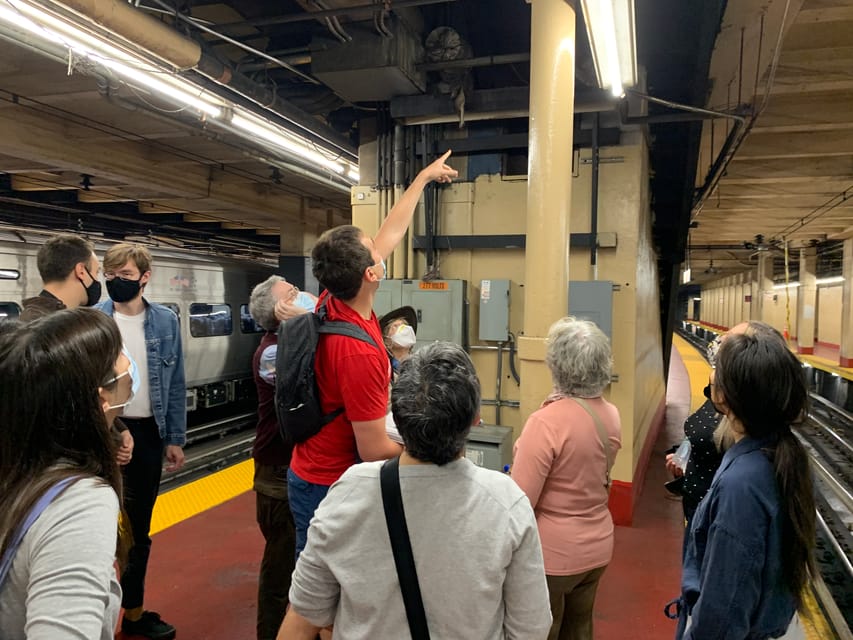
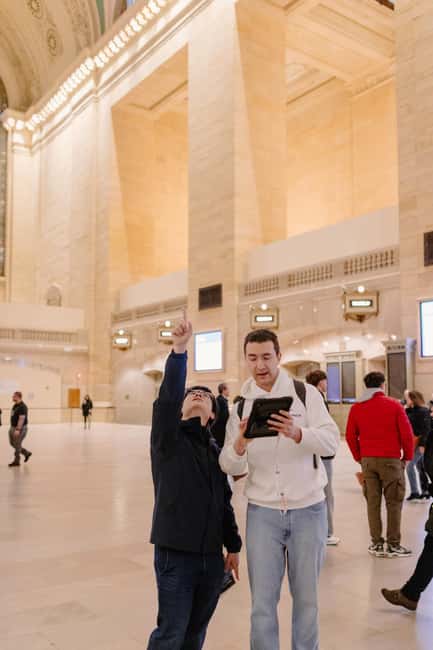
Grand Central Terminal supplies the glamour and mystery. Most people know the Main Concourse, but the tour looks beyond the obvious photo stop.
You can expect to explore public areas connected with the terminal’s secret bar, hidden tennis court, old theater, whispering walls, glass walkways, and underground entrances. These features give Grand Central a playful side, while the surrounding architecture supplies the larger story.
The whispering walls are a classic example of how a small design detail can become part of a city’s folklore. The glass walkways and underground entrances show how the terminal works in three dimensions, with circulation spreading below and around the main concourse. The old theater and tennis court add the sort of surprising history that makes a familiar building feel new again.
The phrase secret bar should not lead you to expect a private drinking session or access to a restricted room. The tour visits public areas only. Its purpose is to show you where these features are, explain their background, and help you notice spaces you might walk past alone.
The same applies to the hidden tennis court. The fun is in learning that such a place exists within the terminal complex and understanding how Grand Central has been used beyond its obvious role as a train station. Rayn’s stories and images help connect these odd corners to the building’s wider life.
More New York City Tours:
- NYC: SUMMIT One Vanderbilt Tickets
★ 4.7 · 51,195 reviews - NYC: Empire State Building Tickets – Observatory & Museum
★ 4.7 · 25,757 reviews - New York City: Statue of Liberty & Ellis Island with Ferry
★ 4.6 · 18,683 reviews - New York City: American Museum of Natural History Ticket
★ 4.5 · 15,447 reviews
Rayn’s guiding style and the value of a specialist
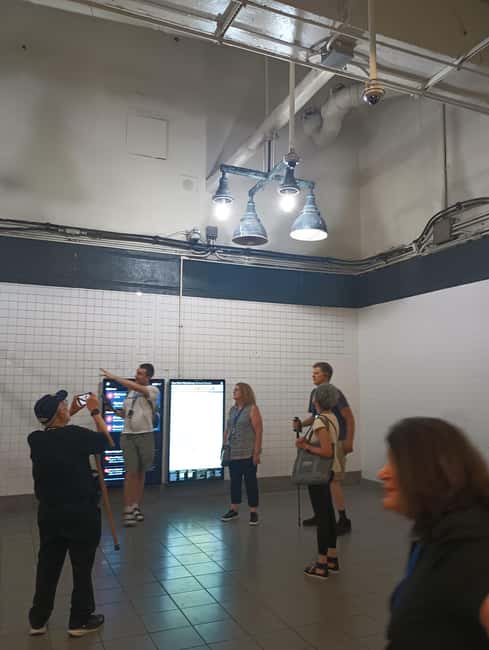
Rayn is not presented simply as someone who memorized a standard station script. He is an AICP-certified urban planner, a licensed NYC guide, and a member of the Guides Association of NYC. His focus is transportation, architecture, planning, and the city systems that tie them together.
That background matters because the tour covers several kinds of information at once. You get history, but also design, politics, engineering, and the daily operation of the subway. If you ask why a station was built in a certain way or why the network developed as it did, you are likely to get more than a date and a name.
Rayn also uses large binders of photographs and illustrations. That can be especially helpful at Penn Station, where the original building has disappeared. Historical images give you a visual reference while you stand in the modern station, making the comparison much sharper.
The experience is private, so you can ask questions and request more detail on the subjects that interest you. A group fascinated by rail technology may spend more time on the subway system. Another group may want to focus on architecture and lost buildings. That flexibility is one of the clearest advantages over a large scheduled group walk.
The tradeoff is that Rayn’s subject is broad and information-heavy. If you prefer a short, light sightseeing stroll with only a few facts, this may feel dense. The tour is better suited to people who enjoy context and are happy to follow a guide through several layers of New York’s past and present.
How long the tour takes and what the pace feels like
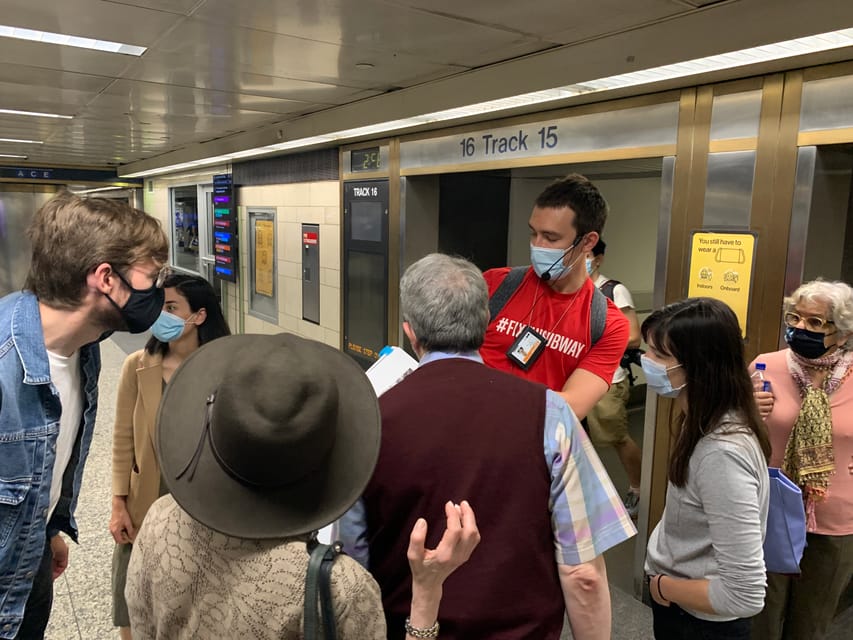
The stated duration is between 1.5 and 2.5 hours, depending on the option and starting time you choose. The exact meeting point may vary, too, so check the booking details carefully before you set your day around it.
That range is reasonable for one station, but Penn Station and Grand Central together cover a lot of ground. The subject is also wide: demolished architecture, modern rail halls, subway history, station technology, hidden spaces, and urban planning.
If you choose the full comparative experience, expect a steady walking pace rather than a sit-down talk. You will move through busy public buildings, enter underground areas, ride the subway, and use stairs. Bring water, wear comfortable shoes, and leave room in your schedule for the route to breathe.
The tour provides individual earpieces, which is a practical touch. Stations are noisy, and a guide’s voice can easily disappear beneath announcements and passing trains. The earpieces should help you hear Rayn even when he is a few steps away.
The duration can also feel short if you are deeply interested in transportation. The material is substantial enough that an engineering-minded visitor could happily spend much longer discussing the stations and subway technology. That is a sign of the tour’s depth, but it also means you should not expect every detail to receive equal time.
Private group value at $200
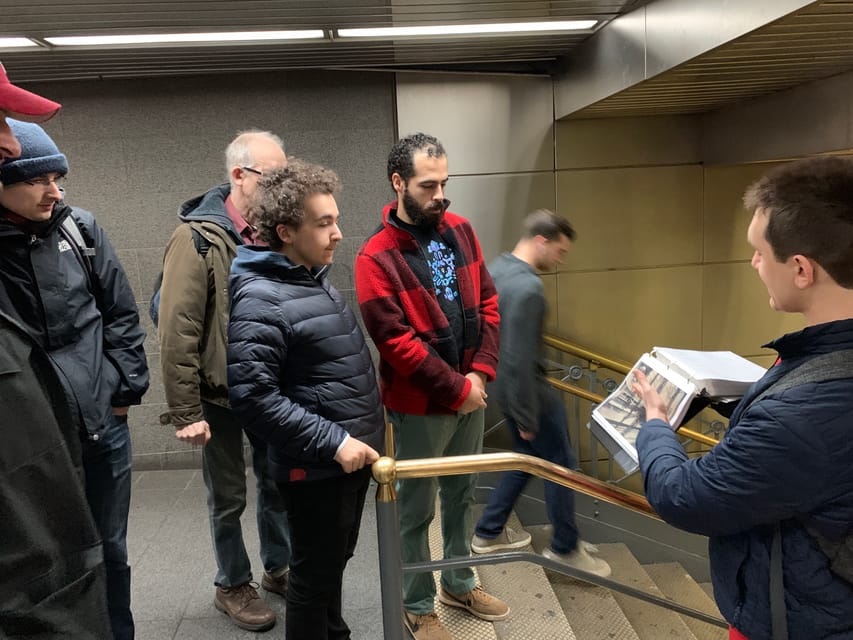
The price is $200 per group of up to 15 people. For a solo visitor or a couple, that is a significant outlay. For a family or group of friends, the math improves quickly, especially because the fare for the subway and the listening earpieces are included.
At the maximum group size, the cost works out to about $13.33 per person before any additional booking charges. That is strong value for a private guide, particularly if your group has a shared interest in New York transportation or architecture.
The private format also changes the experience. You are not locked into a generic pace or a fixed level of explanation. Rayn can respond to questions, use the historical illustrations that fit your interests, and keep the group together without competing with a large crowd.
For two people, the value depends on your priorities. You are paying for specialist guidance and access to a carefully shaped interpretation of places you could technically visit for free. If you only want to see the Main Concourse and take a subway ride, you can do that independently. If you want to understand why the stations look and function as they do, the private format makes more sense.
Who will enjoy this most
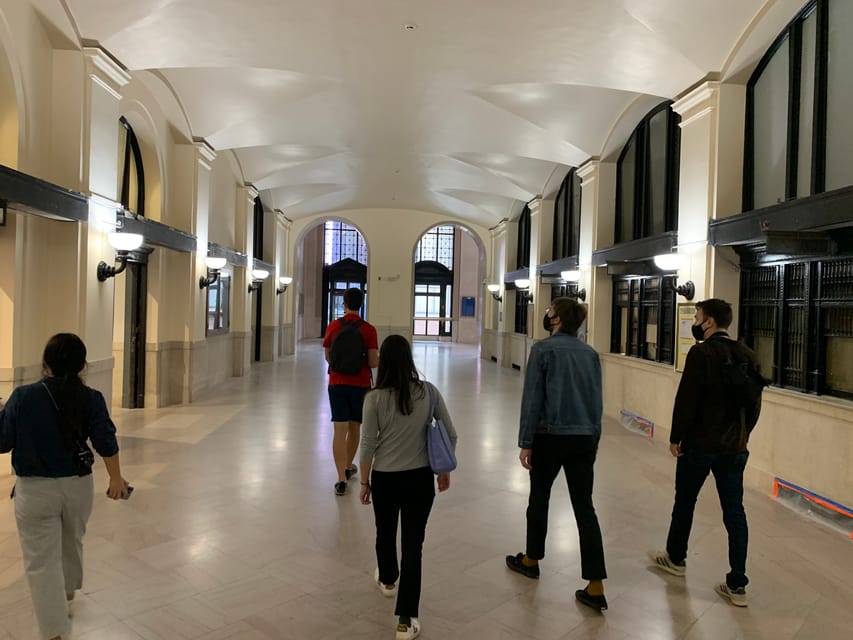
I would recommend this tour to anyone curious about New York’s transportation network, especially:
- People who enjoy trains, stations, and subway technology
- Architecture and urban planning students or professionals
- Visitors who have already seen Grand Central’s main hall
- New Yorkers who want a more technical look at familiar places
- Families or friends who can share the private-group price
- Anyone interested in how a city changes when major buildings are lost or rebuilt
It is also a good first-day activity if you want a clear introduction to New York’s transport structure. The tour connects two major terminals, explains the subway, and gives you a better sense of how the city moves.
I would be more cautious if your group includes someone who cannot manage stairs or extended walking. The experience is specifically not suitable for people with mobility impairments, and the route includes underground areas and steps. It is also not ideal if you want a quiet, slow visit focused only on photographs.
Practical details before you go

The tour is offered in English with a live guide. It is a private group activity, and the meeting point depends on the option you select. The tour ends back at the meeting point.
Bring comfortable shoes, water, and a camera. You will be walking through active public transport buildings, so keep your belongings manageable and be ready for station noise and changing conditions.
The route stays in public areas. You will not enter restricted rooms, railway control spaces, or other areas closed to ordinary visitors. The exact path and length can shift slightly because of the MTA’s weekend schedule.
You can cancel up to 24 hours in advance for a full refund, and the reserve-now, pay-later option lets you hold the plan without paying at the time of booking. Those policies are useful if your New York schedule is still taking shape.
Should you book the Penn Station and Grand Central tour?
Book it if you want New York explained through its stations rather than simply photographed. The best reasons are Rayn’s urban-planning background, the comparison between demolished Penn Station and today’s facilities, the included subway ride, and the access to unusual public spaces in Grand Central.
I would choose the full Penn Station and Grand Central option if you are interested in architecture, city planning, or railways. If your time is short, a Grand Central-focused option may be easier to fit into your schedule, but the Penn Station comparison gives the experience its strongest argument.
Skip it if you dislike stairs, want a very relaxed pace, or only need a quick introduction to Grand Central’s Main Concourse. For everyone else, the $200 group rate is a fair way to turn two busy train stations into a detailed lesson about how New York was built, changed, and kept moving.
FAQ
Where does the tour begin?
The meeting point may vary depending on the option you book. Check the specific booking details for the starting location.
Where does the tour end?
The activity ends back at the meeting point.
How long does the tour last?
The stated duration is between 1.5 and 2.5 hours. Starting times depend on availability.
Is the tour private?
Yes. It is a private group tour for up to 15 people.
What language is the tour offered in?
The live tour is offered in English.
Is the subway fare included?
Yes. Your subway fare during the tour is included.
Are listening devices provided?
Yes. Individual earpieces are provided so you can hear the guide clearly, including in noisy station areas.
Does the tour enter restricted areas?
No. The tour visits public areas only and does not access restricted spaces.
Is the tour suitable for people with mobility impairments?
No. The route includes underground areas and walking up and down steps, and the activity is not suitable for people with mobility impairments.
Recently added in New York City
- NYC: Midtown Hands-On Bagel Baking Class★ 5.0 · 12 reviews
- Personalize Sightseeing Tour★ 5.0 · 92 reviews
- Central Park Pedicab Tour with Guide★ 5.0 · 63 reviews
- Central Park Pedicab Guided Tour★ 5.0 · 17 reviews
- Photographer, Professional Photo shoot – New York★ 5.0 · 16 reviews
- Official Central Park Pedicab Ride ( UP TO 3 PERSONS )★ 5.0 · 4 reviews
- JFK or LGA package only (Round trip transfer plus VIP Contrasts)★ 5.0 · 3 reviews
- Official Central Park Pedicab Tours★ 5.0 · 35 reviews
Grand Central Terminal Tours, compared.
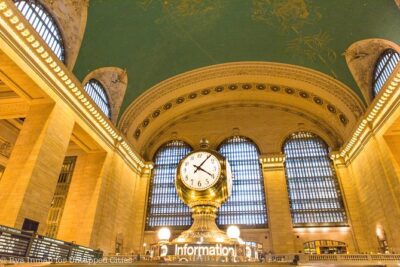
Secrets of Grand Central Station Walking Tour New York City
Read our review →


SUMMIT One Vanderbilt with Grand Central Terminal Tour
Read our review →
Best NYC Sightseeing Tour: Times Square, Grand Central, & More
Read our review →
SUMMIT One Vanderbilt Ticket and Grand Central Tour
Read our review →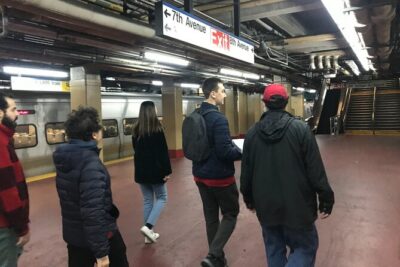
Secrets of Grand Central Terminal and/or Penn Station – Private
Read our review →Browse the lists this tour appears in