
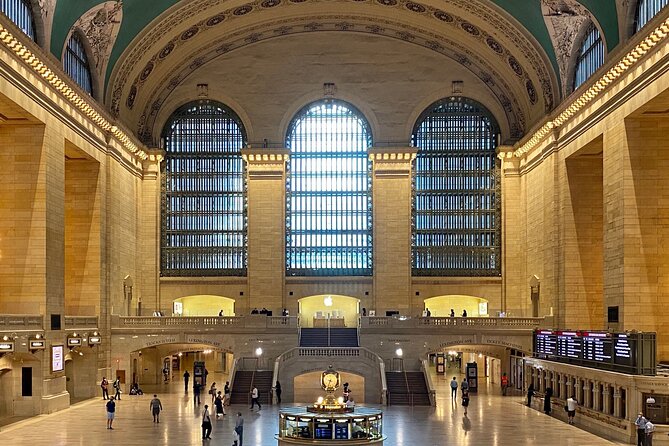
Reviewed · GRAND CENTRAL TERMINAL TOURS
The Story of Grand Central Terminal: An Art And Engineering Marvel
Grand Central Terminal nearly vanished. That alone gives this virtual video tour a strong hook. Kitt Garrett traces the building’s rise, its threatened future, the people who fought to save it, and the changes that carried it into modern New York. You also learn how the city moved from horse and carriage days to today’s commuter system.
I like the way the presentation links Grand Central to the surrounding neighborhood instead of treating the terminal as an isolated monument. I also like the practical follow-up: you can download a self-guided walking guide and use it when you visit in person. The main drawback is simple: this is a screen-based experience, not an on-site tour, so you will not feel the scale, noise, or daily rush of the terminal while watching.
Key points to know before booking
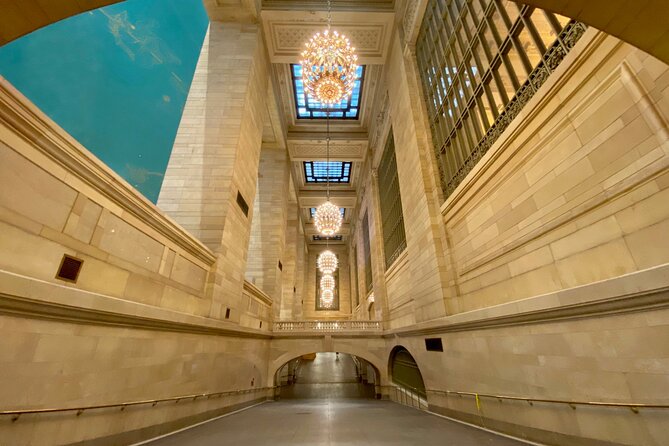
- Kitt Garrett leads the presentation, using historical photographs, present-day views, and a clear timeline of Grand Central’s development.
- The virtual tour lasts about 1 hour and 38 minutes, giving it more room than a short documentary.
- The story covers both architecture and transportation, from horse-drawn carriages to modern suburban commuting.
- Myths and lesser-known details get attention, helping you notice places you might otherwise walk past.
- A downloadable PDF guide supports a later visit, with locations and photo stops inside the terminal.
- The $25 price covers a private group of up to 15, which can be good value for a family or small organization.
Why Grand Central works well as a virtual tour
Grand Central Terminal is easy to pass through without really seeing it. You may enter to catch a train, check the clock, and hurry toward the platforms. This experience changes the pace. Instead of treating the building as a backdrop, it explains how its design, history, and daily purpose fit together.
The presentation begins with New York transportation before focusing on the terminal itself. That context matters. Grand Central did not appear by magic as a finished hall. It grew out of the city’s need to move people, manage expanding rail traffic, and connect central Manhattan with outlying neighborhoods and suburbs.
I find that approach more useful than a tour that only lists architectural features. When you understand the transportation problem the terminal was built to solve, the scale of the building makes more sense. The grand spaces were not created only for show. They were designed around movement, waiting, arrivals, departures, and the practical demands of a growing city.
The virtual format also helps if you are planning a New York visit. You can watch before going, decide how much time Grand Central deserves, and arrive with a list of details to find. That is especially helpful for people who have used the terminal many times but never stopped to study it.
More NYC Superhero and Comics Tours:
- Superheroes in New York Walking Tour
★ 5.0 · 595 reviews - New York City: Superheroes of NYC Guided Walking Tour
★ 4.5 · 271 reviews - Public Super Tour of NYC: Heroes, Comics and More!
★ 4.5 · 148 reviews
Kitt Garrett’s history of New York transportation
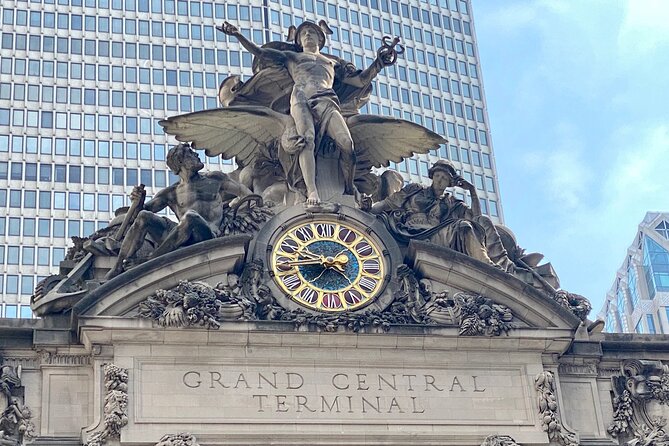
The first part places Grand Central in a wider story of New York travel. You move from the era of horse and carriage to the commuter patterns that shape the city today.
This section is valuable because it explains the terminal as part of a changing transportation network. The building is not just a famous interior. It is tied to the way New Yorkers reach work, move between neighborhoods, and travel to suburban communities.
Garrett’s presentation also connects the terminal with the surrounding area. Historical photographs compare earlier streets and buildings with more recent changes. That gives you a better sense of how Grand Central fits into the larger city, rather than presenting it as a sealed-off piece of the past.
I would pay close attention here if you enjoy urban history. The transportation story gives you a framework for the rest of the tour. It also helps you understand why Grand Central remains useful even after more than a century of changes around it.
The drawback is that the supplied material does not give a full chapter-by-chapter outline or list every image used. You should expect a guided visual presentation rather than a formal online class with downloadable lecture notes or a detailed syllabus.
The terminal’s architecture and engineering
The title promises art and engineering, and the presentation treats both as important. You learn about Grand Central as an architectural wonder, but also as a working transportation building that has had to adapt over time.
That balance is one of the best reasons to choose this experience. A purely architectural talk might focus on decoration and famous rooms. A purely historical talk might rush past the building’s physical design. Here, the point is to see how the terminal’s beauty and function operate together.
Historical images are central to the experience. They show how the building and neighborhood changed, giving you a visual record that is hard to appreciate during a quick visit. The older photographs also make the restoration and renovation story easier to follow.
You will hear about work carried out over the past 100 years. The presentation explains that Grand Central has not remained frozen in one period. It has been repaired, altered, and brought into new phases of use while retaining the features that make it recognizable.
That is a useful lesson for your own visit. Look beyond the famous central spaces. Notice the relationship between public rooms, circulation areas, and the working functions of the terminal. The video prepares you to see the building as a machine for moving people, not just as a photogenic landmark.
How Grand Central almost disappeared
One of the strongest parts of the story is the terminal’s near-demolition. Grand Central was almost lost, and the presentation explains who helped save it and how that effort unfolded.
This gives the building a sharper sense of importance. It is easy to assume that a place this famous was always protected. The story shows that preservation is not automatic, even for an architectural landmark known around the world.
I especially like this part for first-time visitors because it changes the way you enter the terminal. Instead of seeing only a grand old building, you see a place that survived a serious threat. Details that might have seemed decorative or old-fashioned take on another meaning when you know they could have disappeared.
The tour also places the preservation story alongside later renovation. That combination keeps the account from becoming a simple celebration of the past. Grand Central had to survive, but it also had to keep serving a modern need.
If preservation history is a major reason you are booking, keep in mind that this is a virtual presentation rather than an in-person visit to specific preservation sites. You will learn the story and see the relevant areas on screen, then use the mobile guide to find them later.
More Grand Central Terminal Tours:
- Secrets of Grand Central Station Walking Tour New York City
★ 5.0 · 1,796 reviews - NYC: The Secrets of Grand Central Terminal
★ 4.8 · 718 reviews - NYC: Official Grand Central Terminal Tour
★ 5.0 · 458 reviews - NYC: Official Grand Central Terminal Guided Tour
★ 4.6 · 251 reviews
Myths, secrets, and the places to find them
Grand Central is full of details that are easy to miss. The presentation sorts through secrets, myths, and factual history, then shows you where to look when you visit.
That practical connection is important. Many virtual programs end when the video ends. This one is designed to continue into your own walk through the terminal. The downloadable PDF can act as a checklist, helping you locate special spots and photo stops inside the building.
You can use it in two ways. First, watch the presentation before your trip and mark the places you most want to see. Second, keep it on your phone while exploring the terminal so you can match the stories with the actual spaces.
I would not expect the PDF to replace a live guide. It is better understood as a companion for a self-guided visit. You will still need to manage your own route, timing, and attention once you arrive.
The guide is likely most useful for repeat visitors. If you have passed through Grand Central many times, the historical notes can give purpose to a return visit. You may start looking up from your usual route, checking corners and details you once ignored, and comparing old images with the present-day building.
What the 1-hour-38-minute format gives you
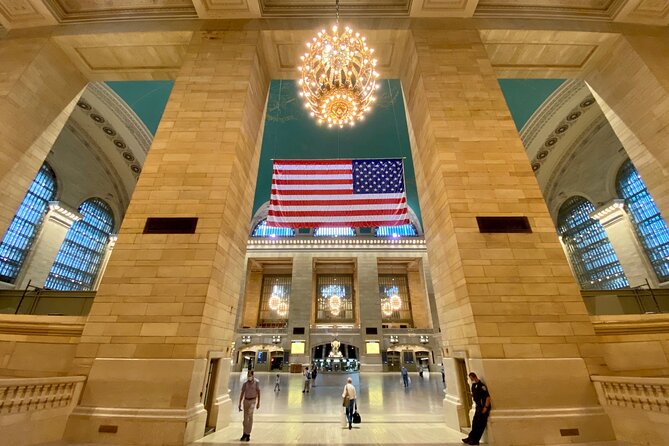
At about 1 hour and 38 minutes, this is longer than a quick introduction but shorter than a full day of museum content. The length gives Garrett room to connect the transportation story, architectural design, preservation fight, renovations, and terminal walk-through.
You should set aside a quiet block of time rather than treat it as a five-minute preview. The material is intended to be watched closely, and the historical images work best when you are not distracted.
The longer format is also useful if you want to plan your visit in advance. By the end, you should have a clearer idea of how much time to give Grand Central and which areas deserve attention.
Still, the exact balance between talking, photographs, and virtual movement is not specified. If you prefer a live guide who can answer questions as you go, this may feel less flexible. If you enjoy a prepared presentation with a clear narrative, the format is a good fit.
The $25 private-group value
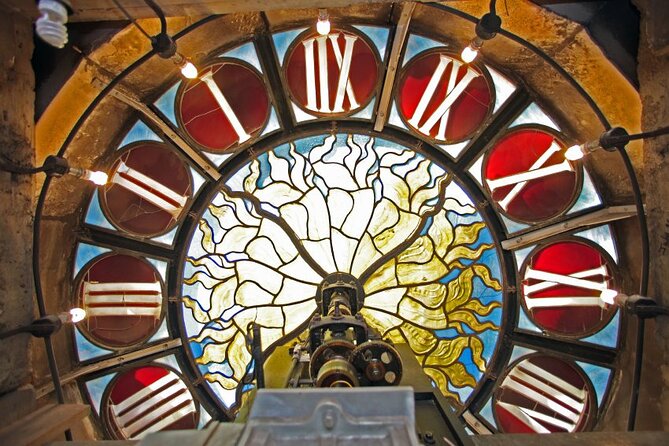
The price is $25 per group of up to 15 people, not $25 per person. That makes the value much better for a family, a group of friends, a classroom-sized gathering, or a small club.
For one person, the cost is less easy to judge. You are paying for a prepared presentation, the guide’s research, the visual material, and the downloadable follow-up guide. You are not paying for admission to Grand Central itself or for an in-person escort through the terminal.
For a group of 10, the cost works out to $2.50 each. For the maximum group of 15, it is about $1.67 per person. That is a fair price if you plan to watch together and later visit Grand Central as a group.
The private format means only your group participates. That can make the experience more comfortable than a public online event, especially if you want to pause for discussion or use it as part of a private lesson or trip-planning session. The supplied details do not explain the exact live format or whether questions are handled during the presentation, so do not assume it works like a live guided video call.
Who should choose this experience
I would recommend it most strongly to four types of people:
- You are planning a first visit to Grand Central and want context before arriving.
- You have used the terminal before but want to notice more than the main hall.
- You enjoy New York history, architecture, preservation, and transportation.
- You are organizing a private group activity at a modest per-group price.
It also suits people who prefer learning at home before dealing with a crowded city attraction. You can take notes, pause your viewing, and return to the PDF later.
Families may find the near-demolition story and the building’s visual details appealing, though the presentation is clearly aimed at people seeking an in-depth account. For very young children, the pace and historical material may require an adult to keep the visit engaging.
The experience is less suitable if you want the atmosphere of the terminal itself. A screen cannot reproduce the echo of the main hall, the movement of commuters, or the feeling of standing inside a working transportation center. It prepares you for that experience, but it does not replace it.
Practical details before you book
The activity is listed at 70 East 42nd Street in New York City, the address associated with Grand Central Terminal. It includes a mobile ticket, and the activity is described as ending back at the meeting point.
The listed operating schedule runs Monday through Sunday from midnight until 11:30 p.m., for the stated availability period from May 15, 2021, through June 8, 2026. Since this is a virtual product, confirm the exact viewing instructions and access details at booking.
Confirmation is provided when you book. Service animals are allowed, the location is near public transportation, and most people can participate. The private arrangement is useful if you want to watch with your own group rather than join strangers.
One important point: the experience is non-refundable and cannot be changed for any reason. Check your date and group plans carefully before paying.
How to get more from the experience
Watch the presentation before your New York visit, not after, if your goal is to use it as a planning tool. Keep the downloadable PDF on your phone, and use it to create a short list of places to locate inside Grand Central.
Give yourself time in the terminal after watching. The program is designed to help you decide how much time to spend there, but a rushed stop will limit the value of what you learned.
You can also compare the older photographs with the current neighborhood. The area around Grand Central has changed, and the presentation draws attention to those changes. That makes the walk outside the terminal part of the experience, not just a route to your next subway or train.
Do not expect every visit to match the screen exactly. Buildings change, access can vary, and a working terminal has its own daily rhythm. Use the PDF as a flexible guide rather than a strict route.
Should you book The Story of Grand Central Terminal?
Book it if you want a serious, visual introduction to Grand Central before visiting, or if you already know the building but want to understand its past, design, myths, and preservation fight. Kitt Garrett’s focus on old and new images, the surrounding neighborhood, and specific places to find later gives the experience practical value beyond a standard short documentary.
The $25 group price is particularly appealing for up to 15 people. I would be more cautious if you want a live, on-site guide, immediate questions and answers, or the sensory experience of being inside the terminal.
For most people, the best use is simple: watch it before your visit, download the guide, then go to Grand Central with enough time to look around. You will arrive with a purpose instead of merely passing through.
FAQ
Where does the experience take place?
The activity is associated with 70 East 42nd Street, New York, NY 10165, USA, the location of Grand Central Terminal. It is a virtual video tour that prepares you for a later self-guided visit.
How long does the virtual tour last?
The approximate duration is 1 hour and 38 minutes.
How much does the experience cost?
The price is $25 per group, with up to 15 people included.
Who leads the tour?
The experience is provided by Kitt Garrett New York Sites & Insights, and the presentation is led by Kitt Garrett.
What subjects does the tour cover?
It covers New York transportation from horse and carriage travel to modern commuting, along with Grand Central’s architecture, engineering, secrets, myths, near-demolition, preservation, and renovations.
Do I receive a self-guided guide for a later visit?
Yes. You can download a self-guided walking tour to your mobile device. The PDF helps you locate special places and photo stops inside Grand Central.
Can I cancel or change the booking?
No. The experience is non-refundable and cannot be changed for any reason.
Recently added in New York City
- New York City Superheroes Tour Marvel and DC Comics Origins★ 4.5 · 27 reviews
- Sweets and Slices Greenwich Village Walking Food Tour★ 5.0 · 23 reviews
- Tour Contrastes de Nueva York★ 4.5 · 48 reviews
- Sunday Walking Tour and Gospel in West Harlem★ 4.0 · 14 reviews
- Harlem Sunday Gospel Experience★ 4.0 · 46 reviews
- Spanish Superhero Tour in New York★ 5.0 · 3 reviews
- Street Art & Graffiti Tour in NYC Private Tour★ 5.0 · 7 reviews
- New York: Harlem tour and Gospel service★ 4.5 · 30 reviews
Grand Central Terminal Tours, compared.
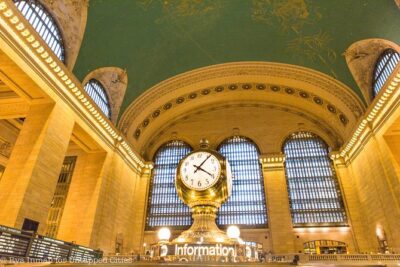
Secrets of Grand Central Station Walking Tour New York City
Read our review →



SUMMIT One Vanderbilt with Grand Central Terminal Tour
Read our review →
NYC Secrets of Grand Central Private Walking Tour
Read our review →
Best NYC Sightseeing Tour: Times Square, Grand Central, & More
Read our review →
SUMMIT One Vanderbilt Ticket and Grand Central Tour
Read our review →Browse the lists this tour appears in