
Reviewed · NYC SUBWAY AND UNDERGROUND TOURS
NYC Underground Subway Private Walking Tour
New York’s subway is more than a way to get across town. It is a moving museum, a record of grand civic plans, old engineering, and daily city life. This private tour begins above ground near City Hall, then takes you into public stations and onto the No. 6 train, where the story keeps unfolding as the cars move through Manhattan.
I like two things here. First, a native New Yorker leads the walk, with guides such as Justin and Richard praised for their personal knowledge and warm manner. Second, you get a fresh look at places you may have passed for years, including the old City Hall station area and the Municipal Building. The main caution is that this is not an underground exploration of closed stations. You see some abandoned spaces only briefly, and the tour includes plenty of standing.
Key points
- A private tour for your group only, with several start times available during the day.
- City Hall Park sets the scene, with visible traces of New York’s first subway station.
- The old City Hall station is viewed from a moving train, not entered on foot.
- Most of the tour takes place on the No. 6, with about 90 minutes devoted to subway history.
- A MetroCard or subway fare is extra, and you need one swipe for the ride.
- Best for history fans and curious New Yorkers, especially those who enjoy architecture and city infrastructure.
Starting near Broadway and City Hall Park
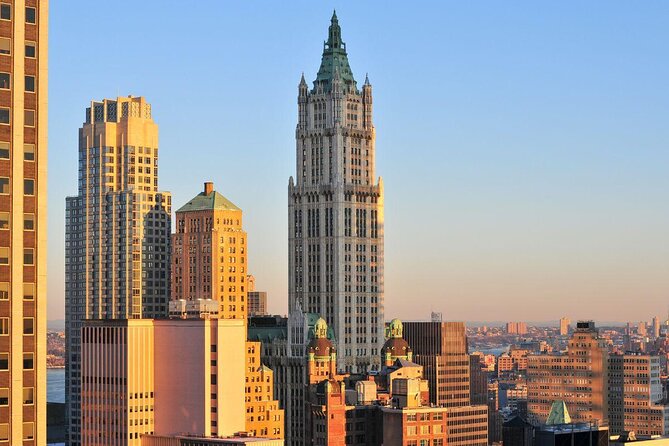
The tour meets at 200 Broadway, near the foot of what was once the world’s tallest building. The exact setting matters. This is not a random subway entrance chosen for convenience. You begin in the civic heart of Lower Manhattan, where City Hall, the Brooklyn Bridge, the Municipal Building, and the old courthouse district all sit within a short walk.
Your guide uses this opening stretch to explain why New York needed a subway in the first place. In the late 19th and early 20th centuries, the city was growing fast, streets were crowded, and moving people below ground became a major public project. The story is easier to follow here because the buildings around you are part of it.
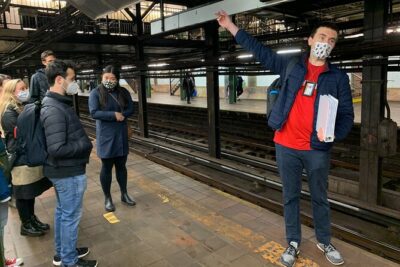
Expect a walking tour rather than a polished theater presentation. You may spend time stopped in one place while the guide points out details and explains dates, plans, and political connections. One past participant found the opening section too stationary, so wear shoes you can stand in and be ready for a slower start.
The private format helps. You do not have to keep up with a large group, and the guide can respond to questions from your party. Justin has been praised for remembering names and making the experience personal. Richard, who grew up in New York, has also led the tour. Guide assignments can vary, but the experience is built around a local guide rather than an audio recording.
More NYC Subway and Underground Tours:
- New York City Slavery and Underground Railroad Tour
★ 5.0 · 411 reviews - NYC Underground Subway Walking Tour
★ 4.5 · 361 reviews - NYC: History of Slavery & Underground Railroad Walking Tour
★ 4.7 · 87 reviews
City Hall Park and the subway’s first chapter
City Hall Park is the first major stop, with about 15 minutes devoted to the creation of New York’s first subway station. You will look for visible remnants in and around the park while the guide explains how the original system was planned and built.
This stop gives the tour its foundation. Instead of starting with a train ride and a list of station facts, you first learn why this part of Lower Manhattan mattered. City Hall was the city’s political center, and the surrounding buildings helped shape the early subway system.
The details are easy to miss when you are simply walking to work or crossing the park. Your guide draws attention to traces that are not marked like a museum exhibit. I like this part because it changes the way you look at familiar public space. A park bench, a building line, or a station entrance can take on a new meaning once you know what once stood there.
Admission to the park is free. The value comes from the explanation, not from access to a paid site. If you already know a lot about the subway, the guide’s anecdotes and local perspective will matter more than the basic timeline.
City Hall, the Brooklyn Bridge, and Tweed Courthouse
From City Hall Park, you see New York City Hall and discuss its role in the subway’s creation. The building provides a useful reminder that the subway was not only an engineering project. It required political choices, public money, and a plan for linking a fast-growing city.
The route also brings you to the beginning of the Brooklyn Bridge. You do not cross the bridge as part of this activity, but seeing it from the opening stretch adds useful context. The bridge represented one way New York tackled movement across the East River, while the subway offered another way to connect neighborhoods below the streets.
You also walk by the Tweed Courthouse. This is a short exterior stop, not a museum visit, but it adds another piece to the civic story. The area around City Hall is packed with reminders of government, construction, and public works. The guide connects those pieces to the subway instead of treating each building as an isolated sight.
Keep your expectations practical. This is not a long architecture tour, and there is no stated interior admission at these stops. You are seeing the buildings from public spaces while the guide explains why they belong in the subway story.
The Municipal Building and New York’s grand scale
The Municipal Building is another short stop, listed at about 10 minutes. Here, the focus turns to the building’s importance in the creation of the subway system.
The value of this pause is the link between architecture and transportation. New York’s subway grew alongside a city that wanted monumental civic buildings and better connections between its districts. The Municipal Building helps you picture that ambition on a large scale.
This is also one of the places where the guide’s local experience can make the difference. You are unlikely to get much from simply standing outside and taking a photograph. The point is to understand why this building appears in the subway story and how public institutions shaped the system.
The early walking section includes several short stops close together. That makes the route easy to follow, but it also means you may spend more time listening than moving. If you want a fast sightseeing tour with constant motion, this may feel slow. If you like details and questions, the pace gives you room to look around.
More NYC Walking Tours:
- SoHo, Little Italy, and Chinatown Walking Tour in New York
★ 5.0 · 3,153 reviews - Secrets of Grand Central Station Walking Tour New York City
★ 5.0 · 1,796 reviews - Greenwich Village Walking and Food Tasting Tour
★ 5.0 · 1,572 reviews - Artistic, Alternative Greenwich Village Walking Tour
★ 5.0 · 971 reviews
Union Square and the 14th Street station
The tour then reaches Union Square, where you explore the 14th Street Union Square subway station. This is a useful change of setting. You have moved from the civic buildings of Lower Manhattan into one of Manhattan’s most familiar transit areas.
The stop itself is brief, about five minutes. Do not expect a long station inspection or a private section closed to the public. The attraction is seeing an ordinary working station through a historical lens. Signs, entrances, platforms, and architectural details can look different once the guide explains how the system developed.
Union Square also helps show how the subway connects grand public plans with everyday use. City Hall Park tells the story of origins. Union Square shows the system as part of daily New York life.
A short stop can be enough here because the main subway portion follows. You should not judge the entire activity by the few minutes at Union Square. The bulk of the time is spent riding and discussing the No. 6.
About 90 minutes on the No. 6 train
Most of the tour takes place on the No. 6 train, for roughly an hour and a half. This is the heart of the experience. Rather than viewing the subway as a series of static stations, you move through it while the guide explains its past.
That format has real advantages. You can see how the system works as a living network, not just as an old construction project. You also get the ordinary sounds and movement of the subway, with the guide pointing out details you might otherwise miss.
The train ride is not a private subway car or a special access experience. Other passengers use the system, and the stations are publicly accessible. You are paying for the guide’s interpretation, not for exclusive access behind a locked door.
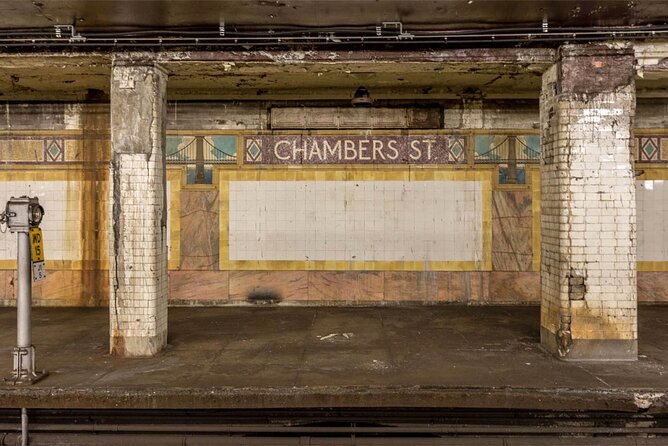
The tour description refers to the architectural ghosts of the nearly forgotten Chambers Street station and remnants connected with Union Station. The old City Hall station is part of the story too, but you should understand the viewing conditions before booking. You pass the abandoned City Hall station area from a moving train, and the view lasts only about two minutes. You do not get off to walk through it.
That point matters. New York law does not allow the tour to take you into abandoned stations. If you imagined a flashlight tour through empty platforms, this is not that. You will see what can be viewed legally from public subway service, then hear the history from the guide.
For me, that limitation does not ruin the concept, but it changes the value calculation. The tour works best when you enjoy the explanation, the glimpses, and the story of how the system changed. It is a poor fit if your main goal is extended access to abandoned platforms.
What the guides add to the experience
The strongest part of this activity is the human layer. Justin has been praised for enthusiasm and for revealing details that even a longtime subway user had never noticed. One native New Yorker described learning new things despite years of riding the system.
Richard has also led the tour and is described as someone who grew up in New York. That sort of local connection can give the ride a more personal feel. You are not only hearing dates and station names. You are hearing how the city’s transit system fits into the life of someone who has used it for years.
The tour is in English. A guide has adjusted the pace for a French-speaking participant, which suggests some flexibility, but you should still be comfortable following spoken English for much of the two hours. One complaint involved a guide speaking too quickly and not repeating questions. Guide style can affect the experience, so ask questions early if you need a slower pace.
The strongest praise focuses on enthusiasm, patience, and the ability to make familiar stations feel new. The main criticism concerns presentation speed and time spent standing. Those are useful warnings, not minor details. This tour succeeds when the guide communicates clearly and keeps the group engaged.
Heat, standing, and the practical side of the route
Subway stations can be hot, especially in summer. One person found the combination of outdoor heat, underground warmth, and long periods of standing unpleasant. The operator acknowledged that summer can be difficult for this activity.
I would choose a cooler part of the year if you have a choice. If you go in warm weather, bring water, wear light clothing, and use comfortable shoes. Food and drinks are not included, so plan ahead rather than expecting a refreshment stop.
The tour lasts about two hours, but the time is not split evenly between walking and riding. The first part includes several outdoor explanations and short stops. The No. 6 ride takes about 90 minutes. You need enough stamina for standing on platforms, walking between points, and riding the train.
The route is near public transportation, and most people can participate. Service animals are allowed. Still, the long standing periods may matter if you need frequent seating or find subway heat difficult.
Is $156 per person a fair price?
At $156 per person, this is a costly subway ride if you measure value by transportation alone. The MetroCard or subway fare is extra, and the activity includes no food, hotel pickup, or drop-off.
The price makes more sense for a private history tour. Your group is the only group participating, so you are paying for a dedicated guide and a focused experience rather than a basic ride. If you are traveling with several people who share an interest in New York architecture and transit, the private format may feel worthwhile.
For one person or a couple on a tight budget, the cost needs more thought. You can ride the subway yourself for far less, visit City Hall Park for free, and read about the system independently. What you cannot easily reproduce is the guide’s route, timing, station observations, and local stories.
I would book it for a special interest experience, not as a general introduction to New York. The tour gives you a new way to see a system you might otherwise treat as background noise. It does not provide exclusive access, a long visit inside an abandoned station, or a broad tour of every subway line.
The free cancellation policy gives you some flexibility. You can cancel at least 24 hours before the start time for a full refund. Changes or cancellations inside that 24-hour window are not refunded.
Who will enjoy this private subway tour?
I think the best fit is someone who enjoys city infrastructure, architecture, public works, and overlooked details. It also suits a New Yorker who wants a fresh activity without leaving Manhattan’s public transit system.
History fans will get the most from the explanations of City Hall, the Municipal Building, the first subway station, and the older station remnants. The tour can also work for visitors who want something different from the usual museum and observation deck schedule.
It is less suitable for anyone expecting a physically active walking tour. The route includes a lot of standing, and much of the experience involves listening from platforms or inside the train. It is also not ideal for someone who wants to enter closed stations or spend a long time photographing abandoned interiors.
The private format is helpful for families or small groups because you can ask questions and set the tone with your guide. Still, the supplied details do not promise a child-focused format, so I would book it for a group whose members can follow a two-hour spoken tour.
Should you book the NYC Underground Subway Private Walking Tour?
Book it if you want the subway explained by a local guide and like the idea of seeing City Hall Park, Union Square, and the No. 6 line as parts of one long civic story. Justin and Richard have been praised for enthusiasm, local insight, and making routine stations feel worth a second look.
Skip it if you want to walk through abandoned stations, avoid heat, or keep the day moving without long stops. The City Hall station viewing is brief and takes place from a moving train, which is the most important expectation to set.
For the right audience, this is a thoughtful, unusual tour. You finish with a better sense of why New York built its subway, how public buildings shaped that work, and how much history sits beneath an ordinary commute.
FAQ
Where does the tour begin?
It begins at 200 Broadway, New York, NY 10038, near City Hall Park and the foot of what was once the world’s tallest building.
Where does the tour end?
The activity ends back at the meeting point.
How long does the tour last?
The tour lasts approximately two hours.
Is this a private activity?
Yes. Only your group participates in the private tour.
Is a subway fare included?
No. You must pay separately for one subway swipe.
Which subway line does the tour use most?
The tour spends most of its time riding the No. 6 train.
Can you enter abandoned subway stations?
No. The stations visited are publicly accessible, and abandoned stations cannot legally be entered. The old City Hall station area is viewed from a moving train.
Is the tour available at different times?
Yes. Several tour times are offered during the day.
Can you cancel for a full refund?
Yes. You can cancel at least 24 hours before the start time for a full refund. Cancellations or changes made less than 24 hours before the start time are not refunded.
Recently added in New York City
- Custom Private New York Architecture, Art and City Tour★ 5.0 · 3 reviews
- NYC VIP Private Luxury airport arrival ride by Stretch Limousine★ 4.5 · 38 reviews
- New York Afternoon Fall Foliage Cruise with Lunch★ 5.0 · 6 reviews
- New York City Skyline Dinner Cruise★ 3.5 · 34 reviews
- New Years Eve Speakeasy Drinks and Ball Drop Tour NYC★ 4.0 · 3 reviews
- Niagara Falls, Washington DC, Boston 4-day Tour from New York★ 4.0 · 5 reviews
- Macy’s Thanksgiving Day Parade Premium Viewing Brunch 2025★ 4.5 · 3 reviews
- NYC Sunset Cruise with DJ, Skyline & Statue of Liberty★ 4.0 · 30 reviews
NYC Subway and Underground Tours, compared.
New York City Slavery and Underground Railroad Tour
Read our review →

History of Slavery & Underground Railroad Walking Tour
Read our review →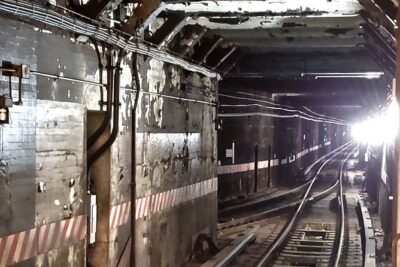

Underground Subway Guided Tour with Local New Yorker
Read our review →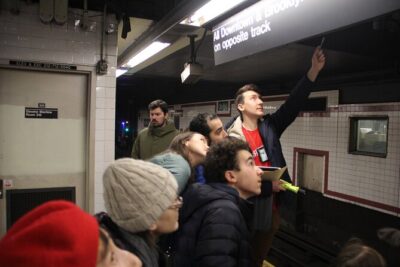

Browse the lists this tour appears in