
Reviewed · NYC SUBWAY AND UNDERGROUND TOURS
Guided Private Underground New York Subway Tour
New York’s subway is more than a way to get across town. On this private tour, you ride the original 1904 route while learning how the system grew, why it took so long to build, and how its art, signals, cars, and politics shaped the city. Guide Gary uses photographs and stories to make a noisy station feel like a living museum.
I especially like the small private format, which lets Gary answer questions and adjust the talk for your group. I also like the practical route: you see City Hall Station from a moving train, study Astor Place’s ceramic work, pass through Times Square, and finish at Grand Central Terminal. The main consideration is simple: this is a talk-heavy tour, not an underground adventure. You do not enter subway tunnels or walk on tracks.
- Ride the original subway route: Follow the early IRT line through several of Manhattan’s most important stations.
- See City Hall Station safely: View the famous abandoned station from the train rather than entering restricted areas.
- Study overlooked artwork: Look for Astor Place’s terra-cotta beavers, old tile work, mosaics, and major works at Times Square.
- Learn from guide Gary: Expect a focused presentation on subway cars, signals, engineering, politics, and New York City growth.
- Finish at Grand Central Terminal: Connect subway history with the story of the terminal’s near-demolition and restoration.
- Pay one group price: The listed cost is $220, with capacity details needing confirmation because the information gives both five and eight people.
What This Private Subway Tour Really Is
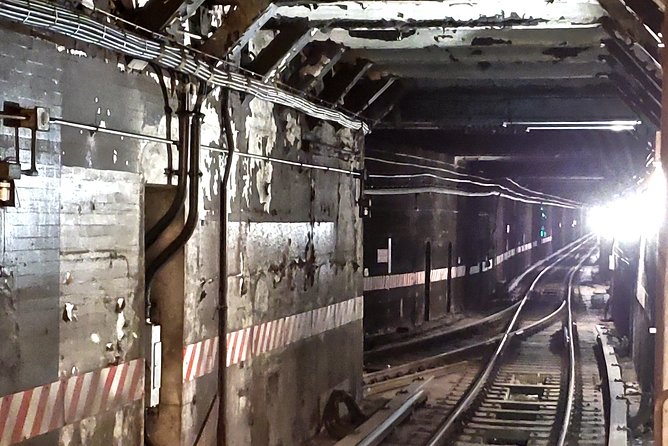
This is a history and architecture tour conducted inside the public subway system. You are not being taken into sealed tunnels, abandoned platforms, or dangerous track areas. The tour stays in places open to the public, with City Hall Station viewed from the safety of the train.
That distinction matters. The title may suggest a little urban exploration, but the actual experience is legal, controlled, and educational. You ride trains, walk through stations, pause beside historic details, and use photographs to understand what you cannot see directly.
The tour lasts about two and a half hours. The schedule is flexible, and the activity is private, so your group is not mixed with strangers. Gary is the guide named in the tour information, and his presentation covers much more than station decoration. He explains the growth of the subway, the development of train cars, automatic train stops, signals, construction problems, and the political decisions that shaped the system.
The strongest part is his command of the subject. Several ratings describe him as funny, attentive, passionate, and able to make the time pass quickly. That enthusiasm is useful here because subway infrastructure can seem dry until someone explains why a doorway, signal, tile pattern, or station plan exists.
Starting at Brooklyn Bridge Station
The meeting point is outside the Brooklyn Bridge subway station at 1 Centre Street. The station itself is the first lesson. You begin above ground with the story of how New York got its first subway and why the original line mattered so much to the city.
Allow about 30 minutes for this opening section. You will learn about the forces behind the system, the city’s early transportation problems, and the people and institutions that pushed the project forward. Gary also uses images to show elements that are no longer visible in everyday station life.
This is an important expectation to set. You may spend a good deal of the first part standing in one place while listening. That gives the history a clear beginning, but it can feel long if you booked the tour hoping to walk constantly. Wear comfortable shoes and be ready for a lecture with movement added, not a nonstop walking tour.
You pay the subway admission when you enter the system. The train fare is not included, but it is the only entrance cost listed for the experience. Bring whatever payment method the city subway accepts on the day of your tour, and allow a little time for entry.
More NYC Subway and Underground Tours:
- New York City Slavery and Underground Railroad Tour
★ 5.0 · 411 reviews - NYC Underground Subway Walking Tour
★ 4.5 · 361 reviews - NYC: History of Slavery & Underground Railroad Walking Tour
★ 4.7 · 87 reviews
Riding Past City Hall Station
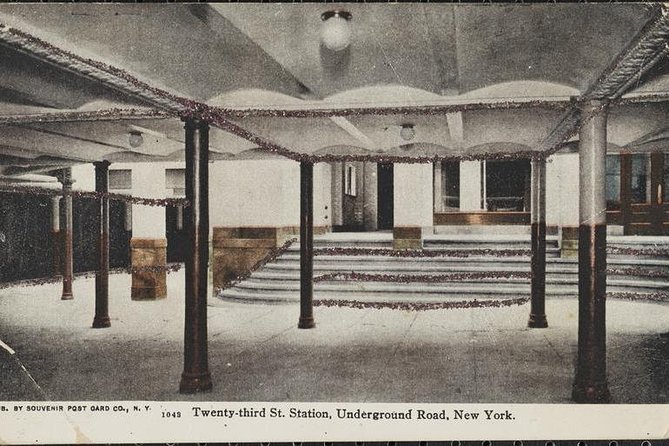
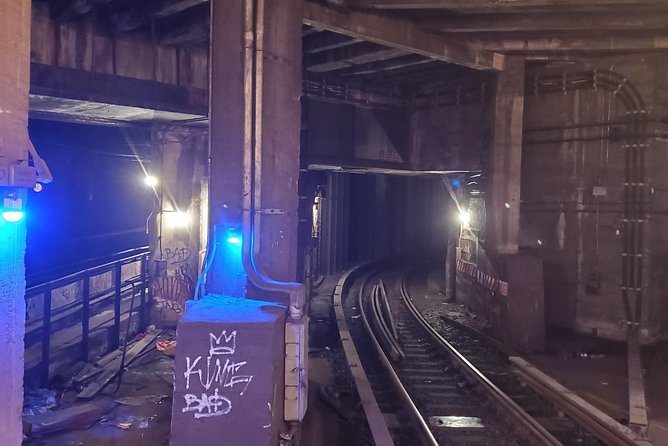
The ride through the old route is the tour’s central experience. From the train, you view the former City Hall Station, one of the most famous unused stations in the system. Its curved design and historic detailing are difficult to appreciate from a regular platform, but the train passes through the space without requiring you to leave the public route.
This is also where the tour’s safety policy becomes clear. You do not get off to walk the tracks, enter service tunnels, or trespass into closed areas. Those activities are illegal and unsafe. If you want a tour built around restricted access, this is not the right choice. If you want a lawful look at subway history with context from someone who has studied the system closely, it makes sense.
The ride itself is only part of the value. Gary explains why the original stations were designed as they were, how the system expanded, and how early technical decisions still affect the trains you use today. He also discusses the evolution of subway cars, including practical changes such as door placement.
Train noise can be an issue. This is a working subway, not a quiet museum, and some parts of the explanation take place beside active tracks. The guide is described as stopping when express trains pass and checking that people can hear him, but you should still expect moments when the city wins the volume contest.
Astor Place and Its Ceramic Beavers
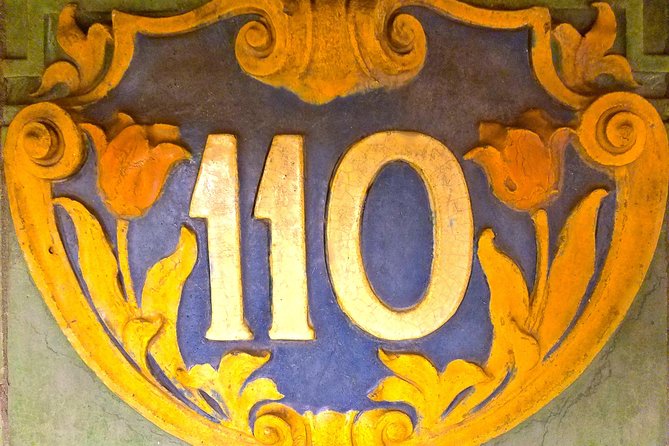
Astor Place is one of the tour’s most rewarding short stops. The station contains decorative terra-cotta work, including the well-known ceramic beavers. These small details are easy to miss when you are hurrying for a train, which is exactly why a guide adds value.
Here, you look above eye level and along the walls instead of focusing only on the arrival board. The station’s ornament helps explain an older idea of public transportation: subway stations were not meant to be bare corridors. Materials, symbols, and patterns were part of the civic design.
The planned stop is about 10 minutes, but its importance is larger than the clock suggests. Astor Place gives you something concrete to look for during the rest of your New York visit. After this tour, you may find yourself scanning other stations for tile work, mosaics, signs, and small pieces of design that commuters pass every day.
The stop also arrives around the midpoint of the experience. By then, you have heard the basic story of the system and can connect the decorative work to the larger development of the city.
Grand Central and the Shuttle to Times Square
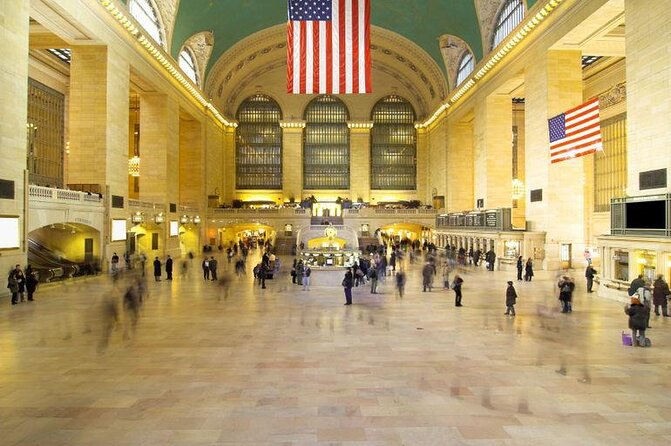
The route continues to Grand Central Station, where you learn how the terminal came to be and how its earlier versions differed. The tour covers the prior stations, the reasons Grand Central was nearly lost, and the forceful steps taken to save and renovate it.
This portion is especially useful because it connects two transportation systems. The subway was built to move people beneath the city, while Grand Central became one of the country’s major rail terminals. Their stories overlap in Midtown, and the tour shows how transportation influenced New York’s growth.
From Grand Central, you switch to the Shuttle for Times Square. The transfer helps you understand how the system functions, rather than treating the subway as a collection of unrelated stops. You see how a short connection can carry enormous numbers of people between two central parts of Manhattan.
The timing here is approximate. Trains, crowds, and station conditions can affect how long you spend in each place. The private format helps because Gary can answer questions from your group rather than rushing through a fixed script designed for a large crowd.
More New York City Tours:
- NYC: SUMMIT One Vanderbilt Tickets
★ 4.7 · 51,195 reviews - NYC: Empire State Building Tickets – Observatory & Museum
★ 4.7 · 25,757 reviews - New York City: Statue of Liberty & Ellis Island with Ferry
★ 4.6 · 18,683 reviews - New York City: American Museum of Natural History Ticket
★ 4.5 · 15,447 reviews
Times Square Underground
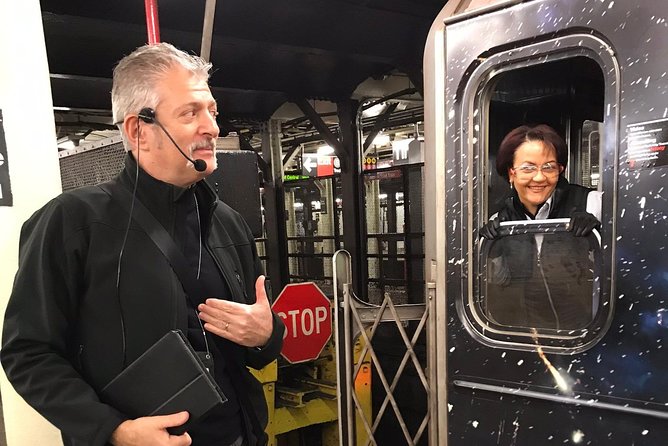
Times Square station is not just a place beneath the famous billboards. It became the most important station in the system because of its location and connections. The tour explains how that importance developed and points out artwork valued at several million dollars.
This stop takes about 20 minutes. It is a useful counterpoint to City Hall and Astor Place. City Hall represents the early subway, Astor Place shows careful decorative design, and Times Square demonstrates the scale and central role the system gained over time.
Do not expect a quiet art gallery. Times Square is one of the busiest places on the route, and the station has the noise and movement you would expect. The reward is learning to see public art in a place most people treat as a passageway.
The guide’s images also matter here. Some stories and historical views cannot be understood from the current station alone. Photographs help you compare the subway as it was with the system beneath your feet today.
Finishing Inside Grand Central Terminal
The tour ends at Grand Central Terminal on East 42nd Street. The final stop is above the subway and costs nothing extra. It gives the experience a satisfying finish because Grand Central is both an architectural landmark and a transportation story.
You hear how the terminal developed, what came before it, and why it nearly disappeared. The discussion of preservation and renovation adds a useful lesson: famous New York landmarks were not always treated as treasures. Some survived because people took drastic steps to protect them.
The terminal also lets you compare two kinds of historic public space. Subway stations often reveal their character through tile, signs, and engineering choices. Grand Central presents its history more openly, with a grand interior that invites you to stop and look.
The planned time here is about 25 minutes. Since the tour ends at the terminal, you can continue on your own afterward without returning to the starting point. That makes the route practical for a day spent moving north through Lower Manhattan and Midtown.
How Much Information Will You Hear?
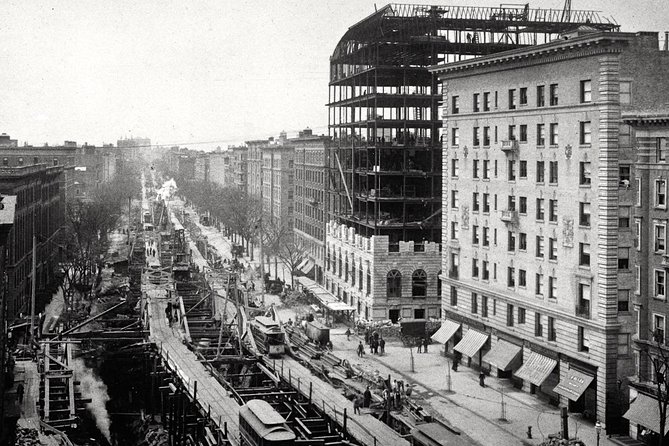
A lot. Gary’s presentation covers the founding of the subway, the growth of New York, the companies and political forces involved, train-car design, signals, automatic train stops, construction challenges, art, and safety.
That depth is the experience’s greatest strength and its main limitation. I would recommend it to anyone who enjoys city history, rail systems, architecture, engineering, or the practical stories behind familiar places. It is also surprisingly good for New Yorkers who have used the subway for years but never stopped to ask why the stations look or operate as they do.
Families can do well on this tour, too. The information includes plenty of visual material, and Gary has been described as effective with children and teenagers. Still, younger children who need constant movement may find the standing and listening sections demanding.
You should also ask questions. The tour is private, and the guide encourages them throughout. If you want a certain balance of art, politics, train technology, or city growth, say so early. You will get more from the experience if you treat it as a conversation rather than waiting passively for a speech to finish.
Is $220 a Good Value?
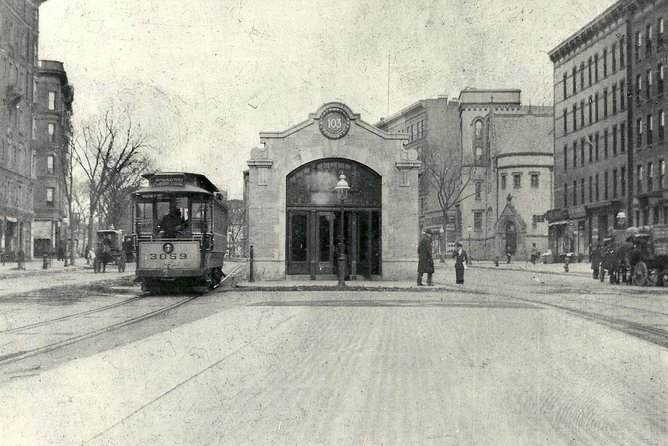
The listed price is $220 per group, not per person. For a small group, that can be a fair deal. Five people would pay about $44 each, before the subway fare. A full group would reduce the per-person cost further.
There is an important capacity issue to settle before booking. The summary says the group can include up to eight people, while the included details say the professional guide is for a maximum of five. Ask the operator to confirm the exact limit for your booking.
The value depends on what you want. This is not a cheap way to ride the subway, since the normal fare covers the transport. You are paying for Gary’s preparation, historical explanation, images, route planning, and the ability to ask questions in a private setting.
The price makes the most sense for families, couples, friends, or local residents who want a focused session. It makes less sense if you mainly want access to closed stations or a casual ride with a few facts along the way. The tour does not provide that kind of access.
The experience carries a 4.8 rating from 51 ratings, with 94 percent of customers recommending it. That fits the tour’s profile: strong for people who want detailed instruction, less suited to anyone expecting a physical exploration of abandoned infrastructure.
Practical Details Before You Go
The tour involves a moderate amount of walking and some stairs. You will move through working subway stations, stand during parts of the explanation, and ride trains with ordinary passengers. Comfortable shoes are a smart choice.
The subway fare is not included, and food and drinks are not provided. Plan to eat before or after the tour, since the schedule is built around stations and trains rather than a meal stop.
The tour is offered in English and uses mobile tickets. Service animals are allowed, and the meeting point is near public transportation. Confirmation arrives when you book.
Free cancellation is available if you cancel at least 24 hours before the local start time. Changes or cancellations made later do not qualify for a refund.
Who Should Book This Tour?
Book it if you like learning how a city works. The tour suits rail fans, architecture fans, New York residents, history students, families with older children, and first-time visitors who want more than surface-level sightseeing.
It is also a smart choice if you plan to use the subway during your stay. You will leave with a better sense of how the system developed and a sharper eye for the art and construction details that most riders miss.
Skip it if your main goal is to enter abandoned tunnels, walk along tracks, or visit areas closed to the public. Those things are not part of the experience, and the safety rules are clear.
For everyone else, the combination of a private group, a useful route, strong historical detail, and a finish at Grand Central makes this a distinctive New York tour. Just arrive ready to listen, stand, ride, and look carefully.
FAQ
Where does the tour start?
The tour starts at 1 Centre Street in New York, outside the Brooklyn Bridge subway station.
Where does the tour end?
It ends at Grand Central Terminal, at 89 East 42nd Street.
How long does the tour last?
The experience lasts approximately two hours and 30 minutes.
Is the subway fare included?
No. The cost of one subway ride is not included. Admission is paid once when the group enters the subway system.
Do you enter the subway tunnels?
No. You do not enter the tunnels or walk on the tracks. City Hall Station is viewed safely from the train.
How many people can join the private tour?
The price is listed per group, but the information gives two different limits: up to eight people in the summary and a maximum of five people in the included details. Confirm the capacity with the operator before booking.
Can I cancel for a full refund?
Yes, if you cancel at least 24 hours before the experience’s local start time. Cancellations or changes made less than 24 hours before the start are not refunded.
Recently added in New York City
- NYC: Midtown Hands-On Bagel Baking Class★ 5.0 · 12 reviews
- Personalize Sightseeing Tour★ 5.0 · 92 reviews
- Central Park Pedicab Tour with Guide★ 5.0 · 63 reviews
- Central Park Pedicab Guided Tour★ 5.0 · 17 reviews
- Photographer, Professional Photo shoot – New York★ 5.0 · 16 reviews
- Official Central Park Pedicab Ride ( UP TO 3 PERSONS )★ 5.0 · 4 reviews
- JFK or LGA package only (Round trip transfer plus VIP Contrasts)★ 5.0 · 3 reviews
- Official Central Park Pedicab Tours★ 5.0 · 35 reviews
NYC Subway and Underground Tours, compared.
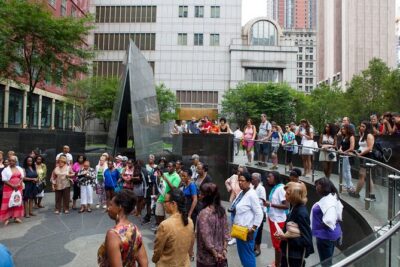
New York City Slavery and Underground Railroad Tour
Read our review →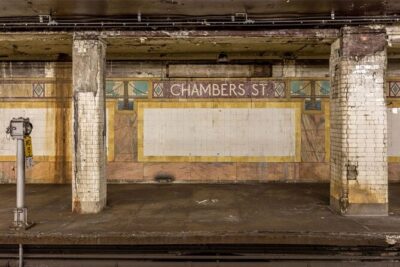

History of Slavery & Underground Railroad Walking Tour
Read our review →
Underground Subway Guided Tour with Local New Yorker
Read our review →

New York 8 Hour Main Attractions Tour with City Bus/Subway
Read our review →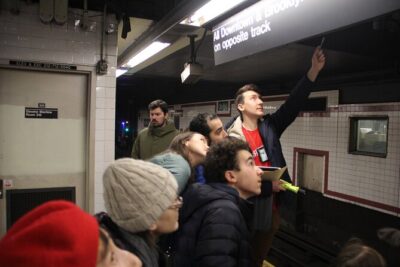

Browse the lists this tour appears in