
Reviewed · NYC SUBWAY AND UNDERGROUND TOURS
NYC: Underground Subway Guided Tour with Local New Yorker
New York’s subway is not just a way to get somewhere. It is a moving museum, a working piece of engineering, and a daily stage for millions of lives. This two-hour tour uses the 6 train as a 10-car time machine, taking you past closed stations and into stories most riders miss.
I like the mix of history and ordinary city life. You hear how New York’s first subway was built illegally under cover of night, then ride beside commuters who are simply getting to work. I also like the guide-led details at Union Square, where a tucked-away art installation is easy to pass without noticing. The main drawback is that you never leave the train to explore an abandoned station, and subway noise can sometimes make the guide hard to hear.
Key points to know before you book
- The 6 train reveals closed stations: You can glimpse City Hall Station and other abandoned spaces from inside a moving subway car.
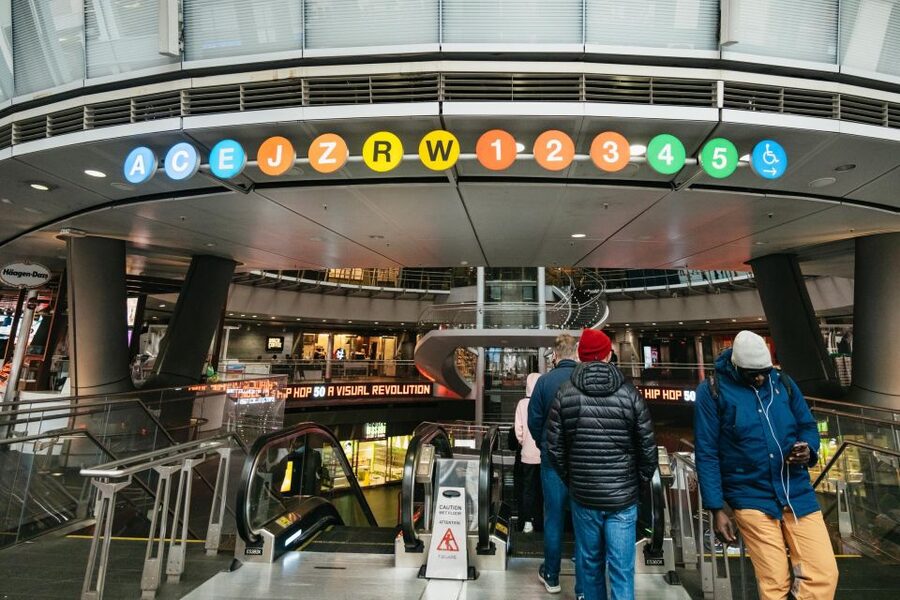
- The tour begins at Fulton Center: Meet outside 200 Broadway, at the southeast corner of Broadway and Fulton Street.
- Union Square has an easy-to-miss art detail: Your guide points out an installation inside one of the city’s busiest stations.
- Local guides make the difference: AJ, Alexis, and Mandy Edgecombe have led tours, with AJ especially noted for learning names and tailoring the conversation.
- You need your own subway fare: Bring a MetroCard or use OMNY for one entry tap.
- Expect stairs and city noise: Comfortable shoes matter, and the tour is not suitable for wheelchair users.
Why the New York subway makes a good history tour
Many city tours take you past grand buildings while a guide recites dates. This one gives you a moving setting. You enter the same subway system used by New Yorkers every day, then learn how its tunnels, stations, symbols, and artwork took shape.
That setting matters. You are not looking at a retired train in a museum. The floor may shake, announcements may interrupt, and commuters will be moving around you. That can make the tour less polished than a quiet indoor talk, but it also gives the subject a pulse.
The tour starts with the origins of mass transit in New York. You hear about the first subway and the surprising story of construction carried out illegally at night. These details give you a better sense of the pressure behind the system: New York needed a faster way to move people, and the city’s transportation network grew through bold, risky projects.
You also learn how the subway changed over time. The guide connects the system’s early construction with later changes in station design, signs, symbols, and upkeep. That wider view helps you see the subway as more than a collection of train lines.
More NYC Subway and Underground Tours:
- New York City Slavery and Underground Railroad Tour
★ 5.0 · 411 reviews - NYC Underground Subway Walking Tour
★ 4.5 · 361 reviews - NYC: History of Slavery & Underground Railroad Walking Tour
★ 4.7 · 87 reviews
Meeting at Fulton Center in Lower Manhattan
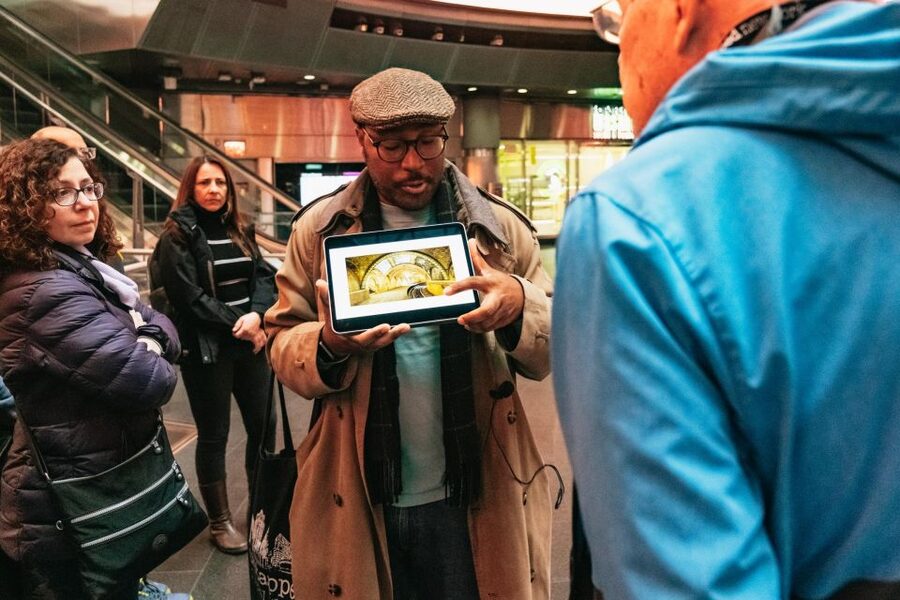
The meeting point is outside 200 Broadway, on the southeast corner of Broadway and Fulton Street, directly outside the Fulton Center entrance. Look for the guide holding an Untapped New York sign.
Give yourself enough time to find the correct corner. Fulton Center is a major transportation hub, and the surrounding streets can feel confusing if you are rushing. The guide will lead the group into the subway system after a short introduction.
This opening section is useful even if you already know New York. Several people on past tours have lived in the city for years and still learned new details about stations they had used many times. You do not need to be a subway expert, though. The guide explains the basic story before adding the finer points.
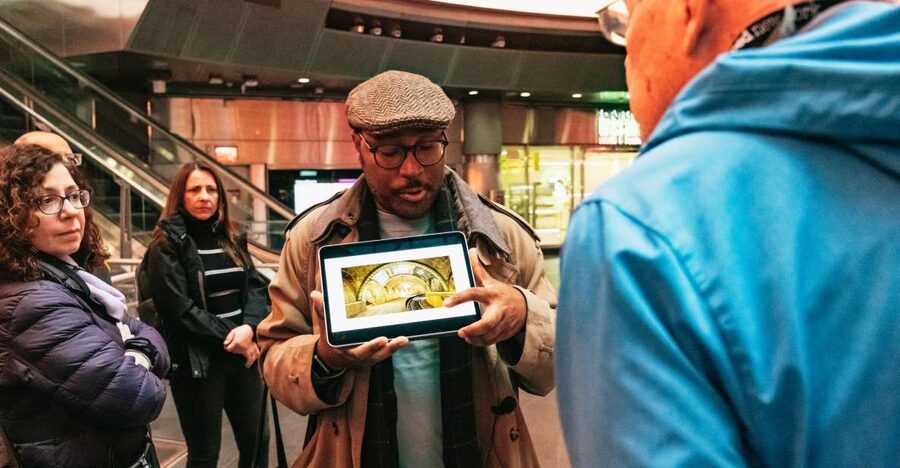
The tour is in English. Your guide uses headsets, which are especially helpful in stations and on trains. They are not a perfect fix for every sound problem. One recent participant found that train noise sometimes competed with the guide’s voice, so stay reasonably close and keep your headset on.
The first subway stories begin underground
The first part focuses on how public transportation developed in New York and why the subway became so important. You hear about the earliest underground line and the unusual circumstances surrounding its construction.
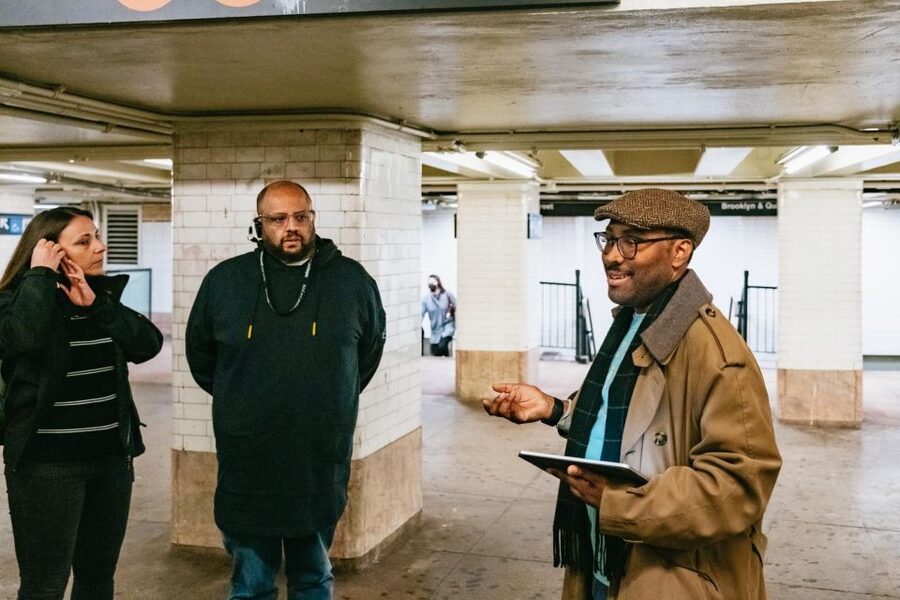
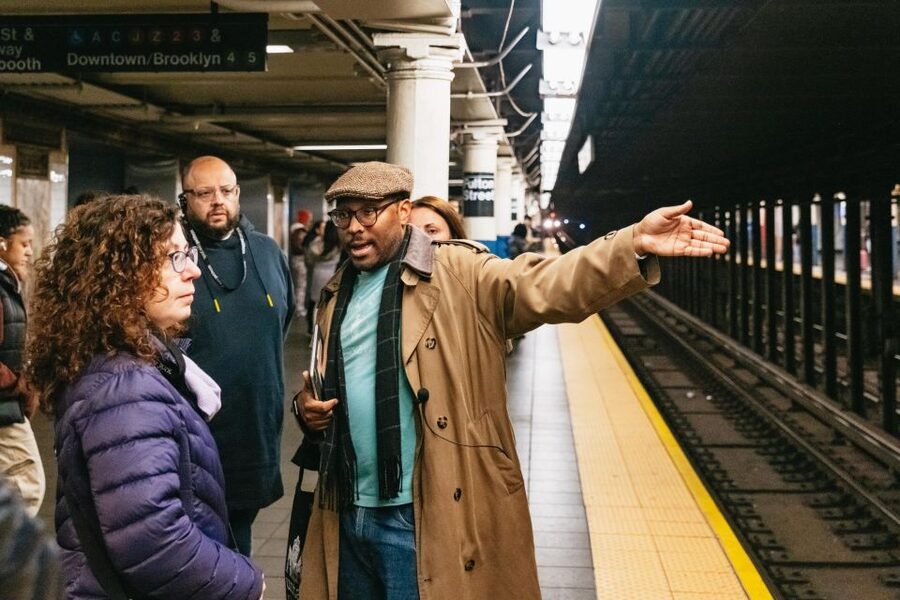
This is where a good guide matters. AJ, Alexis, and Mandy Edgecombe have all led this experience, and the strongest comments focus on their command of New York history and their ability to explain it in an easy, personal way. AJ has a habit of learning everyone’s name and where they come from, then using that information to shape the conversation.
That personal touch is more than a pleasant extra. A small connection can help you stay engaged during a technical explanation about construction or station design. It also makes the tour work well for solo visitors, who can otherwise feel slightly detached in a group.
The guide may point out symbols, pictures, tilework, and small design features that you have walked past without seeing. The subway rewards this sort of attention. It is full of details that disappear when you are focused on finding the right platform.
Riding the 6 train past City Hall Station
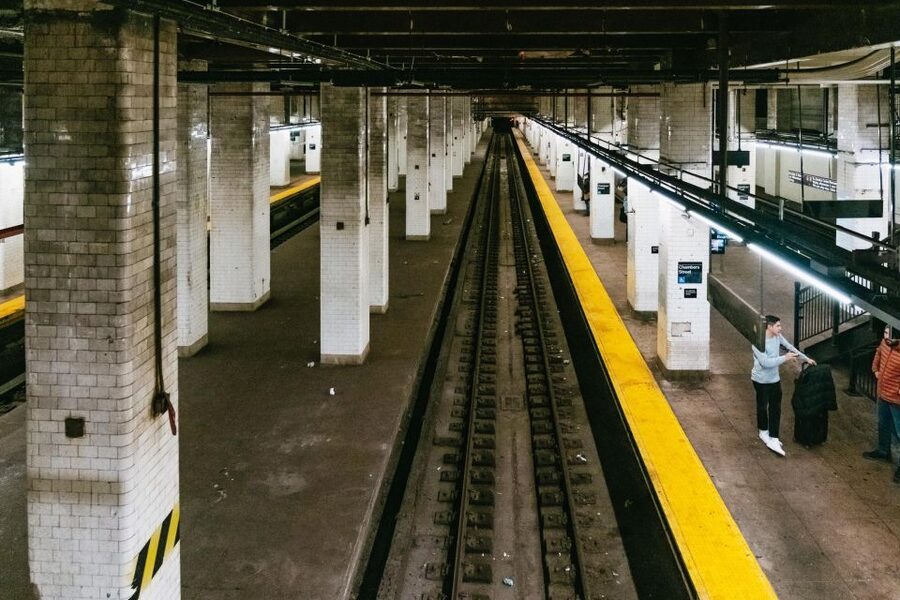
The main ride uses the 6 train. Calling it a 10-car time machine is a fair description of the experience: the train carries you through the modern city while the guide explains what lies beside and below the active tracks.
The famous example is City Hall Station. The station is no longer used for regular passenger service, but parts of it can be seen from the train as it moves through the loop. You do not get off for a walk, and the train does not stop inside the station.
That limitation is important. This is a viewing experience, not an underground exploration of abandoned platforms. Accessing closed stations on foot is illegal, and the tour keeps you inside the train for safety. If you want to photograph every tile or stand on an empty platform, this will not meet that goal. If you like the thrill of spotting places hidden in plain sight, the passing view works well.
Keep your eyes open and listen for the guide’s instructions. The glimpses are brief, and the movement of the train makes it easy to miss something. You may not see every closed space clearly, but the guide gives the passing stations meaning and context.
The ride also lets you experience the subway as New Yorkers do. You share the car with commuters rather than being separated from everyday life. That means crowded moments, background noise, and the normal movement of people getting on and off. For me, that is part of the value. You learn about the system while seeing what it does now.
More New York City Tours:
- NYC: SUMMIT One Vanderbilt Tickets
★ 4.7 · 51,195 reviews - NYC: Empire State Building Tickets – Observatory & Museum
★ 4.7 · 25,757 reviews - New York City: Statue of Liberty & Ellis Island with Ferry
★ 4.6 · 18,683 reviews - New York City: American Museum of Natural History Ticket
★ 4.5 · 15,447 reviews
Union Square’s small artistic surprise
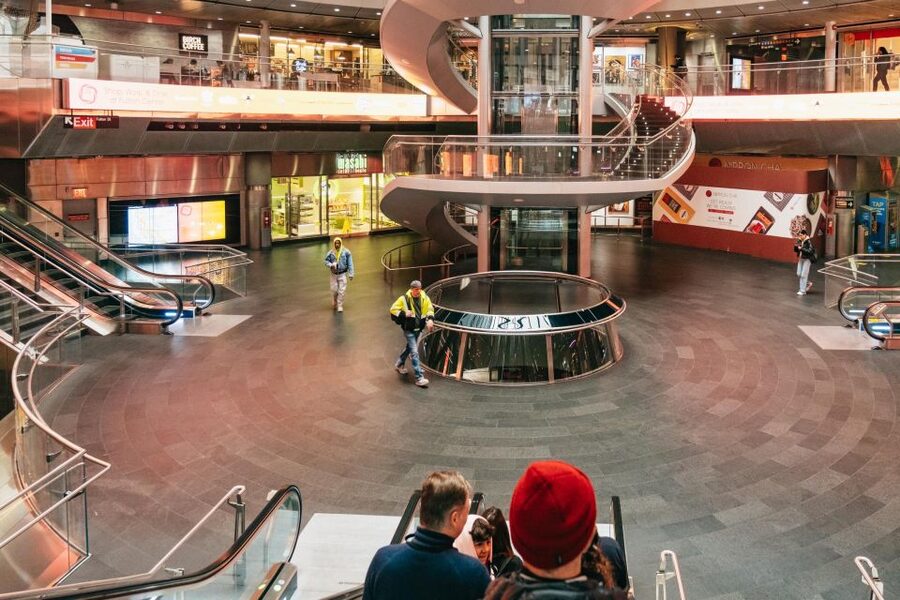
Union Square Station supplies one of the tour’s best contrasts. Above ground, Union Square is a major meeting point. Below ground, your guide points out an art installation that is easy to overlook amid the signs, platforms, and traffic.
The stop shows why a guide can add value beyond a subway map. You might pass the same artwork alone and never understand why it is there or what to look for. With the guide’s help, an ordinary transfer becomes a closer look at the city’s public art.
This part is especially useful for New Yorkers and repeat visitors. You do not need another broad introduction to Times Square or Central Park. Instead, you get a new detail in a place you may already use. One local participant had ridden through 14th Street and Union Square hundreds of times and still came away with new information.
The station is also a reminder that the subway’s character is not limited to tunnels and trains. Its art, tilework, signs, and architecture are part of the city’s public spaces. The tour gives you a way to read those spaces instead of simply passing through them.
Finishing near the Municipal Building
The tour ends at what was intended to be the Grand Central of Downtown. The final setting moves the story back above ground and connects transportation planning with civic architecture.
The Municipal Building is the key visual reward. You can admire the Guastavino tiles on the exterior of the subway stop and the building itself. These tiles give the ending a more decorative feel after the rougher, working-world atmosphere of the platforms and trains.
This final stop also helps tie together the tour’s main ideas. New York’s subway was built as practical infrastructure, but it was not designed without ambition. The city wanted its transportation spaces to carry civic pride, engineering skill, and visual character.
You may find the ending appealing if you enjoy architecture as much as transit history. If your main interest is abandoned stations, the final stop is less dramatic than City Hall or the closed platforms seen from the train. Still, it provides a clear endpoint and a chance to look at a major downtown landmark from a different angle.
What $39 gets you
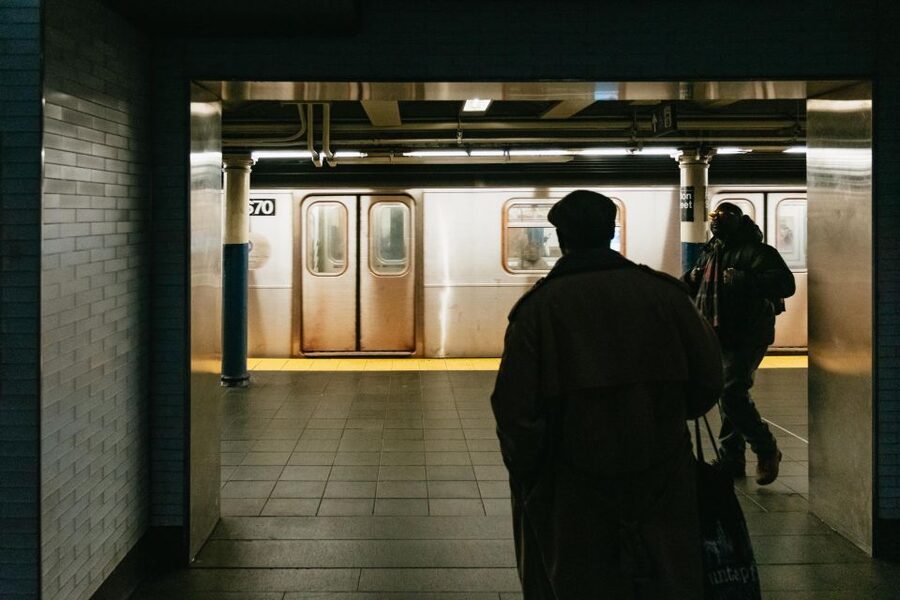
At $39 per person, this is reasonably priced for a two-hour guided experience in New York, especially because the subject is something you will likely use during your trip anyway. The guide adds interpretation to a service you might otherwise experience only as a transfer between attractions.
The value depends on your interests. You are paying for stories, orientation, and trained attention, not for special access to closed stations. The subway fare is separate, so budget for one MetroCard swipe or OMNY tap. You will need to pay that fare to enter the system.
I would book it if you are curious about city planning, transportation, architecture, or overlooked New York details. The price is less attractive if you simply want to ride the subway from one neighborhood to another or if you expect a long walk through abandoned tunnels.
The tour also offers free cancellation up to 24 hours ahead and a reserve-now, pay-later option. Those terms help if your New York schedule is still shifting, though they do not change the experience itself.
Practical advice for a smoother ride

Wear comfortable shoes. You will go up and down several sets of stairs, and the tour takes place in active stations rather than a quiet museum. The activity runs rain or shine, so the underground setting helps on wet days, but you still need to reach the meeting point outdoors.
Bring your MetroCard or plan to use OMNY. The fare is not included. A phone or payment method for the tap is useful if you do not already have a MetroCard.
Do not bring a tripod. It is not allowed on the tour, and crowded subway areas would make one awkward to use anyway.
Keep your expectations realistic about the abandoned stations. You see them from the safety of the subway car. The train does not stop, and you cannot enter on foot. That rule protects both the group and the subway system.
The tour is not suitable for wheelchair users because of the stairs and station access. If mobility is a concern, check carefully before booking rather than assuming every part of the route has step-free access.
Finally, pay attention during the ride. The most interesting views may last only a few seconds, and you may be watching for a station while also listening to the guide. Headsets help, but subway noise remains part of the setting.
Who will enjoy this subway tour most
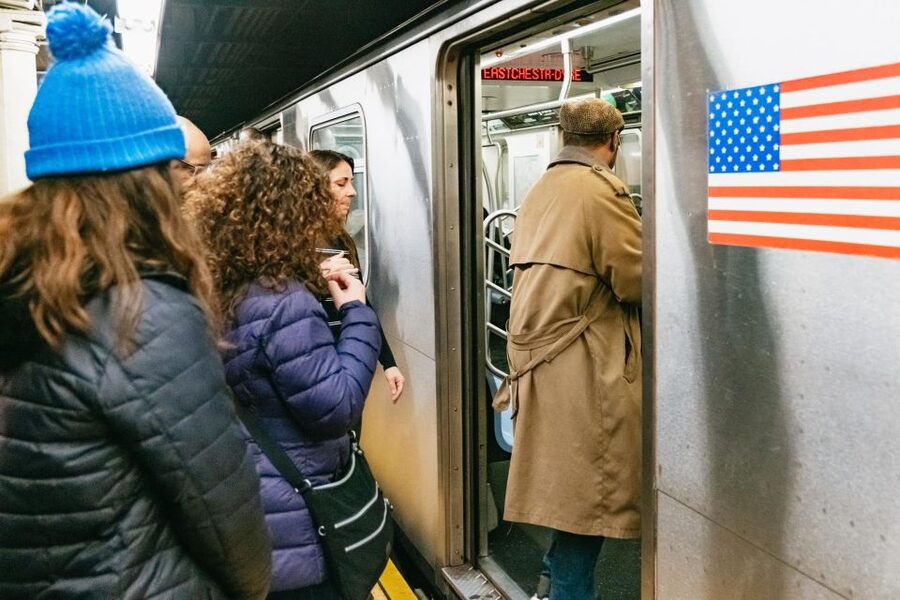
This is a strong choice for first-time visitors who want a practical introduction to New York’s subway and for longtime residents who suspect they have been missing details. It also suits people who prefer local history over a standard sightseeing bus.
Solo visitors should feel comfortable booking. AJ, in particular, has made a point of learning names and encouraging conversation among the group. That can make the tour feel more social without turning it into a forced group activity.
Families with older children may enjoy the unusual subject, though the amount of history and the underground setting will suit children who can listen and manage stairs. The tour is also a good match for architecture fans, urban history students, photographers who can work without a tripod, and anyone fascinated by infrastructure.
It is less suitable for visitors who want a quiet, private tour or a long on-foot look at abandoned places. It is also not the right pick if you need wheelchair access or dislike crowded public transportation.
Should you book the NYC subway tour?
Book it if you want to understand the subway rather than simply use it. For $39, you get two hours of guided context, a ride through active stations, views of closed spaces, Union Square art, and a finish near the Municipal Building.
The best reason to go is the combination of ordinary travel and unusual stories. You ride with New Yorkers, look for City Hall Station, and learn why familiar stations contain details you have never noticed. Just remember that the abandoned stations are viewed from the train, the fare is extra, and subway noise and stairs are part of the deal.
FAQ
Where does the NYC subway tour meet?
Meet outside 200 Broadway, on the southeast corner of Broadway and Fulton Street, outside the entrance to the Fulton Center. Your guide will hold an Untapped New York sign.
How long does the tour last?
The tour lasts two hours.
How much does the tour cost?
The price is $39 per person.
Is the subway fare included?
No. You need one MetroCard swipe or OMNY tap to enter the subway.
Which subway line does the tour use?
The tour uses the 6 train as part of the route.
Can I enter the abandoned subway stations?
No. The abandoned stations can only be viewed from inside the subway cars. The train does not stop there, and entering them on foot is illegal.
Is the tour offered in English?
Yes. The live tour guide speaks English, and English headsets are included so you can hear the guide more clearly.
What should I bring?
Bring comfortable shoes and a public transportation ticket, meaning a MetroCard or a way to use OMNY. Tripods are not allowed.
Is the tour accessible for wheelchair users?
No. The tour includes several sets of stairs and is not suitable for wheelchair users.
Recently added in New York City
- NYC: Midtown Hands-On Bagel Baking Class★ 5.0 · 12 reviews
- Personalize Sightseeing Tour★ 5.0 · 92 reviews
- Central Park Pedicab Tour with Guide★ 5.0 · 63 reviews
- Central Park Pedicab Guided Tour★ 5.0 · 17 reviews
- Photographer, Professional Photo shoot – New York★ 5.0 · 16 reviews
- Official Central Park Pedicab Ride ( UP TO 3 PERSONS )★ 5.0 · 4 reviews
- JFK or LGA package only (Round trip transfer plus VIP Contrasts)★ 5.0 · 3 reviews
- Official Central Park Pedicab Tours★ 5.0 · 35 reviews
NYC Subway and Underground Tours, compared.
New York City Slavery and Underground Railroad Tour
Read our review →

History of Slavery & Underground Railroad Walking Tour
Read our review →


New York 8 Hour Main Attractions Tour with City Bus/Subway
Read our review →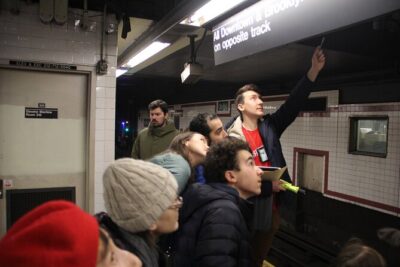

Browse the lists this tour appears in