
Reviewed · NYC SUBWAY AND UNDERGROUND TOURS
NYC: Discover NYC Subway Secrets Below Manhattan – Private
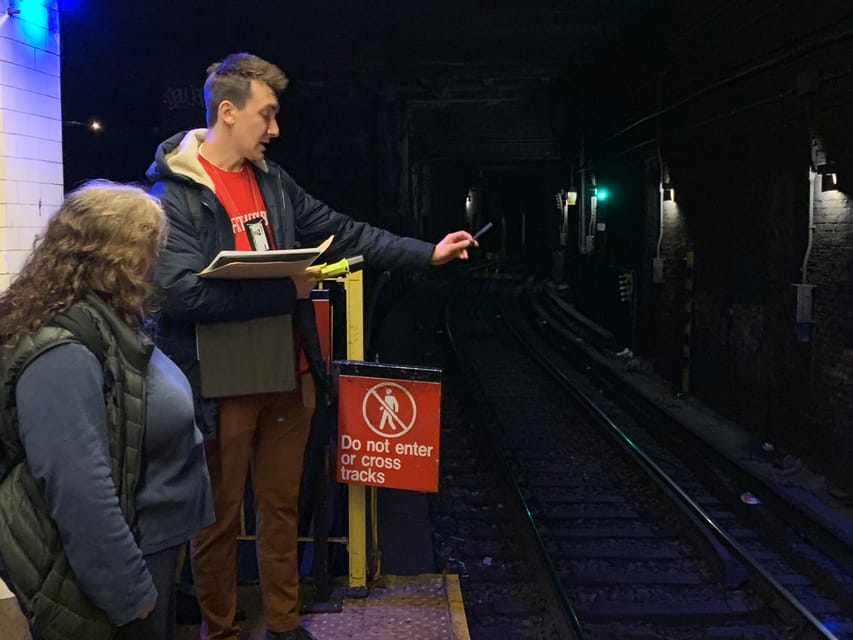
New York’s subway is more than a way to get across town. Beneath the street, you’ll find grand tilework, abandoned platforms, disaster stories, political battles, and clues to how the city grew. This private tour with urban planner Rayn Riel brings those details together, including a look at famous City Hall Station and the newer World Trade Center transit complex.
I like the mix of old and new, from a former wine cellar beneath the Brooklyn Bridge to the sleek $4 billion Oculus. I also like the practical angle: Riel explains why delays happen, how the system was built, and why some stations look so different from others. The main consideration is pace. Two hours covers a lot of ground, and you’ll be walking underground and up and down steps.
Key points at a glance
- See City Hall Station from public areas: Learn about the 1904 station and the original design ideas that shaped New York’s first subway.
- Connect subway history with major disasters: Hear how 9/11 and Hurricane Sandy affected downtown stations, tunnels, and platforms.
- Find a wine cellar beneath the Brooklyn Bridge: Explore a curious piece of underground history linked to subway tunnels.
- Compare old and new New York transit: Move from early stations to the Fulton Center and World Trade Center Oculus.
- Learn from a transit specialist: Licensed guide and urban planner Rayn Riel explains operations, construction, politics, and future plans.
- Ride without paying extra for the fare: Your subway fare and individual earpiece are included in the $200 private group price.
Why this subway tour is different
Most subway rides are forgettable by design. You swipe, wait, board, and try not to make eye contact. This experience asks you to slow down and notice the parts you normally pass without thought.
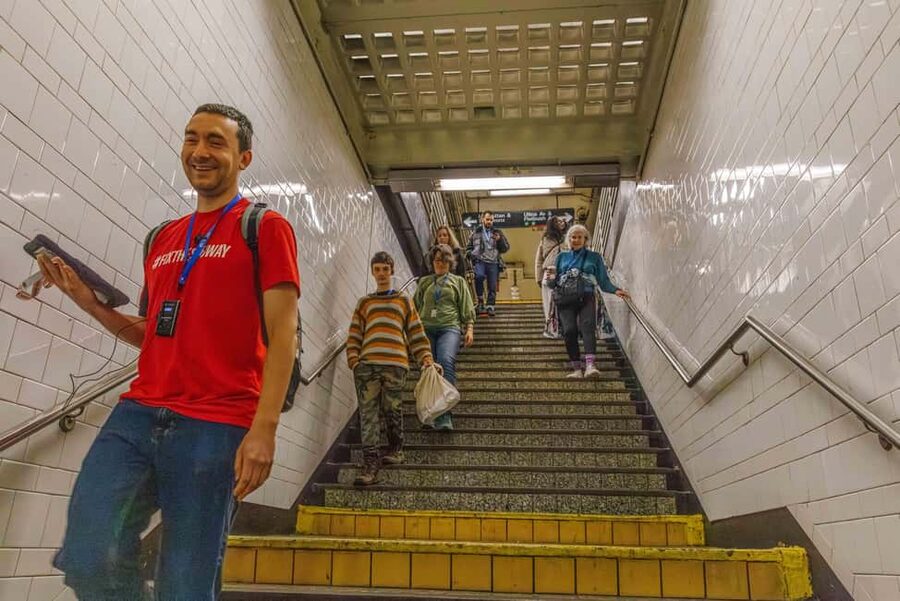
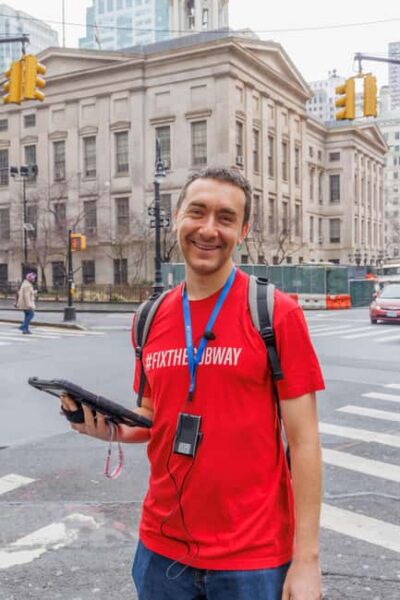
Rayn Riel leads the walk as a licensed NYC guide, urban planner, and former MTA employee. That background matters. You are not getting only a list of station dates or architectural labels. You’ll hear about how the system operates, why infrastructure projects become expensive, and why the numbered and lettered lines differ.
The tour also treats the subway as a living system. Its story includes early twentieth-century engineering, abandoned platforms, signal equipment, flooding, terrorism, new stations, and current transit decisions. That makes the experience useful for first-time visitors and New Yorkers who have spent years riding the trains but rarely looked closely at them.
The tour has a strong rating of 4.9 from 18 ratings, and the praise centers on Riel’s humor, energy, and ability to keep technical subjects moving. That fits the format well. Subway operations can become dry in a hurry, but the guide’s style appears to lean toward odd details, practical explanations, and memorable trivia.
More NYC Subway and Underground Tours:
- New York City Slavery and Underground Railroad Tour
★ 5.0 · 411 reviews - NYC Underground Subway Walking Tour
★ 4.5 · 361 reviews - NYC: History of Slavery & Underground Railroad Walking Tour
★ 4.7 · 87 reviews
Starting at Battery Park and entering subway history
You meet at the Starbucks at One Battery Park Plaza on State Street. This puts you at the southern end of Manhattan, close to the early routes and downtown stations that frame much of the tour.
The opening section explains why New York began building underground at the start of the twentieth century. The subway was not simply a civic convenience. It was a response to a crowded city, growing neighborhoods, and the need to move large numbers of people below busy streets.
Riel also explains how the system developed through three different companies. That detail helps explain why the subway can feel like several networks joined together rather than one tidy design. The differences between numbered and lettered lines become more meaningful once you understand the separate origins and operating traditions behind them.
This is a good place to ask questions. The tour is private, with a maximum group size of 15, so you are not competing with a large crowd for the guide’s attention. A small group also makes it easier to pause at a station detail or ask about a route you use at home.
City Hall Station and the beauty of early subway design
City Hall Station is the tour’s most famous stop. Opened in 1904, it reflects the early subway’s ambition. The station was designed to make underground travel feel civic and important, not merely functional.
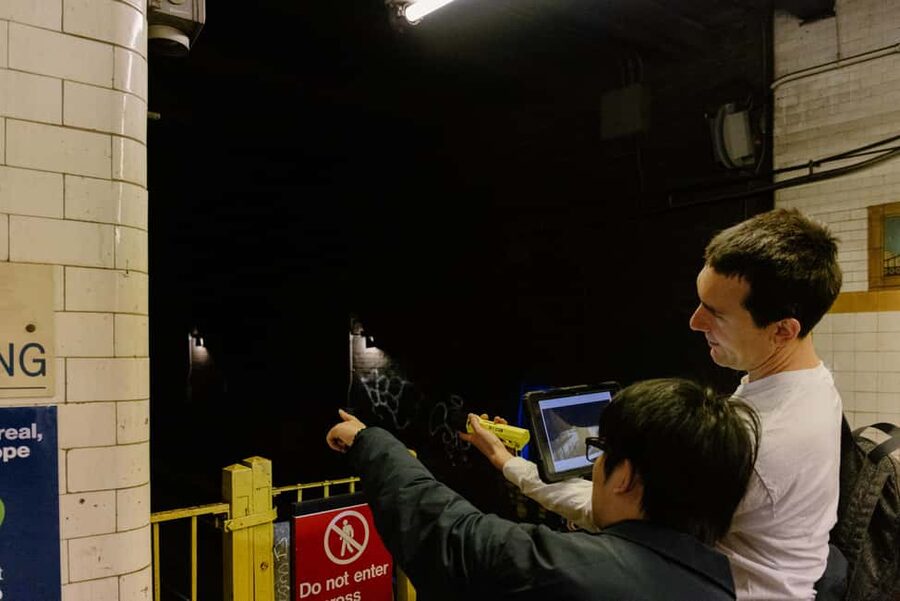
You should expect to view it from public areas rather than enter restricted spaces. That distinction is important. This is not an access-all-areas exploration, and the tour does not take you into closed tunnels or staff-only rooms. Still, seeing the original details in context gives you a better sense of what the first subway designers wanted New Yorkers to experience.
The station’s curves, tilework, and architectural touches offer a sharp contrast with many modern platforms. Riel uses that contrast to explain how station design changed over time. Early stations could give careful attention to ornament and visual identity. Newer stations often have different demands, including crowd flow, accessibility, security, construction cost, and connections between several lines.
For me, this is one of the strongest reasons to book the experience. You are not only looking at old tile. You are learning why one era built a station as a grand public room while another might focus on speed, capacity, and connections.
The wine cellar beneath the Brooklyn Bridge
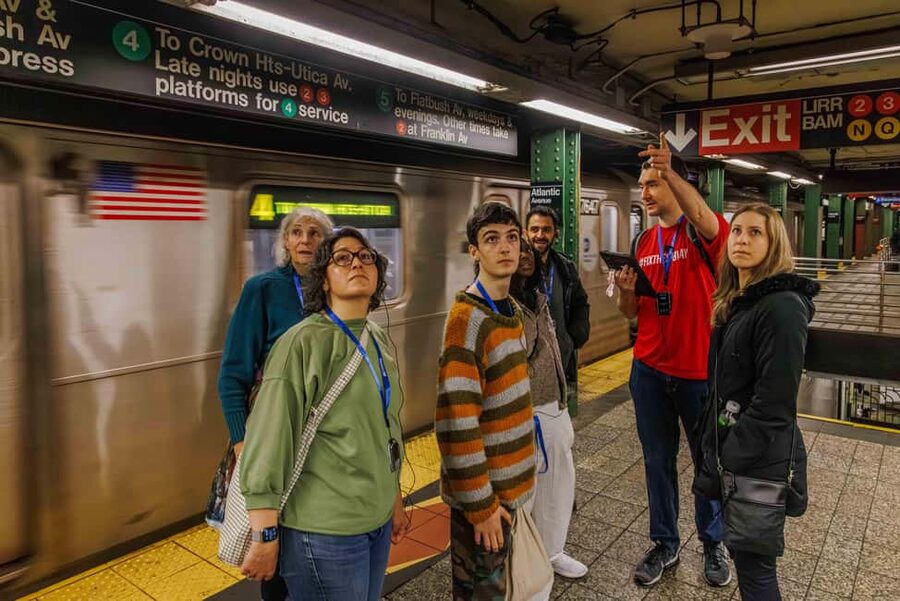
The underground material becomes stranger near the Brooklyn Bridge. The tour points out a former wine cellar under the bridge, connected to NYC Subway tunnels.
That detail is exactly the kind of thing that can change how you see downtown. The subway is not a clean layer cut into the city and sealed off from everything else. It intersects with older buildings, bridge infrastructure, utility routes, commercial spaces, and abandoned plans.
The wine cellar also gives the tour a lighter moment amid the heavier stories of disasters and construction problems. Riel is known for memorable bits of transit trivia, including details about dripping pans and other small pieces of subway infrastructure. Those odd facts may sound minor, but they help you picture the system as a machine that constantly needs maintenance.
You will not be wandering through a secret private cellar. The tour visits public areas, and the exact route can shift with the MTA’s weekend schedule. Think of this stop as a guided look at an unusual connection between the city above and the tunnels below.
More New York City Tours:
- NYC: SUMMIT One Vanderbilt Tickets
★ 4.7 · 51,195 reviews - NYC: Empire State Building Tickets – Observatory & Museum
★ 4.7 · 25,757 reviews - New York City: Statue of Liberty & Ellis Island with Ferry
★ 4.6 · 18,683 reviews - New York City: American Museum of Natural History Ticket
★ 4.5 · 15,447 reviews
Abandoned platforms and stations hiding in plain sight
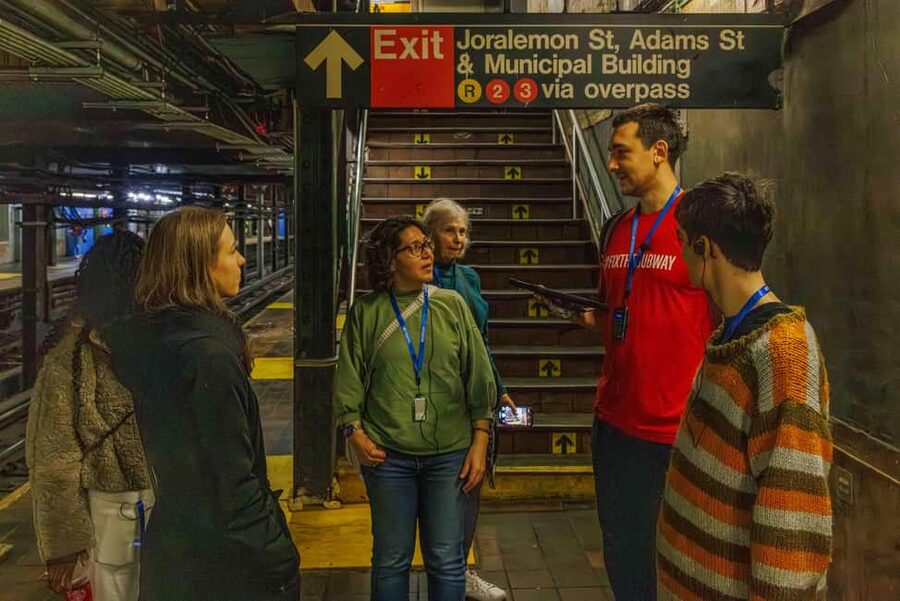
New York’s subway has more abandoned platforms and unused spaces than most riders realize. Some are easy to miss because they sit behind walls, beyond a curve, or beside a platform still in regular use.
The guide explains why these spaces exist and how changing routes, station layouts, ridership patterns, and construction plans left parts of the system behind. This gives you a better way to read the subway. A blocked doorway or empty platform may not be random decay. It can be a trace of an earlier plan.
The tour also explores why trains are delayed. That topic has direct value for anyone using the subway during a short visit. Instead of treating a delay as mere bad luck, you’ll hear about the older infrastructure and operating choices that affect the system today.
The technical side is handled at a level that should suit curious non-specialists. You do not need to know rail terminology before arriving. At the same time, dedicated transit fans are likely to appreciate details about signals, operations, and the system’s mechanical roots.
Flooding, 9/11, and the vulnerable downtown subway
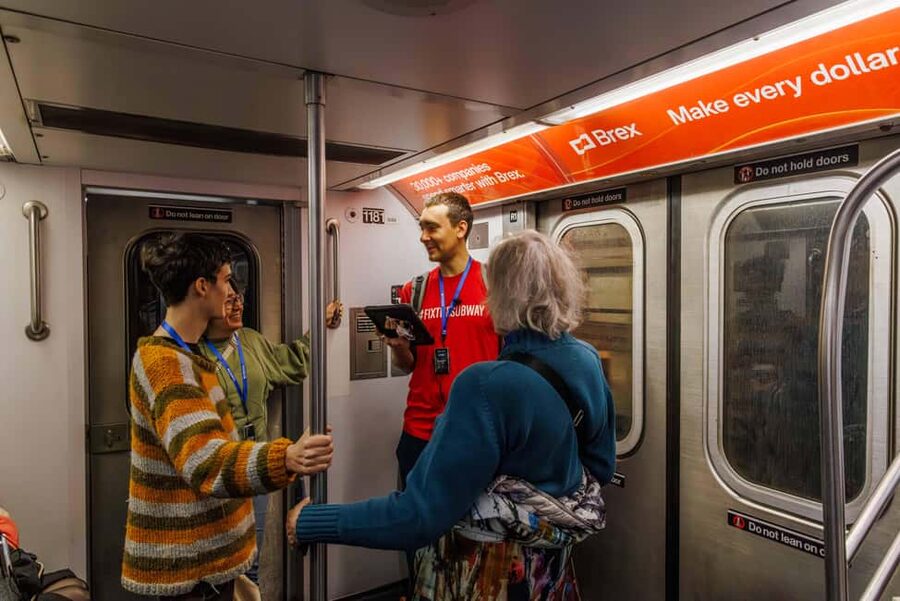
The tour turns to the damage caused by major disasters, including the flooding of a station about a decade before the experience and the impact of Hurricane Sandy on lower Manhattan’s underground network.
This section gives the subway a human scale. Floodwater can destroy equipment, shut down routes, and isolate parts of the city. The guide explains how downtown stations and tunnels were affected and how the system became more prepared for future threats.
The tour also covers the effect of 9/11 on subway platforms beneath the World Trade Center. Some platforms collapsed under the site, and the transit network had to be rebuilt alongside one of the largest redevelopment projects in modern New York.
This is not simply a disaster-history stop. It shows how a transit system must recover while the city above it changes. You’ll hear about resilience, but the practical details matter most: the subway must keep moving people, protect critical equipment, and connect major employment and visitor areas even after severe damage.
The subject can be serious, so the guide’s humor and steady pace are useful. The tour does not stay in one emotional register for long. It moves between engineering, politics, history, and odd subway facts.
The new downtown stations and the Oculus
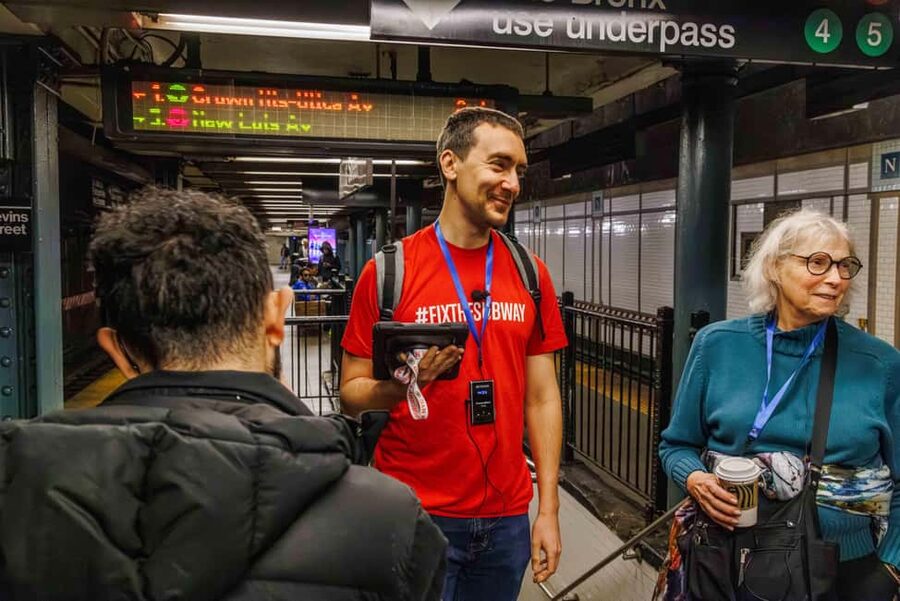
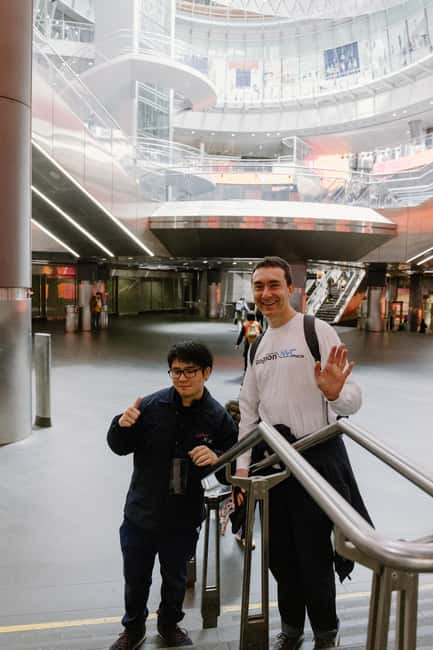
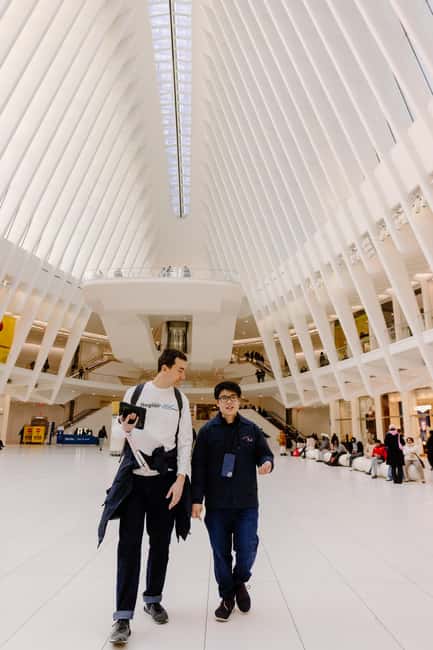
The final part of the route brings you into the newer downtown transit world. The $1.4 billion Fulton Center and the $4 billion World Trade Center Oculus show how far station design has moved from the small tiled rooms of 1904.
Fulton Center is not just a place to catch a train. It links several lines and uses a large, modern interior to organize movement through downtown. The cost and design choices raise useful questions about what a major station should provide and how much the city should spend to make those connections work.
The Oculus presents an even sharper contrast. Its bright, sculptural interior has become one of downtown’s most recognizable public spaces. On this tour, you look at it as transportation infrastructure rather than only as an architectural sight.
That change in viewpoint is worthwhile. You’ll understand how a station can function as a transfer point, a civic symbol, a redevelopment tool, and a piece of post-9/11 New York. Food and drinks are available for purchase at the World Trade Center Transportation Hub, giving you a practical place to pause after the walk.
The listed meeting details say the activity starts and ends at the Battery Park meeting point, while the route includes the World Trade Center hub. Because the exact path may vary with the MTA’s weekend schedule, confirm the day’s route and ending details when you book.
What the two-hour format feels like
Two hours is a smart length for this subject. You get enough time to connect the stops without committing half a day to underground travel.
The tradeoff is density. Riel covers early subway construction, station art, abandoned spaces, operations, disasters, politics, and new infrastructure in a short period. If you want to linger at every station or take many photographs, the pace may feel brisk.
The walk includes subway travel, underground corridors, and stairs. Wear comfortable shoes and bring water. The route does not enter restricted areas, but it is still an active walking experience rather than a seated lecture.
Individual earpieces are provided so you can hear the guide clearly, even when the group is spread out. That is especially useful in a subway setting, where background noise can swallow a normal speaking voice. A speaker is also available for anyone who is hard of hearing.
The route and tour length can shift slightly with the MTA’s weekend schedule. Build in some flexibility rather than planning a tight connection immediately afterward.
The $200 private-group price
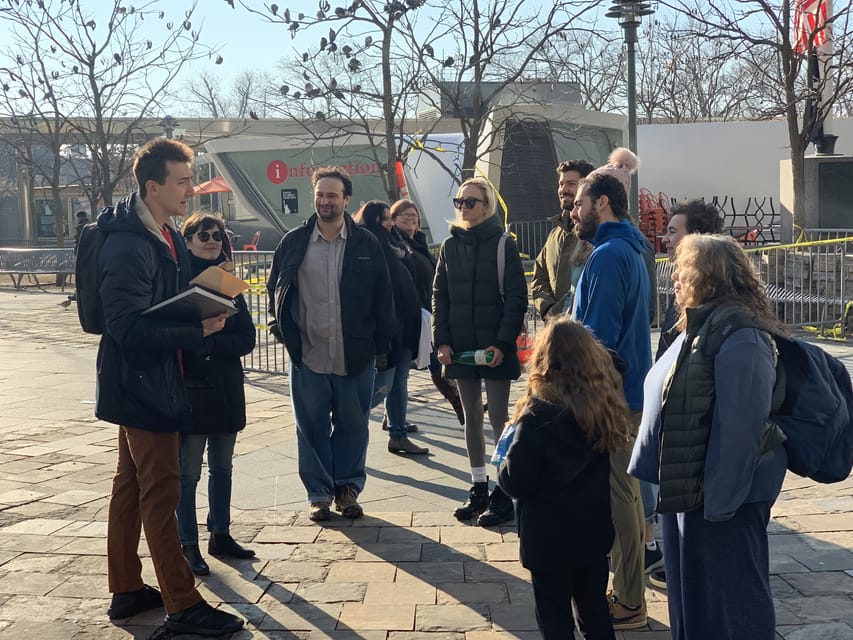
The price is $200 for a private group of up to 15 people. That is a strong value if you can fill much of the group, since the price does not rise with each additional person within the limit.
For two people, the per-person cost is higher than a regular public walking tour. For a family, group of friends, school-related outing, or office group, the math becomes much better. You also receive the subway fare during the tour, individual earpieces, and a guide with urban-planning and transit experience.
The value depends on your interest. If you want a quick list of famous NYC sights, this is not the right use of two hours. If you enjoy infrastructure, city planning, unusual history, or train travel, the private format gives you a focused way to understand places you might otherwise overlook.
I especially like the option for New Yorkers. You do not need to be visiting from out of town to benefit. The tour is built around everyday spaces that many residents use without examining, and it may change how you read your regular station.
Who should book this experience
This is a good choice for:
- Anyone fascinated by trains, tunnels, bridges, or city planning
- Families with older children and teenagers who prefer active experiences
- New Yorkers looking for a fresh local outing
- Visitors who have already seen the major surface sights
- Architecture fans interested in the contrast between 1904 stations and modern hubs
- People who enjoy technical facts when they are explained with humor
It can also work well for a date or a multigenerational group. The route mixes walking, conversation, history, and small surprises, so it does not depend on one narrow interest.
It is less suitable if you need step-free access, dislike underground environments, or want to enter closed subway stations. The advertised route includes stairs and visits only public areas. The tour is in English, and you should be comfortable spending much of the experience below street level.
Practical details before you reserve
The experience lasts two hours, with starting times available according to the booking calendar. It is a private English-language tour led by Rayn Riel.
Your subway fare is included. Bring comfortable shoes and water. Since the route may change slightly based on the MTA’s weekend schedule, check the confirmed meeting and ending details before setting up the rest of your day.
You can cancel up to 24 hours before the activity for a full refund, and the reserve-now, pay-later option lets you hold the plan without paying immediately.
Should you book the NYC Subway Secrets tour?
Book it if you want to understand New York through the machinery beneath its streets. The best parts are the unusual connections: City Hall Station beside modern downtown hubs, a wine cellar linked to subway tunnels, platforms damaged beneath the World Trade Center, and infrastructure shaped by both politics and disaster.
The tour is especially worthwhile when Riel’s transit expertise matches your curiosity. You will get more from it if you like asking why a station was built in a certain way, why a train is delayed, or why an abandoned platform still exists.
Skip it if you want a relaxed sightseeing walk with little stair climbing or if you expect access to closed stations. For everyone else, this is an engaging, specific way to see the city’s transit system as part transportation network, part engineering project, and part New York story.
FAQ
Where does the subway tour start?
Meet at the Starbucks at One Battery Park Plaza on State Street in Manhattan.
How long does the experience last?
The tour lasts two hours. Available starting times depend on the date you select.
Is this a private tour?
Yes. It is a private group experience for up to 15 people.
Is the subway fare included?
Yes. Your subway fare during the tour is included in the price.
Does the tour enter restricted or closed subway areas?
No. The experience visits areas open to the public and does not access restricted areas.
What should I bring?
Wear comfortable shoes and bring water. The walk takes place underground and includes going up and down steps.
Recently added in New York City
- NYC | French guided tour Bushwick & Williamsburg★ 5.0 · 16 reviews
- NYC: Empire State Building Sunrise Experience Ticket★ 4.8 · 68 reviews
- NYC: Fabulous Drag Night Out with a Drag Queen★ 4.8 · 17 reviews
- NYC: Empire State Building & Manhattan Walking Tour★ 4.6 · 18 reviews
- NYC: Empire State Building & Optional Top of the Rock Tour★ 4.4 · 12 reviews
- NYC Empire State Horse Carriage Ride in Central Park(45mins)★ 4.7 · 12 reviews
- NYC: Eat 4 New York Foods & See 30 Sights Walking Tour★ 5.0 · 3 reviews
- NYC: Elf & Home Alone 2 Locations Central Park Pedicab Tour★ 4.9 · 21 reviews
NYC Subway and Underground Tours, compared.
New York City Slavery and Underground Railroad Tour
Read our review →

History of Slavery & Underground Railroad Walking Tour
Read our review →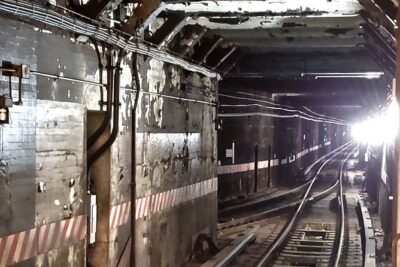

Times Square Donut Adventure by Underground Donut Tour
Read our review →Browse the lists this tour appears in